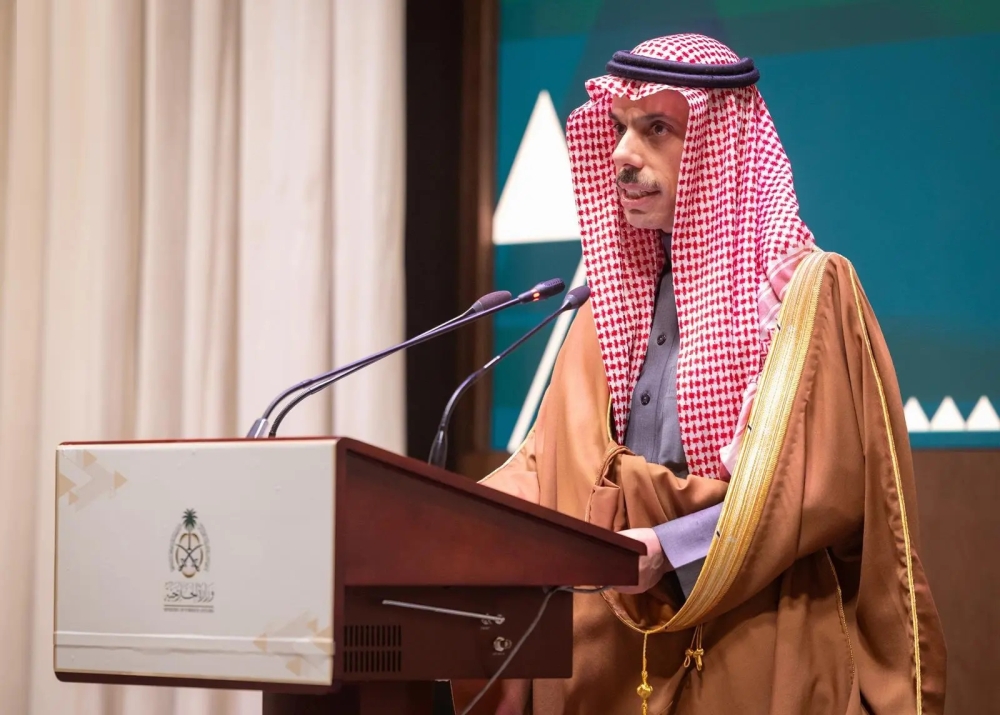
His Highness Prince Faisal bin Farhan bin Abdullah, the Saudi Minister of Foreign Affairs, affirmed that the outcomes of the Riyadh Consultative Meeting , which brought together the foreign ministers of a number of Arab and Islamic countries and was hosted by the Kingdom, aim to enhance the highest levels of consultation and joint coordination. This intensive diplomatic effort seeks to restore the region's security and stability, safeguard the interests of its nations, and ensure the well-being of its people in light of current challenges. During the press conference held after the meeting, His Highness expressed the Kingdom's strong condemnation of the heinous Iranian attacks targeting Saudi territory, the Gulf Cooperation Council (GCC) countries, and several other Arab, Islamic, and friendly nations.
Regional context and strategic dimensions of the Riyadh meeting
Historically, the Middle East and the Arabian Gulf have always been a strategic hub for the global economy, making any tension there have a direct impact on the international stage. In this context, the Riyadh meeting of paramount importance, coming as it does at a sensitive time of significant escalation in the region. The Kingdom of Saudi Arabia has consistently sought to unify Arab and Islamic ranks to confront foreign interference. The Foreign Minister condemned Iran's insistence on destabilizing the region, deeming it a blatant violation of international charters and international law, and a direct threat to international peace and security. He clarified that this behavior is not a recent development, but rather an extension of a historical pattern of blackmail, sponsoring and supporting armed militias to target neighboring countries.
The risks of continued escalatory policies and erosion of trust
The Foreign Minister repeatedly warned of the dangers of continued escalation, emphasizing that the Kingdom's efforts are always aimed at sparing the region further tension, stemming from a commitment to prioritizing wisdom through peaceful solutions. However, Iran's insistence on violating the principles of good neighborliness has eroded trust in it at both the regional and international levels. His Highness stressed the necessity of an immediate halt to Iranian aggression, rejecting attempts to evade responsibility for the attacks that targeted residential areas and vital civilian infrastructure, resulting in significant loss of life and extensive material damage. He affirmed that funding and arming militias in Arab and Islamic countries does not serve Islamic unity but rather undermines it entirely.
Expected impact on maritime navigation and energy supplies
Among the most prominent issues discussed at the meeting was the protection of navigation and strategic maritime routes. Targeting commercial vessels in the Arabian Gulf and disrupting navigation in the Strait of Hormuz would have disastrous repercussions for regional security and the global economy. The participants emphasized that any infringement on freedom of navigation constitutes a serious threat requiring collective action to safeguard maritime security. Furthermore, the damage resulting from attacks on energy resources and food security, particularly regarding fertilizers, negatively impacts the global economy and places a heavy burden on the economies of the most vulnerable developing nations, thus giving the event international dimensions that transcend regional boundaries.
Unprecedented international solidarity to deter threats
In a move reflecting the extent of global support for the Saudi position, His Highness the Foreign Minister reiterated the participating countries' welcome of the international stance, which represents unprecedented solidarity regarding the current situation. This support was demonstrated by the fact that 136 UN member states stood behind Security Council Resolution 2817, which demands that Iran immediately cease its attacks and refrain from any threats or provocative actions against neighboring countries. The participating countries emphasized the necessity of implementing the UN resolution, ending support for proxies in the region, and for Iran to abandon its hostile policies, which are increasing its isolation and exacting a heavy political price.
Ongoing coordination to ensure a secure future
At the conclusion of the conference, the Foreign Minister stressed the importance of continued and intensive consultation and coordination among the countries of the region to monitor developments and assess emerging issues. He emphasized that formulating common positions and taking legitimate measures and actions has become imperative to protect the security and stability of nations, thus paving the way for broad regional and international action that will ensure the restoration of calm and the triumph of reason and international law.