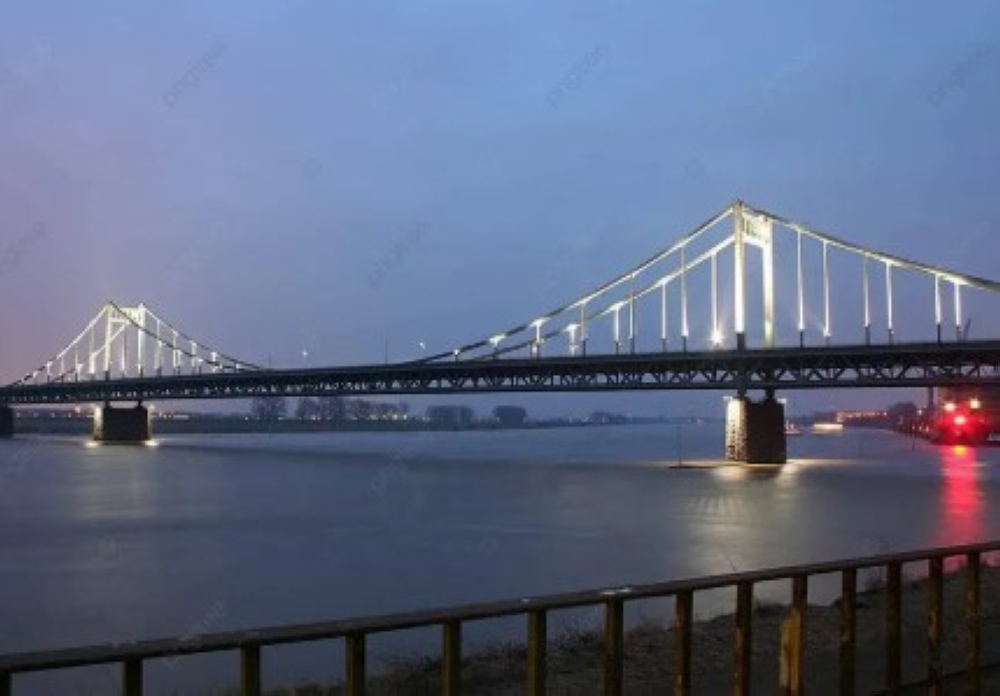
Traffic has returned to normal on the vital Rhine Bridge in the western German city of Leverkusen, after authorities announced its full reopening to vehicles. This decision followed an emergency closure that began Sunday evening due to the danger posed by ice falling from the bridge's overhead cables, which damaged several cars and threatened the safety of drivers.
General context and strategic importance of the bridge
The Rhine Bridge in Leverkusen is an integral part of the A1 motorway, one of the busiest and most important highways in Germany and Europe. More than 100,000 vehicles cross this bridge daily, connecting major economic and industrial centers such as Cologne and the Ruhr region. It serves as a vital artery for international transport and freight, particularly between the Benelux countries and Eastern Europe. Historically, the bridge has suffered from structural problems related to its age and increasing traffic load, necessitating continuous maintenance and restrictions on heavy truck traffic. This prompted German authorities to initiate a massive project to construct a completely new bridge to replace it.
Details of the incident and its direct impact
The sharp drop in temperatures led to the formation of thick layers of ice on the bridge's towering steel cables. With a slight change in temperature, these ice blocks began to fall onto the highway below, damaging the windshields and roofs of several vehicles. In response to this immediate danger, the police decided to close the bridge in both directions as a precautionary measure to ensure public safety. The closure caused massive traffic jams and diverted traffic to alternative routes, significantly impacting thousands of daily commuters and causing delays in the movement of goods regionally.
Importance and expected effects
Although the reopening of the bridge has restored traffic flow to the area, this incident once again highlights the challenges posed by aging infrastructure in the face of extreme weather events. The incident underscores the critical importance of maintaining and upgrading vital bridges. Economically, any disruption to traffic on a major artery like the A1 results in significant costs associated with supply chain delays and increased fuel consumption. With construction of the new bridge ongoing, this traffic point remains vulnerable to any unforeseen event, whether related to weather or the structural condition of the old bridge, thus emphasizing the urgent need to complete the new project as quickly as possible to ensure the continued economic and social activity of the region.