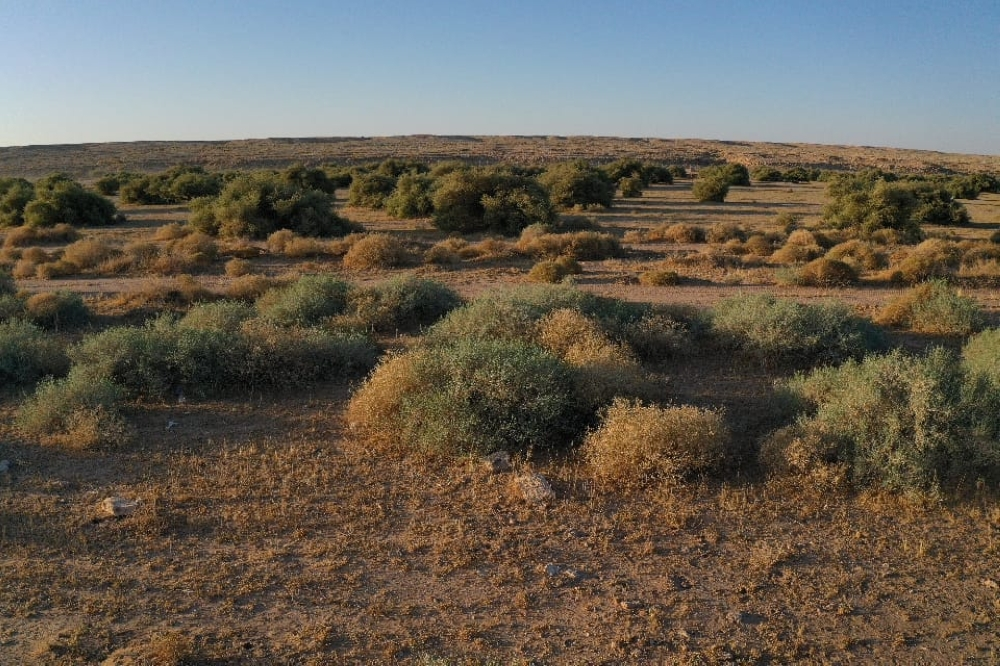
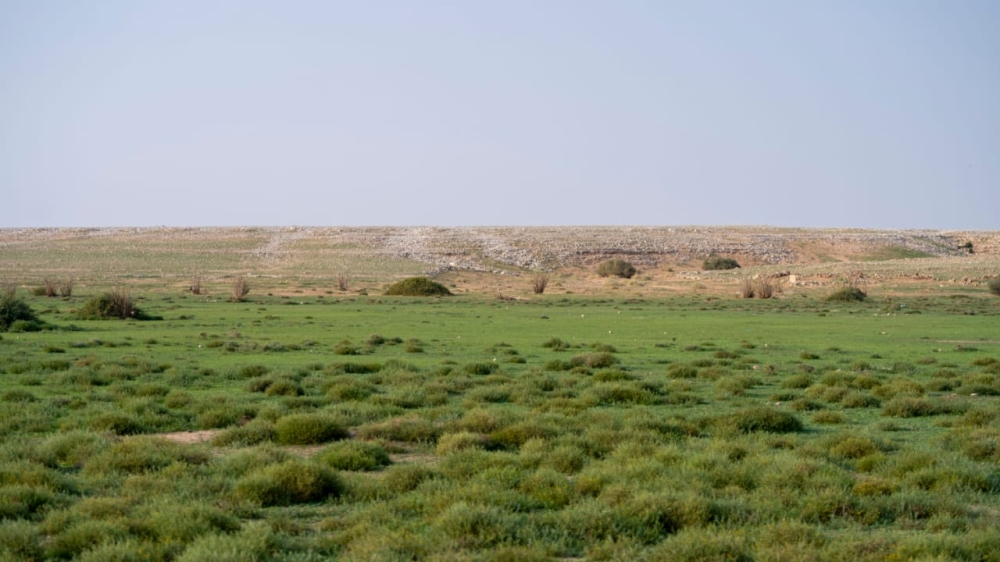
The National Center for Vegetation Development and Combating Desertification in the Kingdom of Saudi Arabia continues its tireless efforts to implement a qualitative initiative aimed at developing meadows and gardens, within the framework of a comprehensive national strategy to preserve these natural sites and enhance their sustainability, given their significant environmental and economic importance in the region.
Project scope and strategic objectives
The center announced that the targeted area within the Al-Fayyad and Al-Riyadh regions is estimated at approximately 4.7 million hectares of natural land. This step is part of a package of executive initiatives that includes planting native trees and shrubs suitable for the desert environment to enhance vegetation cover. The initiative also relies on techniques for sowing seeds of rangeland plants, applying the latest engineering methods for rainwater harvesting, and enforcing strict protection of natural sites to ensure their ecological recovery.
Context of the Saudi Green Initiative and Vision 2030
These efforts cannot be separated from the broader context of Saudi Vision 2030, specifically the "Saudi Green Initiative," which aims to plant 10 billion trees across the Kingdom in the coming decades. Al-Fayyad and Riyadh are key pillars in achieving this ambitious goal, playing a pivotal role in combating desertification, reducing carbon emissions, and improving quality of life. Rehabilitating these vast areas not only benefits the local environment but also contributes to international efforts to mitigate climate change.
Environmental and economic importance of Al-Fayyad and Riyadh
The center noted that the Al-Fayyad and Al-Riyadh areas serve as "natural lungs" for the desert environment; they contribute directly to meeting the needs of livestock, act as natural carbon sinks, and play a crucial role in mitigating sand encroachment and reducing the severity of dust storms affecting cities. Furthermore, these areas constitute rich natural habitats for wildlife, making their protection an urgent necessity for maintaining ecological balance.
From an economic perspective, the center explained that the initiative aims to transform these sites into engines of sustainable development by regulating grazing, encouraging beekeeping and honey production as a promising economic activity, and supporting investment in medicinal and aromatic plants. Efforts are also underway to develop the meadows and valleys into prime ecotourism destinations, thereby boosting the economic returns for local communities.
Geographical distribution and natural characteristics
The meadows and depressions are characterized by their deep, fertile soil, shaped by floodwaters over time, and their dense vegetation rich in organic matter, making them ideal locations for agriculture. The center indicated that the number of meadows and depressions in the Kingdom exceeds one thousand, ranging in size from small basins to areas spanning thousands of hectares. The majority of these sites are concentrated in the central and northeastern regions of the Kingdom, with some of the most famous being Rawdat Khuraim, Al-Tanhat, Al-Khafs, the Al-Saman meadows, and Al-Hajrah, which are considered a natural heritage that must be preserved for future generations.