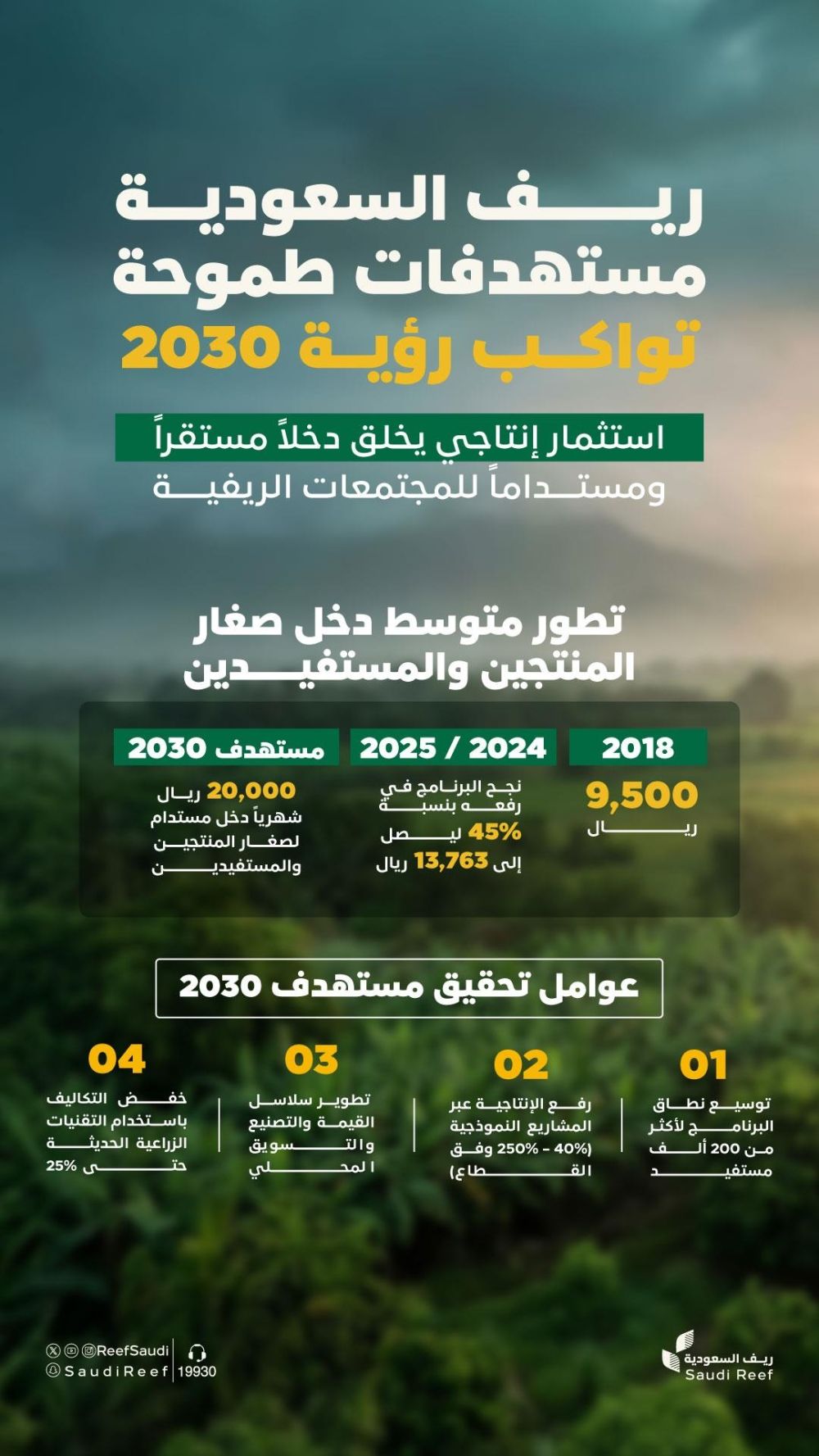
In a move reflecting the success of the strategic plans for the agricultural sector in the Kingdom, the Sustainable Rural Agricultural Development Program “Reef Saudi Arabia” predicted a qualitative leap in the average monthly income of the program’s beneficiaries from small farmers and producers, reaching more than 20,000 riyals per person per month (equivalent to 240,000 riyals annually) by 2030 AD.
Vision and Food Security Context
This announcement aligns with the objectives of the Kingdom's Vision 2030, which places great emphasis on diversifying national income sources and enhancing food security. The "Reef" program is one of the key pillars launched by the Ministry of Environment, Water and Agriculture to improve living standards in rural areas. Since its inception, the program has aimed to leverage the comparative advantages of different regions and support promising agricultural sectors such as coffee, honey, fruit, and rainfed crops, thereby contributing to bridging the food gap and reducing reliance on imports.
Pillars of strategic growth
In detailing this growth, Majid Al-Buraikan, the official spokesperson for "Reef Saudi Arabia," explained that the anticipated increase in income levels is not a coincidence, but rather the result of institutional work that relied on expanding the beneficiary base to exceed 200,000. He pointed out that the program focused on disseminating "model projects" that achieved productivity leaps ranging from 40% to 250%, depending on the sector, reflecting the efficiency of the planning and implementation.
Technology also played a crucial role in this equation, as the introduction of modern irrigation technologies and agricultural mechanization contributed to reducing operating costs by up to 25%, which positively impacted farmers’ net profits and transformed them from mere traditional producers into small investors contributing to value-added chains.
Economic and social impact
These figures gain particular significance when considering their social and demographic dimensions. The shift in per capita income levels (from SAR 9,500 in 2018 to SAR 13,763 by the end of 2024, an increase of 45%) makes agricultural work in rural areas a competitive economic option compared to jobs in major cities. This trend supports the stability of rural communities and reduces reverse migration to urban areas, thus creating a comprehensive development balance across the Kingdom's various regions.
The upward trend in income confirms the program’s success in transforming rural agriculture from a marginal activity into a real contributor to the national economy, thus enhancing the Kingdom’s position as a regional leader in sustainable rural development and the development of local food systems.