Promoting sustainable agricultural development in line with Vision 2030
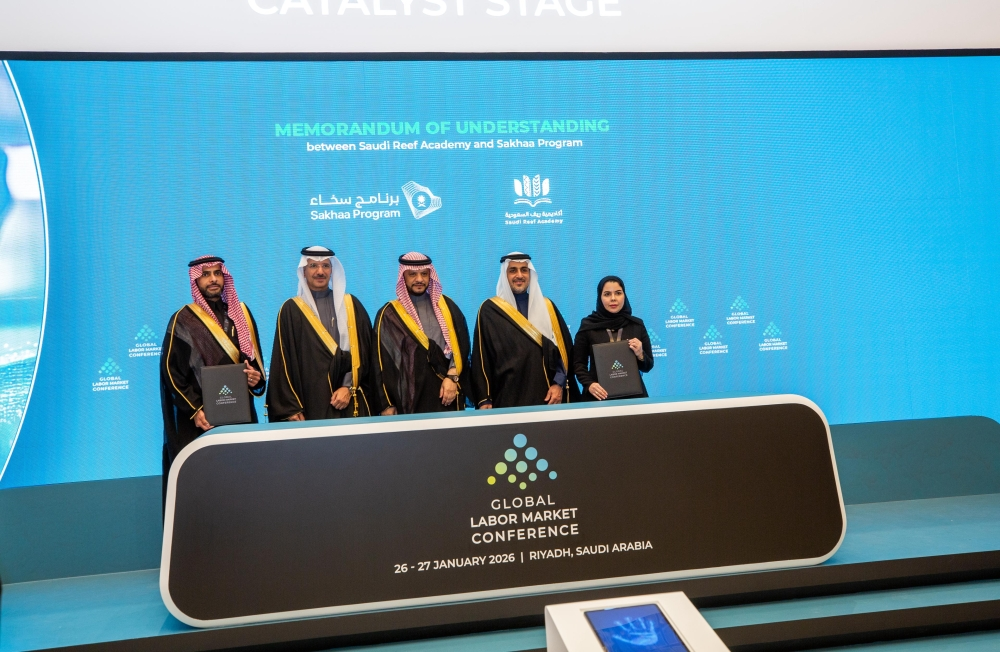
In a strategic move aimed at strengthening the agricultural sector and empowering national talent, the Deputy Minister of Environment, Water and Agriculture, Engineer Mansour bin Hilal Al-Mashiti, witnessed the signing of a memorandum of understanding between the Saudi Countryside Academy and the Sakhaa Program. The signing ceremony, which took place in the presence of the Deputy Minister of Human Resources and Social Development for Labor, Dr. Abdullah bin Nasser Abuthnain, reflects the national importance of this partnership, which brings together two vital sectors to achieve the Sustainable Development Goals.
The agreement was signed by Dr. Maha bint Mohammed Al-Dahi, CEO of the Academy, and Engineer Abdul Aziz Mohammed Al-Hussein, Secretary General of the Sakhaa Program, on the sidelines of the “Labor Market Conference” organized by the Ministry of Human Resources and Social Development.
Background and dimensions of the partnership
This memorandum comes within the framework of the Kingdom of Saudi Arabia's ongoing efforts to achieve the goals of Vision 2030, which prioritizes diversifying the economic base and achieving food security. The Sustainable Rural Agricultural Development Program, "Reef Saudi Arabia," is one of the most important government initiatives launched by the Ministry of Environment, Water and Agriculture to support small-scale agricultural producers, improve living standards in rural areas, and increase the efficiency and productivity of the agricultural sector. The "Reef Academy" serves as the knowledge and training arm of this program, focusing on building the capacities of students and those interested in the agricultural sector and equipping them with modern skills.
Memorandum objectives and areas of cooperation
The memorandum of understanding aims to create a joint framework to unify efforts between the two parties in several key areas, most notably:
- Enabling agricultural initiatives: Focusing on supporting quality initiatives that achieve a tangible and sustainable impact in the sector.
- Feasibility studies: Providing technical and methodological support to prepare integrated feasibility studies for emerging agricultural projects to ensure their success.
- Linking competencies to opportunities: Empowering “givers” (those who give and take initiatives) and connecting them with real opportunities with a measurable impact, which contributes to turning ideas into productive projects.
- Corporate sustainability: Working to enhance the corporate sustainability of initiatives by developing clear and effective operating models.
- Governance and Impact Measurement: Establishing a common governance framework and accurate performance indicators to measure the effectiveness of initiatives and their long-term impact.
Expected impact at the local and national levels
This partnership is expected to have a significant positive impact, serving as a model for integration between the government sector, represented by the Riffa Academy, and the development sector, represented by the Sakhaa Program. Locally, the memorandum will contribute to developing a new generation of entrepreneurs and agricultural specialists, creating new job opportunities in rural areas and enhancing their economic stability. Nationally, these efforts directly support the Kingdom's food security strategy by increasing domestic production, encouraging the adoption of modern agricultural technologies, and strengthening the sector's resilience to future challenges such as water scarcity and climate change. Building a portfolio of nationally prioritized agricultural initiatives will ensure that resources are directed towards the most impactful and effective projects.