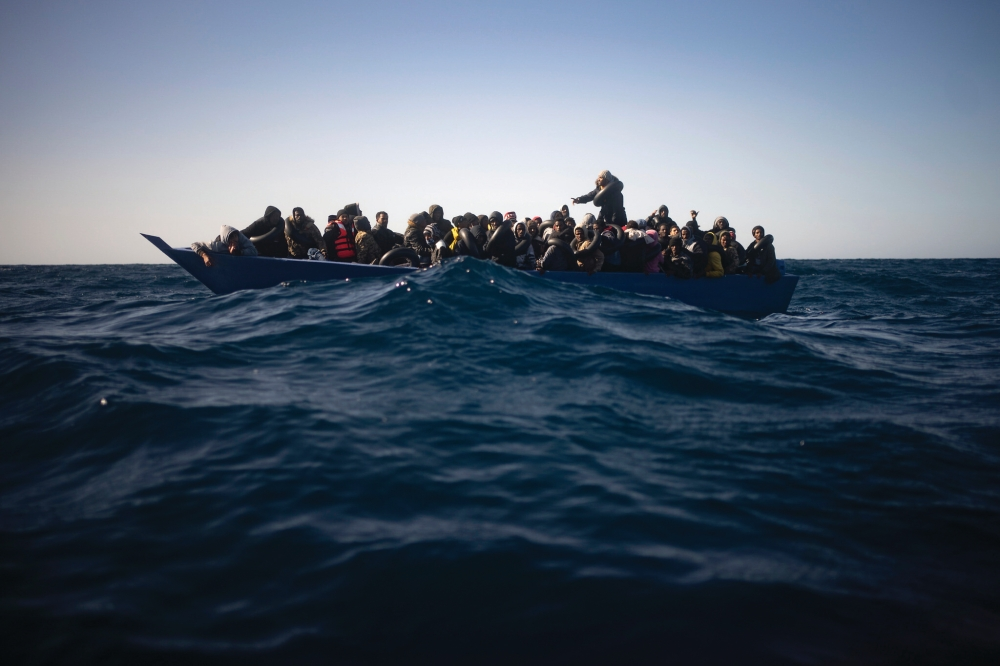
The UN's International Organization for Migration (IOM) reported a horrific humanitarian tragedy in its latest report, with more than 900 migrants killed or missing in the Red Sea during 2025. This alarming figure makes it the deadliest year on record for those using the "Eastern Route" connecting the Horn of Africa and the Arabian Peninsula. These statistics highlight the worsening irregular migration crisis in the region and the urgent need for international intervention.
The migrant route in the Red Sea: A perilous journey
Historically, the Eastern Migration Route is one of the oldest and most dangerous migration routes in the world. Every year, tens of thousands of people, mainly from Horn of Africa countries like Ethiopia and Somalia, risk their lives in a desperate attempt to reach the oil-rich Gulf states. This arduous journey often begins with crossing the border into Djibouti, followed by boarding flimsy boats operated by smugglers to cross the Red Sea to the Yemeni coast. Armed conflicts, natural disasters, and dire economic conditions drive these individuals to make this perilous decision to escape their harsh realities.
In this context, Tania Pacifico, head of the International Organization for Migration (IOM) mission, told AFP that “2025 was the deadliest year on record on the Eastern Migration Route, with 922 people killed or missing, double the number of victims in the previous year.” She noted that the vast majority of these victims were Ethiopian nationals.
The deep roots of the crisis: poverty and conflict in Ethiopia
To understand the true motivations behind these mass migrations, one must examine the internal situation in Ethiopia, the second most populous country in Africa, with nearly 130 million inhabitants. According to World Bank reports, more than 40 percent of Ethiopians live below the extreme poverty line. Furthermore, the country has recently suffered from devastating armed conflicts, most notably the bloody civil war in the northern Tigray region, which claimed the lives of more than 600,000 people between 2020 and 2022, according to African Union estimates, which many experts believe may be an underestimate.
Despite the end of large-scale military operations, the humanitarian consequences remain catastrophic. A local official told AFP that some 1,300 people have recently died from severe hunger and a lack of essential medicines in displacement camps scattered across Tigray. While Ethiopia is projected to achieve 10 percent economic growth by 2026, which could theoretically reduce migration flows, high inflation rates, which approached 10 percent in February, are undermining this progress and exacerbating the economic hardship faced by citizens.
Regional and international repercussions of the humanitarian crisis
The effects of this crisis are not limited to countries of origin; they extend to pose a complex regional and international challenge. Neighboring and transit countries such as Djibouti and Yemen are bearing burdens beyond their capacity, placing immense pressure on their limited infrastructure and local resources. Internationally, humanitarian organizations are sounding the alarm about funding gaps that threaten relief programs, necessitating urgent intervention from the international community to provide the necessary support and develop comprehensive strategies to address the root causes of irregular migration and combat human trafficking networks.
Yemen: A transit point turns into a deadly trap
The tragedy doesn't end with simply surviving the perilous sea crossing; many who manage to cross find themselves stranded in Yemen, the poorest country in the Arabian Peninsula. This country, ravaged by a devastating civil war for nearly a decade, has become a deadly trap for migrants. There, they struggle to survive in dire humanitarian conditions, caught between the flames of local conflict and a complete lack of livelihoods. Some even choose to return home and face the dangers of the sea again rather than remain trapped in the hell of war and despair.