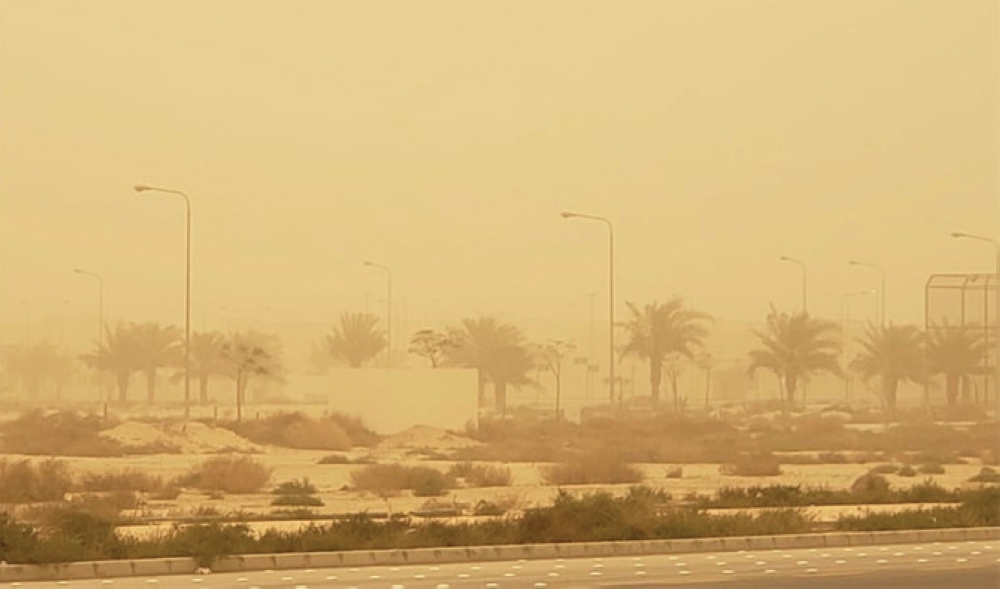
The National Center for Meteorology in Saudi Arabia issued a red alert on Monday, warning of unstable weather conditions directly affecting the Al-Jawf and Northern Borders regions. This warning is part of the center's ongoing monitoring of weather fluctuations to ensure the safety of citizens and residents.
Weather details and affected areas
The center explained in its report that the weather conditions include strong surface winds stirring up dust and sand, leading to the formation of powerful dust storms. The warning identified specific cities and governorates that will be at the heart of these conditions: Al-Qurayyat and Tabarjal in the Al-Jawf region, as well as the governorate of Tarif in the Northern Borders region. Forecasts indicate that these storms will cause near-zero horizontal visibility, potentially dropping to less than one kilometer, necessitating the utmost caution.
Red alert indications and the importance of the warning
The "Red Alert" is the highest level of alert in the National Center for Meteorology's automated early warning system, indicating the need for immediate precautionary measures and avoidance of hazardous areas. This system reflects the advanced meteorological infrastructure in the Kingdom, aiming to mitigate risks from natural disasters and severe weather conditions. These warnings are of paramount importance to drivers on highways connecting the northern regions of the Kingdom, as dust storms increase the likelihood of traffic accidents due to reduced visibility.
Fog and reduced visibility alerts
In a related development concerning the general weather conditions in the Kingdom, the meteorological report not only addressed dust storms but also included prior warnings about the formation of fog of varying intensity. Fog covered large areas of nine administrative regions during the early morning hours, reducing horizontal visibility to between 3 and 5 kilometers in some locations and to near-zero visibility (1-3 kilometers) in others.
Public safety guidelines
The relevant authorities, including Civil Defense and Highway Patrol, are urging everyone to adhere to safety instructions during these weather fluctuations. Those with respiratory conditions and asthma are advised to avoid direct exposure to dust. Drivers are strongly urged to use hazard lights, maintain a safe following distance, or come to a complete stop at designated rest areas if visibility becomes zero until the storm subsides.