An astronomical phenomenon adorns the sky of Ramadan
The Jeddah Astronomical Society announced that the skies of the Kingdom and the Arab world will witness the arrival of the first quarter moon of Ramadan on Tuesday evening, February 24, 2026. The Society's president, Engineer Majid Abu Zahra, explained that this astronomical phenomenon will peak at 3:27 PM Mecca time, marking the completion of a quarter of the moon's orbit around the Earth since the beginning of the month.
What is the first-quadrant phase? The scientific context of the phenomenon
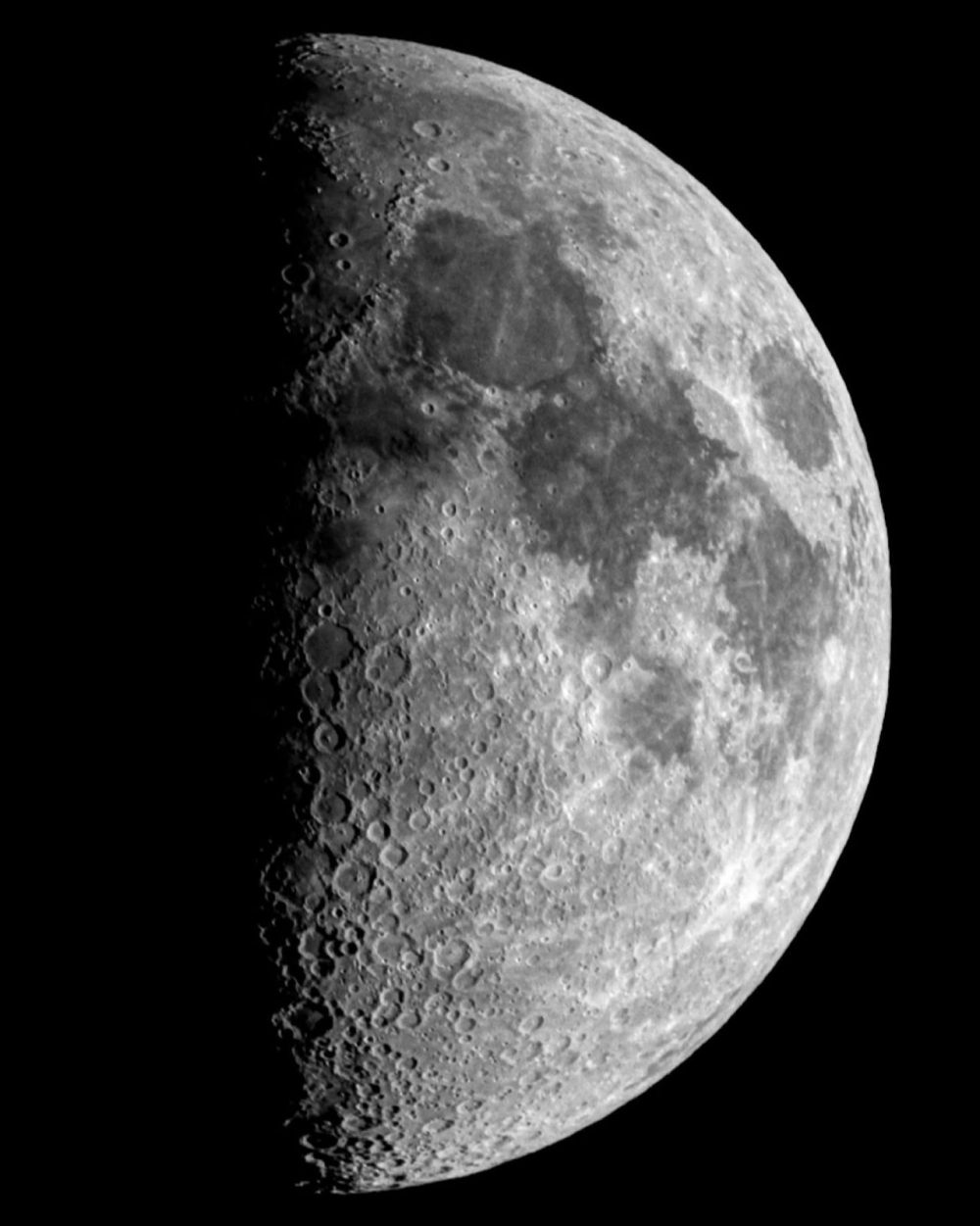
The first quarter phase occurs when the Moon forms a 90-degree angle with the Sun from our perspective on Earth. At this stage, half of the Moon's face is fully illuminated by sunlight, while the other half is in darkness. Although we see half the Moon illuminated, it is called the "first quarter" because it has completed a quarter of its monthly orbit around our planet, which takes approximately 29.5 days. This phase, along with the last quarter, is one of the key milestones in the lunar cycle, which begins with the new moon and waxing crescent and culminates in the full moon.
The importance of the phases of the moon in culture and history
The phases of the moon have always been intertwined with human life, serving as the primary means by which people divided time and determined months. In Islamic culture, observing the moon holds particular significance, as the Islamic calendar is fundamentally lunar, and all religious rites and occasions depend upon it, most notably determining the beginning and end of Ramadan and Eid al-Fitr. Following the moon's transformation from a new crescent to a quarter and then to a full moon is a celestial journey that reflects the passing of blessed days and adds a spiritual and cosmic dimension to the act of fasting.
A golden opportunity for astronomy and photography enthusiasts
The first quarter phase is considered one of the best times to observe the lunar surface and its topography. This is due to the Terminator, the line separating the illuminated and dark sides of the Moon. At this line, sunlight strikes the Moon at a very oblique angle, casting long shadows behind mountains and craters, thus highlighting the surface details in a stunning three-dimensional way. Observers can enjoy the view of the Moon with the naked eye, but using binoculars or a small telescope will reveal a captivating world of craters, mountains, and lunar maria with remarkable clarity.
How and when can you observe the first quarter moon?
The moon will be visible in the sky shortly after sunset, reaching its highest point, before beginning its descent towards the western horizon to set around midnight. This timing makes it an ideal target for observation during Ramadan evenings, allowing families and astronomy enthusiasts to easily enjoy the view. As the days progress, the illuminated portion of the moon will gradually increase each night, transitioning to the waxing gibbous phase, on its journey towards becoming a full moon in the middle of Ramadan.