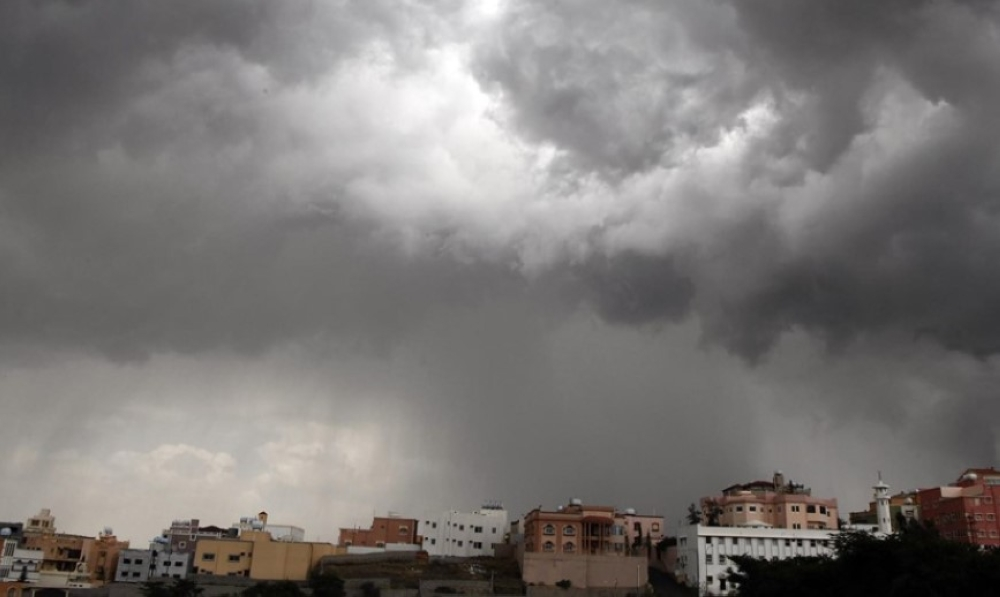
The Ministry of Environment, Water and Agriculture announced in its daily report the latest rainfall statistics in Saudi Arabia , noting that 104 hydrological and climatological monitoring stations across 10 different regions of the Kingdom recorded varying amounts of rain over the past 24 hours. The Asir region recorded the highest amounts, reflecting the continued heavy rainfall affecting the southwestern parts of the country.
Rainfall distribution map: Asir and Riyadh are in the lead
The detailed report indicated that the Asir region recorded the highest rainfall at 46.2 mm in Al-Shaaf, Abha Governorate, followed by Al-Fawha in Balqarn with 35.1 mm, Abha Airport with 33.3 mm, Al-Asran in Sarat Abidah with 33.0 mm, and Al-Khalaf with 32.4 mm. Other areas in Asir, such as Wadi Dhahab, Radoum, and Al-Harjah, recorded amounts ranging between 24.9 and 28.0 mm. In the Riyadh region, Al-Aflaj Governorate recorded 35.2 mm, while Al-Masani' neighborhood in the capital recorded 14.0 mm, Al-Hair 12.8 mm, and Wadi Al-Dawasir Airport 9.7 mm.
Rates vary in the Eastern Province, Jazan, and other regions
In the Eastern Province, Al-Ahsa Airport recorded 27.0 mm of rainfall, Al-Qadisiyah neighborhood in Dammam 21.6 mm, and Al-Dughaimiyah village in Al-Khobar 18.4 mm. In the Jazan region, rainfall reached 26.5 mm in Al-Dayer and 14.6 mm in Al-Haqou in Bish. The report also included Tabuk, which recorded 20.0 mm in Rahib, and Najran, which recorded 7.9 mm in Badr Al-Janoub. Makkah recorded 4.6 mm in Kiyad in Al-Qunfudhah, Al-Jawf recorded 4.0 mm in Wa'lah in Tabarjal, Al-Baha recorded 0.8 mm in Baljurashi, and the Northern Borders region recorded 0.5 mm in Rafha.
Climate in the Kingdom: Ongoing efforts to monitor weather phenomena
Historically, Saudi Arabia has a predominantly arid desert climate, although the southwestern highlands, such as Asir, Al-Baha, and Jazan, receive higher rainfall due to their mountainous terrain and the influence of monsoon winds. The Saudi government has prioritized the development of environmental monitoring infrastructure, establishing a vast network of hydrological and climatological monitoring stations under the Ministry of Environment, Water and Agriculture. These stations aim to provide accurate and real-time readings that aid in water resource management, flood forecasting, and the protection of lives and property, reflecting the significant advancements in the national meteorological system.
The economic and environmental impact of increased rainfall in Saudi Arabia
Rainfall in Saudi Arabia is of paramount importance, extending far beyond simply moderating the climate. It plays a vital role in supporting the agricultural sector and enhancing vegetation cover within the framework of the "Green Saudi Arabia" initiative. Locally, this rainfall contributes to replenishing dams and groundwater, which are essential sources of fresh water. Furthermore, the abundant rainfall in regions like Asir strengthens its position as a leading tourist destination, positively impacting the local economy by stimulating domestic tourism. Regionally and internationally, this accurate data contributes to enhanced cooperation in meteorology and addressing climate change, which affects the Middle East and the world.