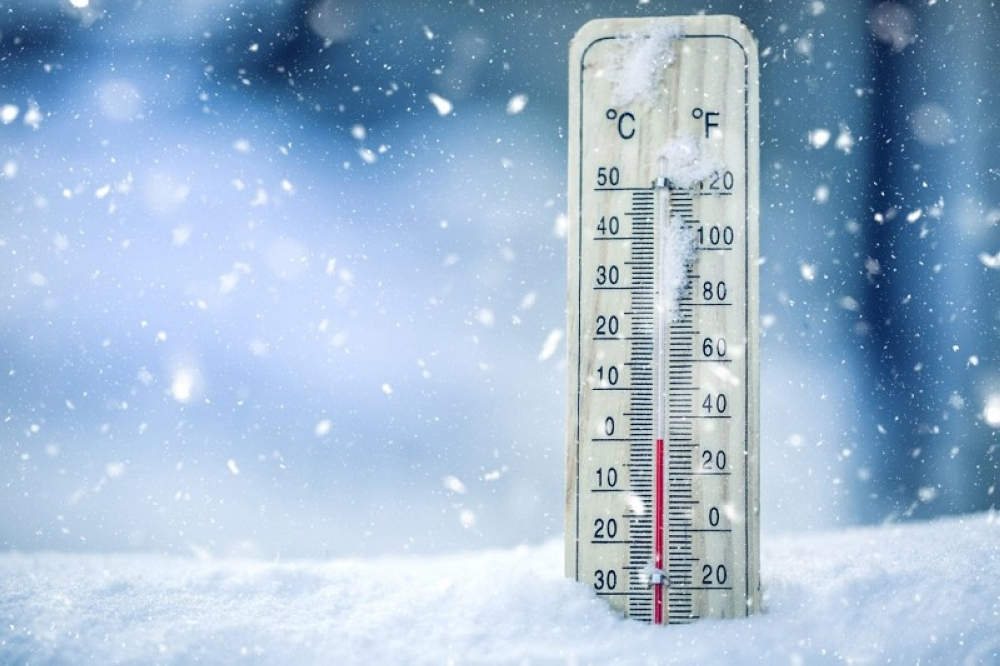
The National Center for Meteorology in Saudi Arabia announced the latest weather updates, reporting a sharp drop in temperatures in Rafha Governorate, reaching as low as -2 degrees Celsius. This reflects the peak of the cold wave currently affecting the northern regions of the Kingdom. This significant decrease coincides with strong surface winds that are stirring up dust and sand, leading to reduced horizontal visibility in several areas. This situation necessitates taking precautions.
Climate data indicates that this drop in temperatures is a natural characteristic of the Kingdom's winter climate, particularly in the Northern Borders region. Geographically, cities like Rafha, Tarif, and Arar serve as the first line of defense and the primary recipient of cold air masses originating from higher latitudes (whether Siberian or polar). These geographical features make the region prone to frequent freezing and sub-zero temperatures, often leading to frost formation in the early morning hours, which directly impacts daily life and agricultural activities.
Regarding wind activity, the report explained that its impact extends beyond simply making the weather feel colder; it also poses a challenge to motorists on highways and in open areas. Active, dust-laden winds significantly reduce visibility, increasing the likelihood of traffic accidents if safety rules and speed limits are not observed in such volatile weather conditions.
These warnings are of paramount importance both locally and in terms of public services, prompting road safety authorities to increase their preparedness to deal with any emergency. Ongoing medical advice is also being issued to citizens and residents, especially the elderly, children, and those with respiratory conditions, urging them to wear heavy winter clothing and avoid direct exposure to cold drafts and dust to protect their health and safety.
In conclusion, the National Center of Meteorology stresses the need to follow current weather bulletins and early warnings, as winter weather fluctuations in desert areas can be rapid and severe, requiring continuous community awareness to deal optimally with these climatic conditions.