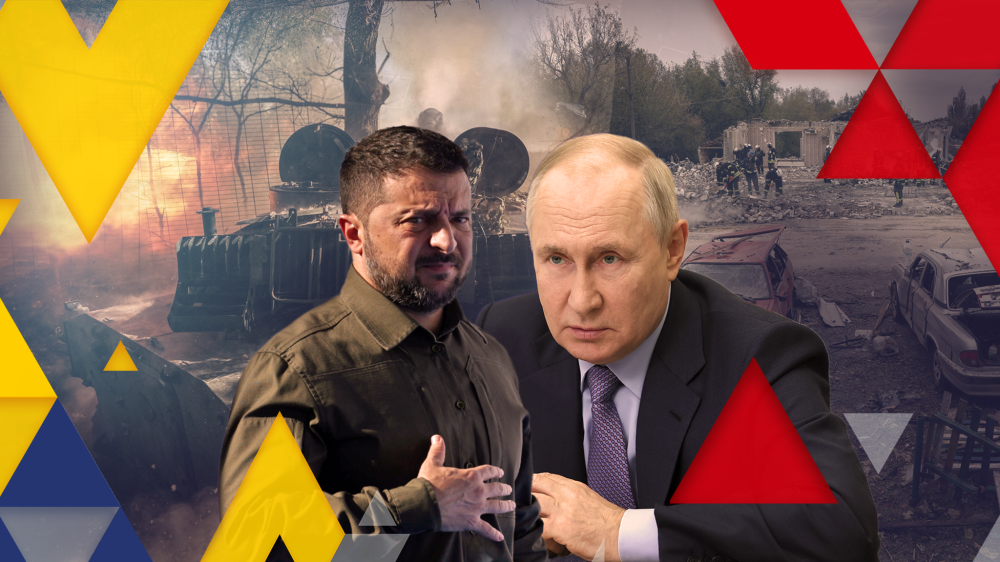
As the bells of the new year 2026 rang out, a stark contrast emerged in the political and military rhetoric between the two sides of the biggest conflict in Europe, as Russian President Vladimir Putin and his Ukrainian counterpart Volodymyr Zelensky charted completely different paths for the future of the years-long war, reflecting the complexities of the field and diplomatic landscape.
Putin: A bet on patience and support for "heroes"
In his traditional annual address, Russian President Vladimir Putin adopted a defiant and assertive tone, promising his people a complete victory in Ukraine. Putin went beyond mere promises, directly urging Russians to strengthen national unity and support the soldiers he described as "heroes," declaring, "We believe in you and in our victory." These statements underscore the continuation of the Russian military doctrine that relies on the passage of time and the attrition of the enemy, despite the high costs of war.
What was striking about Putin's speech was his complete disregard for the attacks that Moscow accuses Kyiv of launching against sensitive sites, including the alleged targeting of his residence in the Novgorod region. Analysts interpret this omission as an attempt to maintain an image of "control" and avoid granting the other side a media victory, while focusing instead on reassuring the Russian public that operations are proceeding according to plan.
Zelensky and the crucial 10% equation
On the other hand, Ukrainian President Volodymyr Zelenskyy made a diplomatic surprise in his speech, announcing that his country was closer than ever to ending the war. Zelenskyy indicated that the peace agreement was "90% complete," placing the onus on the international community and the negotiating parties to finalize the remaining 10%.
In his televised address, Zelensky stressed that this remaining, slim margin "will determine the fate of peace, and the fate of Ukraine and Europe." Experts point out that this remaining margin often relates to the most complex points in any negotiation, such as long-term security arrangements, the final demarcation of borders, and guarantees against a recurrence of aggression—issues that have formed the core of the conflict since the outbreak of war in February 2022.
The context of the conflict and its geopolitical implications
These statements come as the conflict enters its new year amidst profound geopolitical shifts. Since the start of the Russian military operation on February 24, 2022, the conflict has transformed from a predicted lightning offensive into a protracted war of attrition that has reshaped international alliances. The conflict has isolated Russia from a significant portion of the Western economy, prompted Finland and Sweden to join NATO, and transformed Ukraine into one of the most heavily armed countries in Europe, with unprecedented Western support.
Talk of a "peace agreement" at this juncture is highly significant; it suggests that both sides may have reached a state of military exhaustion, or that there is intense international pressure to end a conflict that has negatively impacted global energy and food security. However, the greatest challenge remains bridging the gap between the "victory" Putin promises and the "just peace" Zelensky demands, as each side believes that conceding the remaining 10% could infringe upon national sovereignty or the very existence of the state.
In conclusion, the world is waiting to see what the first months of 2026 will bring, and whether the remaining 10% will be a bridge towards European stability, or will turn into a gap that reignites the battles with greater ferocity.