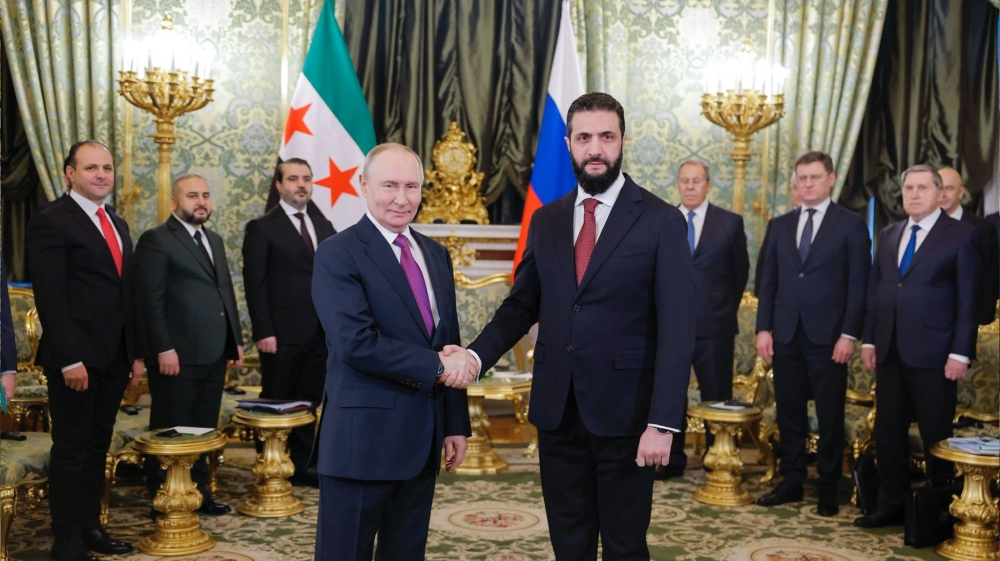
في خطوة دبلوماسية بالغة الأهمية، استقبل الرئيس الروسي فلاديمير بوتين في الكرملين، القائد السوري أحمد الشرع، في أول لقاء رسمي على هذا المستوى منذ التغيرات الجذرية التي شهدتها سوريا. تركزت المباحثات على رسم ملامح مستقبل العلاقات الثنائية، ومناقشة الوضع الإقليمي، وتحديد مصير الوجود العسكري الروسي في سوريا، في مرحلة ما بعد سقوط نظام بشار الأسد.
خلفية تاريخية وسياق اللقاء
يأتي هذا اللقاء في أعقاب التحول السياسي المفاجئ الذي شهدته دمشق في ديسمبر 2024، والذي أدى إلى إنهاء حكم عائلة الأسد الذي استمر لعقود. وكانت روسيا، منذ تدخلها العسكري في عام 2015، الحليف الأبرز لنظام الأسد، حيث لعبت دوراً حاسماً في بقائه في السلطة طوال سنوات الحرب الأهلية. يمثل هذا الاجتماع تحولاً استراتيجياً في السياسة الروسية، حيث تسعى موسكو للحفاظ على مصالحها الحيوية في سوريا، بما في ذلك قواعدها العسكرية في حميميم وطرطوس، وتأمين نفوذها في منطقة الشرق الأوسط، عبر الحوار المباشر مع السلطة الجديدة في دمشق.
أبرز محاور المباحثات وتأثيرها المتوقع
خلال اللقاء، أكد الرئيس بوتين على أن العلاقات بين البلدين “تتطور إيجابياً”، مشيداً بالجهود التي تبذلها القيادة السورية الجديدة لتحقيق الاستقرار. وأشار إلى أن روسيا وسوريا نجحتا في تعزيز التعاون الاقتصادي، معرباً عن استعداد شركات البناء الروسية للمشاركة بفعالية في عملية إعادة إعمار سوريا، التي دمرتها سنوات طويلة من الصراع. من جانبه، شدد أحمد الشرع على الدور المحوري الذي تلعبه روسيا في استقرار الوضع، مؤكداً على وجود “موضوعات مشتركة ومصالح متبادلة” بين موسكو ودمشق. وأعرب عن تطلعه إلى أن تشهد منطقة الشرق الأوسط مرحلة جديدة من الاستقرار والتنمية.
الأهمية الاستراتيجية للقاء
على الصعيد المحلي، يمنح هذا اللقاء دفعة قوية للشرعية الدولية للحكومة السورية الانتقالية، ويوفر غطاءً سياسياً ضرورياً لبدء مرحلة إعادة بناء الدولة. أما إقليمياً، فيبعث اللقاء برسالة واضحة إلى القوى الإقليمية الأخرى، مثل تركيا وإيران، بأن روسيا لا تزال لاعباً أساسياً لا يمكن تجاوزه في الملف السوري. وعلى المستوى الدولي، يوضح هذا التقارب قدرة موسكو على التكيف مع المتغيرات الجيوسياسية بسرعة للحفاظ على مصالحها، ويفتح الباب أمام تفاهمات دولية جديدة حول مستقبل سوريا، بما في ذلك ملفات مكافحة الإرهاب وعودة اللاجئين.