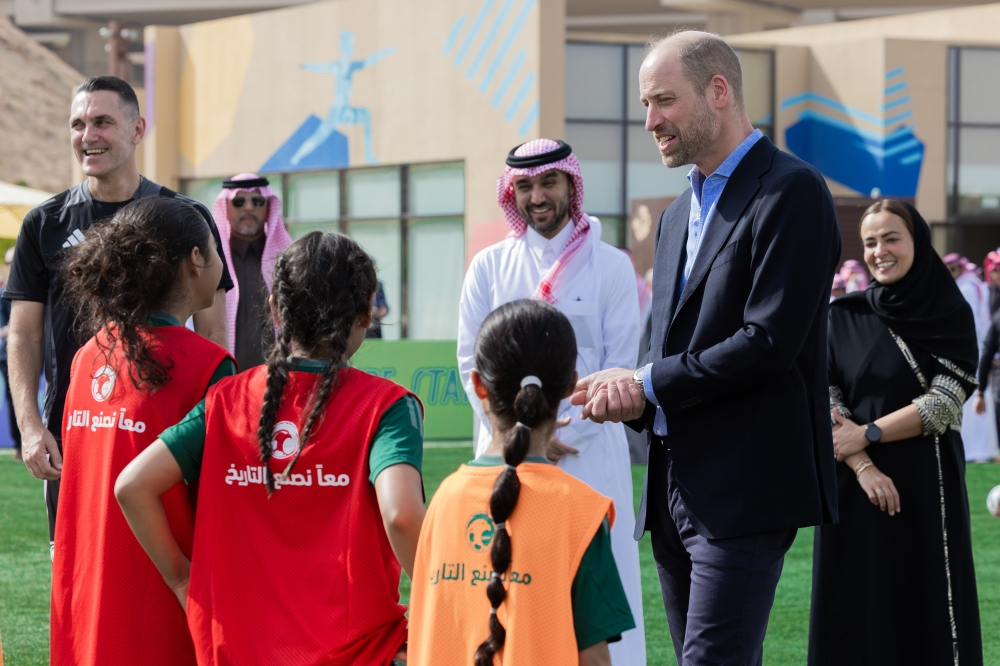
In an official visit reflecting the deep ties between the United Kingdom and the Kingdom of Saudi Arabia, His Royal Highness Prince William, Prince of Wales and heir to the British throne, observed a training session for female athletes at one of the regional training centers for girls in the non-profit Mohammed bin Salman City (MiSK). This visit, during which he was accompanied by His Royal Highness Prince Abdulaziz bin Turki Al-Faisal, Minister of Sport, highlighted the rapid developments taking place in the women's sports sector in Saudi Arabia.
Historical background and developmental context
This visit marks a significant milestone in the journey of Saudi women's football, which has witnessed remarkable progress in recent years. After decades of limited female participation in public sports, the spark of change ignited as a key component of Saudi Vision 2030, which aims to empower women and increase their contribution across all sectors. Within this framework, the first national women's team was established in 2021, preceded by the launch of the first official women's football league in 2020. These achievements would not have been possible without substantial government support, investment in infrastructure, and the establishment of specialized training centers to attract and develop young talent.
The importance of the visit and its expected impact
During the visit, Prince William met with the players and the technical and administrative staff. Professor Lamia Bin Bahyan, Vice President of the Saudi Arabian Football Federation, provided a comprehensive explanation of the Federation's strategy for developing women's football and the efforts being made to raise the players' technical performance level. The presence of a global figure of the stature of the Prince of Wales, who also serves as President of the English Football Association, lends significant international momentum to these efforts. Locally, this gesture is a tremendous source of inspiration and encouragement for current players and the next generation of girls, and it underscores that their aspirations are receiving global attention and appreciation.
On the international level, the visit reinforces Saudi Arabia's image as a country undergoing positive social transformation and opens new horizons for sports cooperation between the two countries, including the exchange of expertise, the establishment of training camps, and friendly matches. It also contributes to changing stereotypical perceptions and provides tangible evidence of the progress made in women's empowerment, which aligns with the Kingdom's goals of enhancing its soft power on the global stage.