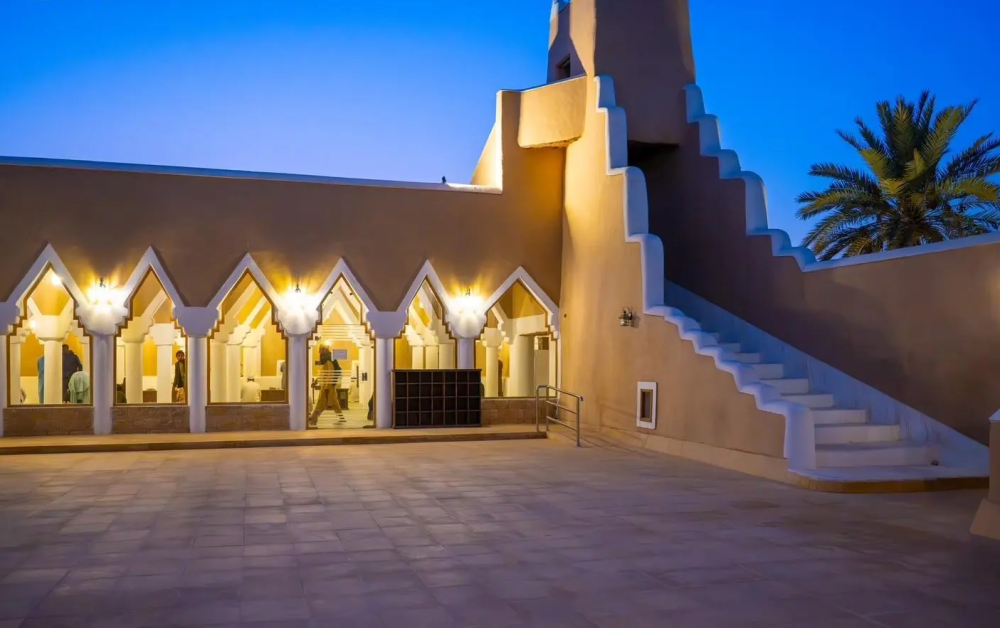
In a move reflecting the great importance placed on the national heritage and cultural legacy of the Kingdom of Saudi Arabia, the Prince Mohammed bin Salman Project for the Development of Historical Mosques includes the Al-Qibli Mosque in the old town of Manfouha in Riyadh. This mosque, considered an architectural masterpiece and a testament to the history of the Saudi state, dates back to the reign of the founding King Abdulaziz bin Abdul Rahman Al Saud – may God have mercy on him – and was built to serve as a religious beacon and social center for the people of the area.
General context: Preserving identity within Vision 2030
The restoration of the Al-Qibli Mosque comes as part of the second phase of Prince Mohammed bin Salman’s project to develop historical mosques, which aims to preserve and rehabilitate 130 historical mosques across the Kingdom. This national project is not limited to architectural restoration; it also aims to restore the vital role of these mosques as centers of worship, guidance, and knowledge, while preserving their authentic architectural character that reflects the cultural identity of each region. The project aligns directly with the goals of the Kingdom’s Vision 2030, which emphasizes the importance of preserving and promoting Saudi Arabia’s Islamic and national heritage and fostering pride in national identity.
The historical and architectural importance of the Al-Aqsa Mosque
The Qibli Mosque was built by order of King Abdulaziz, and its construction was overseen by the builder Abdullah bin Masoud. The mosque acquired its name, "Qibli," due to its location west of the town of Manfouha and its proximity to the Emirate Palace on the southeastern side, making it the closest mosque to the seat of government in the town, where princes and high-ranking officials would pray. The mosque represents a unique example of traditional Najdi architecture, relying on local natural materials such as mud and plaster, with tamarisk wood and palm fronds used for its roofing. It covers a total area of approximately 500 square meters and consists of an inner prayer hall, an outer courtyard, and a lower prayer room known for its moderate temperature, which was used for prayer during periods of extreme cold.
Details of the development process and preservation of authenticity
The development of the Al-Qibli Mosque focuses on its revitalization while meticulously preserving its original architectural features. The same materials and techniques used in its initial construction are being employed to ensure the restoration of its historical character. The mosque's roof rests on 33 columns arranged in three rows, and a towering minaret rises from its northern side. The mosque has undergone several restorations throughout its history, most notably in 1364 AH (1945 CE), followed by another development project that began in 1414 AH (1993 CE). Today, the current development, part of the Crown Prince's project, aims to ensure its sustainability for future generations by providing it with the necessary modern services without compromising its heritage identity, thus preserving it as the last remaining mud-brick mosque in the old town of Manfouha.
Expected impact: Enhancing religious and cultural standing
The restoration of the Qibli Mosque not only preserves a prominent historical landmark but also enhances its religious and cultural significance in the heart of Riyadh. Locally, the mosque will once again serve worshippers and become a center for community activities, strengthening social bonds among the neighborhood's residents. Nationally, the project highlights the Kingdom's efforts in caring for mosques and its architectural heritage, offering a living example for new generations of their country's history and the authenticity of its architectural arts. This attention to heritage sites also contributes to enriching the Kingdom's cultural tourism map and attracting those interested in history and Islamic architecture from around the world.