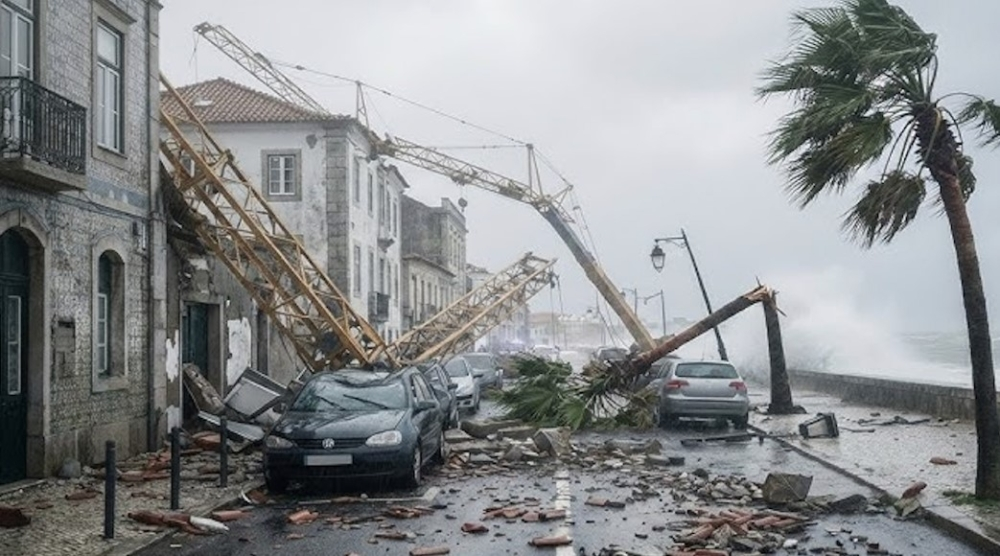
Portugal has been hit by a series of violent storms that have caused a humanitarian and economic disaster, leaving widespread destruction and claiming 11 lives so far. Portuguese authorities have announced that the initial financial losses from these natural disasters could exceed €4 billion, a figure that reflects the severity of the damage to infrastructure and private property.
Heavy rains and strong winds that battered the Iberian Peninsula caused widespread flooding and landslides, cutting off roads and leaving hundreds of thousands of homes without power. Authorities forced thousands of residents to evacuate to safer areas, particularly in low-lying regions and near overflowing rivers. Among the tragedies, rescue teams found the body of a 70-year-old man in his car, which had been submerged by floodwaters in the town of Serpa, bringing the confirmed death toll to [number missing].
General context and impacts of climate change
These storms come within a global context of increasingly frequent extreme weather events, which scientists directly link to climate change. Southern Europe, including Portugal and Spain, is no longer immune to these changes. After years of severe drought, the region now faces the opposite challenge: rainfall exceeding the capacity of its infrastructure to handle it. Experts warn that these events will become more frequent and intense in the future, placing immense pressure on governments to invest in early warning systems and develop more resilient and disaster-resistant infrastructure.
Importance and expected effects
Domestically, the €4 billion in losses represent a significant blow to the Portuguese economy, directly impacting vital sectors such as agriculture, where the floods destroyed vast areas of the harvest, as well as tourism and infrastructure. Rebuilding the affected areas will be a lengthy and costly process, and the government may have to seek assistance from EU solidarity funds.
Regionally, the damage was not limited to Portugal alone, but extended to neighboring Spain, which also experienced flooding and the closure of roads and schools. This event highlights the need to strengthen regional cooperation among the countries of the Iberian Peninsula to address transboundary natural disasters. Internationally, what happened in Portugal serves as another wake-up call, underscoring the urgent need for serious global action to combat climate change. The effects are no longer mere future projections, but a tangible reality costing lives and billions of dollars.