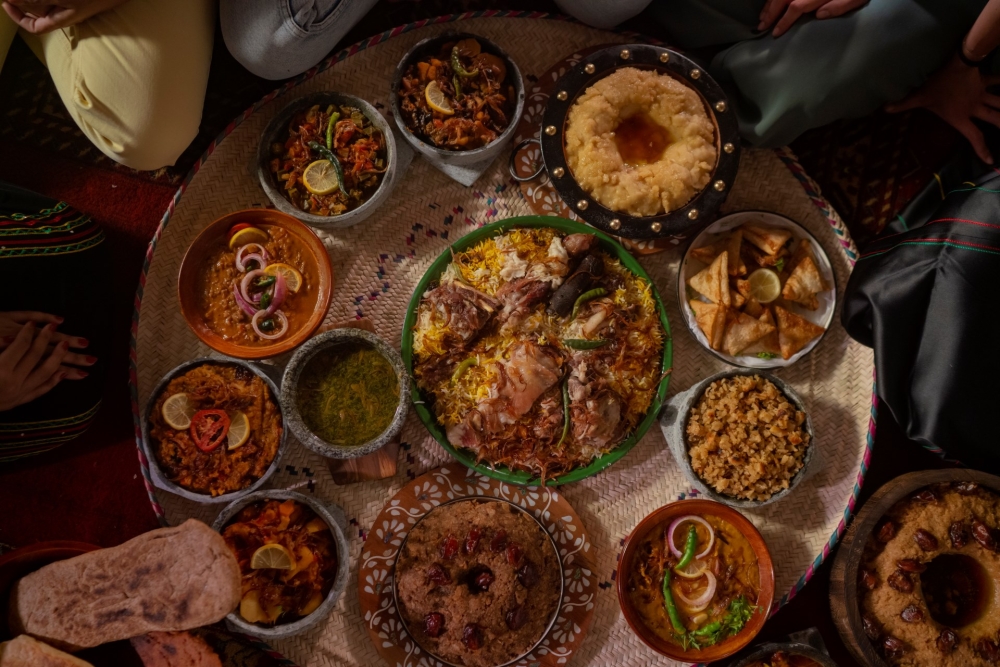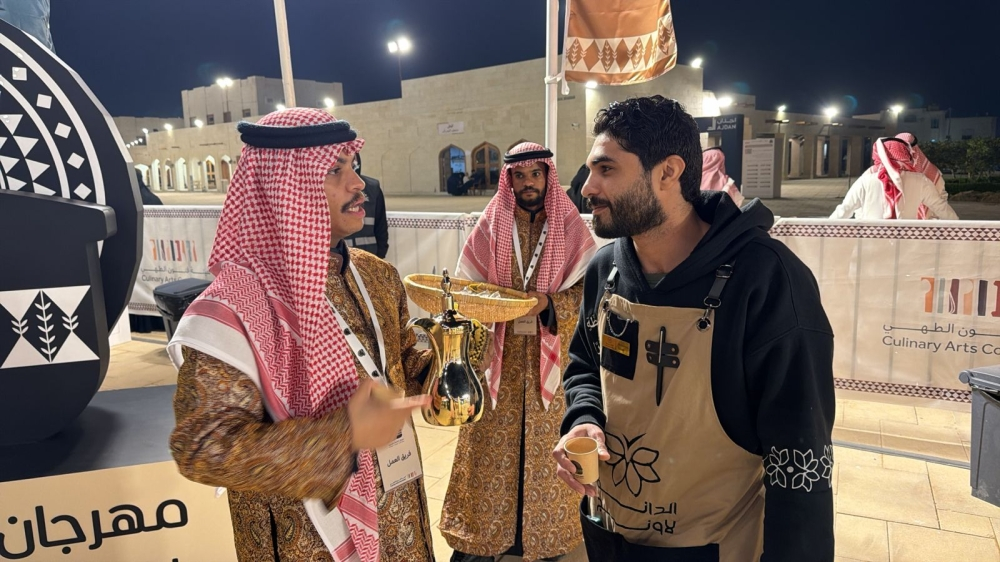
The Culinary Arts Commission launched the "Traditional Food Festival" at the Al-Rams project in the heart of Awamiyah, aiming to provide a comprehensive culinary and cultural experience for visitors to the Eastern Province. This event brings together a diverse array of Saudi culinary heritage, transforming the project's grounds into an open kitchen that reflects the Kingdom's rich geographical and cultural diversity, showcasing more than 20 traditional dishes with a modern, professional touch.
A cultural context that strengthens national identity
This festival is organized as part of the Ministry of Culture and the Culinary Arts Commission's ongoing efforts to document the intangible heritage of the Kingdom of Saudi Arabia, in line with the goals of Vision 2030, which seeks to highlight the country's rich cultural heritage. Culinary arts are an integral part of national identity, with each dish reflecting the story of humanity's connection to its land and natural resources throughout history. These events not only showcase and present culinary traditions but also serve to preserve them and pass them on to future generations.
A culinary journey through the Kingdom's five regions
Around one national table, a select group of Saudi chefs gathered to represent the Kingdom's six regions through dedicated pavilions, offering a live experience for visitors:
- Western Region: Chef Noura Al-Arifi explained that the festival connects food with social occasions, showcasing dishes such as "mantu" stuffed with meat and onions, "balila" (chickpea stew), and "saleeq" (a traditional Taif-style rice dish), in addition to "shorbat al-hub" (a soup made with love), a staple of Ramadan meals in the Hijaz region. Al-Arifi, who hails from the Eastern Province, noted that the cultural diversity allowed her to proudly represent the Western Region.
- Central Region: Chef Abdullah Labi reviewed Najd dishes that are characterized by richness and warmth, such as “Jareesh”, “Matzeez”, and “Kibbeh Hail”, in addition to winter sweets such as “Haneeni” and “Kleija” from Qassim, stressing that they represent a unified identity for the region.
- Northern Region: Chef Munira Abdullah revealed dishes that rely on local environmental resources, such as “Al-Malihiya”, the rare “Al-Bakila” dish made from the wild Samh plant, in addition to “Al-Faqi’a” (truffles) and “Al-Maqtuta”.
- Eastern Province (Host): Chef Tahani Abdullah from Al-Ahsa spoke about the “Shrimp Split” dish as a winter icon, and its traditional method of preparation, along with “Harees” and “Luqaimat”.
- Southern Region: Chef Sakina Al-Farhan presented the “Southern Areeka” dish and “Mifa” bread, praising the Authority’s support for chefs.
Traditional drinks and their economic and tourism dimensions
The experience wasn't limited to food; it extended to include traditional hot drinks. Barista Omar Hassan explained that the menu featured Hijazi almond coffee, Najdi saffron milk, and Al-Ahsa lime, adding a distinctive Saudi touch to the hospitality.
This festival holds immense importance that extends far beyond mere entertainment; it contributes to boosting domestic tourism in Qatif and the Eastern Province, and enhances the status of the Al-Rams project as a cultural and heritage destination. It also plays an economic role by supporting local chefs and productive families, and opening new avenues for investment in the traditional restaurant sector, thus confirming that Saudi cuisine possesses global appeal and the ability to compete effectively.