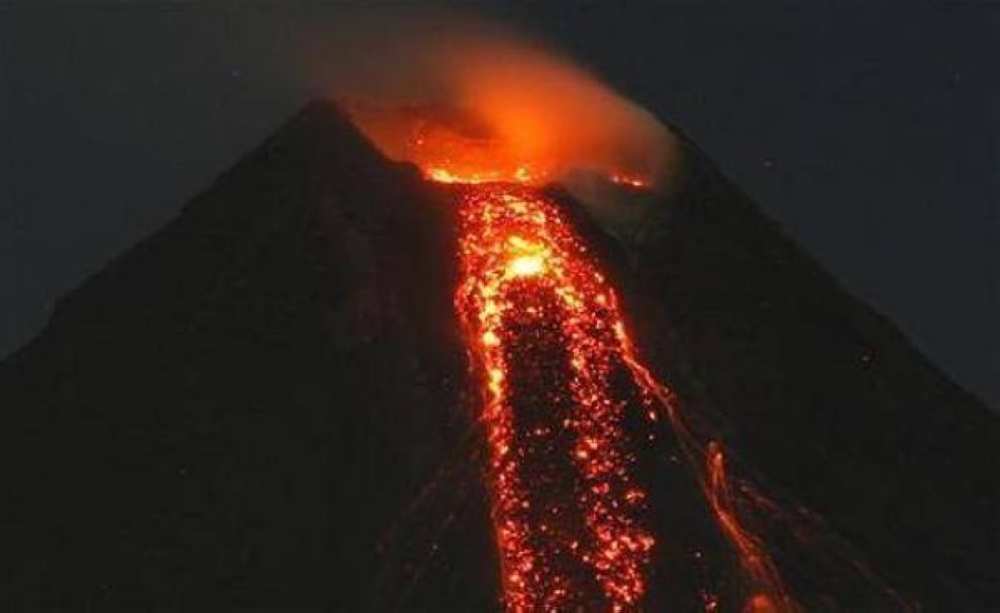
The Philippine Institute of Volcanology and Seismology (PHIVOLCS) issued a strong warning Thursday to residents and tourists to stay away from the vicinity of Mayon Volcano , following the detection of significant volcanic activity and continued lava flows from its crater. This warning is part of precautionary measures to prevent any human-caused disasters that could result from the escalating geological activity in the area.
Intense seismic and rock activity detected
In the technical report, Dr. Teresito Pacolcol, head of the institute, explained that monitoring devices had recorded alarming data up to this morning, including one volcanic earthquake, 162 rockfalls, and 50 lava flows. These indicators point to instability in the Earth's crust surrounding the volcano, necessitating the utmost caution.
Mayon: The Perfect Cone and the Hidden Danger
Mount Mayon, located in Albay province on the island of Luzon, rises to a height of 2,462 meters above sea level. This volcano is one of the most famous tourist attractions in the Philippines and the world, drawing thousands of mountaineers and nature lovers annually thanks to its perfectly symmetrical, cone-shaped form. However, this natural beauty masks immense destructive power; Mayon is considered the most active volcano in the Philippine archipelago.
A history full of volcanic eruptions
Historical records show that Mount Mayon has erupted more than 50 times in the last 400 years, making it an integral part of the region's historical and geological memory. Perhaps the most tragic eruption in its recorded history occurred in 1814, when lava and ash completely buried the town of Kagsawa, leaving thousands dead. Only the church tower remains standing today as a testament to the disaster.
Geological context: The Philippines and the Ring of Fire
These warnings are particularly important given the Philippines' geographical location, as the country lies within the Pacific Ring of Fire. This region is a broad arc of geological fault lines encircling the Pacific Ocean basin and is characterized by intense seismic and volcanic activity. This location makes the Philippines constantly vulnerable to natural disasters, requiring authorities to maintain a high level of preparedness for early warning systems and evacuation plans.
Safety procedures and restricted area
Philippine authorities consistently emphasize the importance of avoiding the “Permanent Danger Zone” (PDZ), which extends a 6-kilometer radius around the volcano. The last major eruption of the volcano occurred in June 2023, forcing authorities to conduct a large-scale evacuation of approximately 20,000 local residents to ensure their safety. Experts stress that adhering to official instructions and staying away from danger zones is the only way to survive amidst the volcano's extreme vulnerabilities.