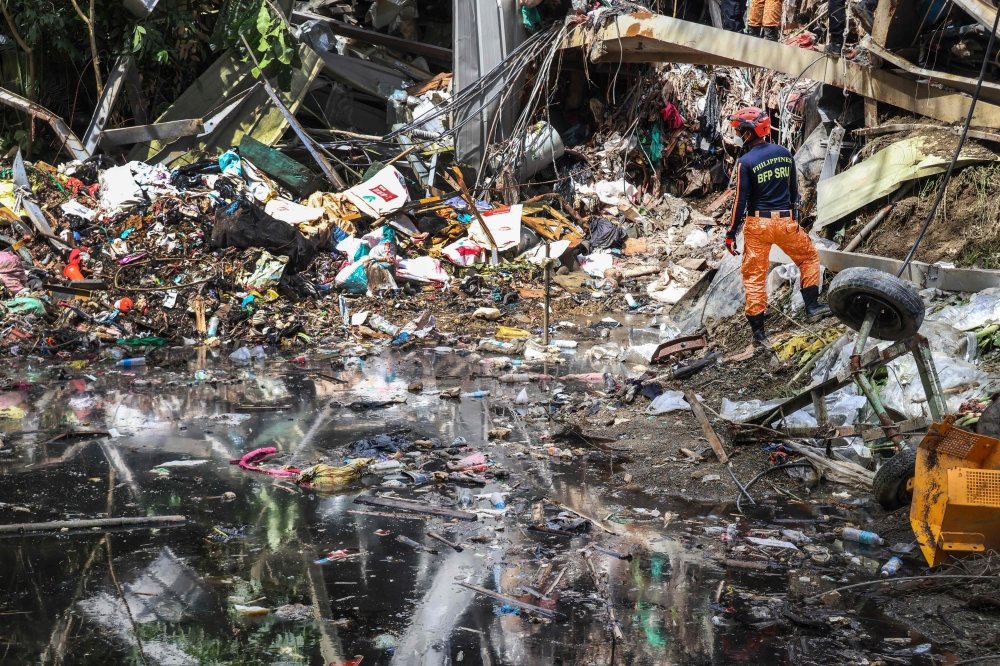
Hopes are fading of finding more survivors after the devastating disaster in the central Philippines, where a massive garbage dump collapsed, burying dozens under tons of debris. Local officials confirmed that the chances of survival are extremely slim as rescue teams continue a desperate race against time and adverse weather conditions to search through the rubble in Cebu City.
With the recovery of another body on Sunday, the confirmed death toll rose to seven, while at least 29 people remain missing. These grim developments come as the initial 72-hour period, known internationally in disaster protocols as the "golden hour" for saving lives, has passed. After this period, the chances of finding survivors diminish significantly due to lack of oxygen, dehydration, and injuries.
Details of the disaster and the stalled rescue efforts
The tragedy occurred last Thursday when a mountain of garbage, roughly twenty stories high, collapsed at the Benaleo landfill, a private facility that receives waste from the city of nearly one million people. Around 50 people were buried under the massive collapse, most of them sanitation workers and garbage collectors who depended on sorting waste for their livelihood.
In a statement to AFP, local fire chief Wendell Villanueva explained the technical challenges faced by the teams, saying, “Yesterday, we detected two possible signs of life using our specialized radar; there were signals of a heartbeat 30 meters below the rubble, but unfortunately, there are no reports of these signals continuing now.” He indicated that it was unlikely there were any survivors after three days of being trapped under tons of debris.
So far, rescue teams have managed to pull 12 workers alive from the rubble and transport them to hospitals for treatment. However, the search operations have faced serious complications, as emergency officials have confirmed that the mountain of waste remains unstable and shifting, endangering the lives of rescuers. Heavy rains have also forced teams to temporarily suspend operations for fear of further collapses.
Social context and the waste management crisis
This incident once again highlights the waste management crisis in the Philippines and other developing countries, where enormous quantities of garbage accumulate in massive landfills that often lack strict safety standards. Cebu City, a major urban center, presents a significant logistical and environmental challenge in waste disposal.
This disaster brings to mind similar tragedies in the Philippines, such as the 2000 collapse of the Payatas landfill in Quezon City, which claimed hundreds of lives. These incidents highlight the daily dangers faced by the poorest residents who are forced to live and work near these landfills, searching for recyclable materials to sell, in the absence of safe and economically viable alternatives.
This incident is expected to open up a wide debate about the need to tighten government control over private and public waste management facilities, and to ensure that such disasters, for which ordinary workers pay the price, are not repeated, in addition to the urgent need to find sustainable solutions for dealing with waste in densely populated cities.