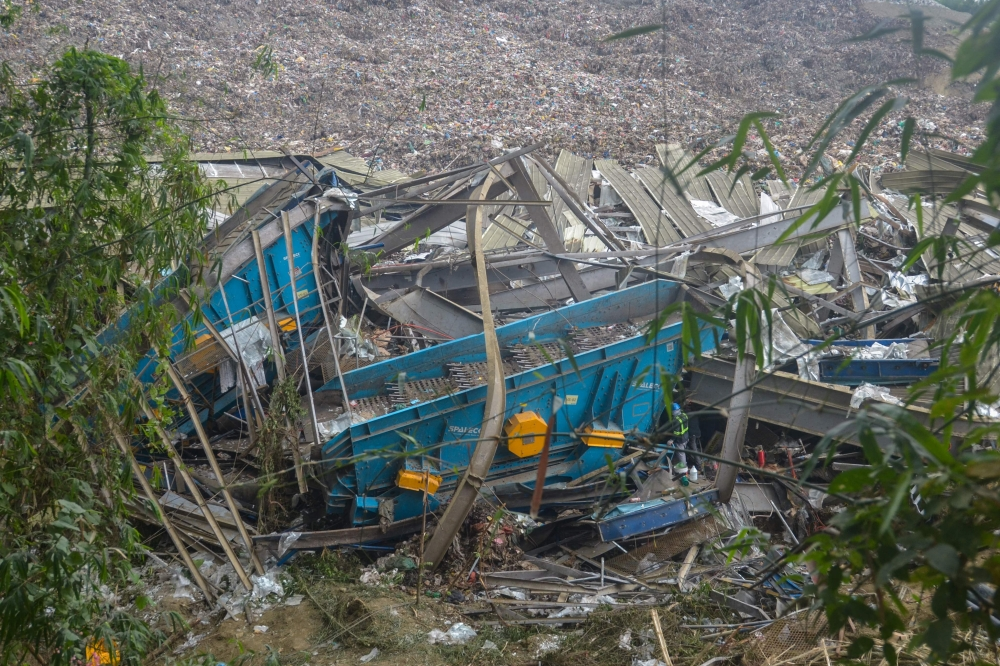
Rescue teams in the central Philippines are engaged in a frantic race against time, using bulldozers and heavy equipment in a desperate attempt to find survivors buried beneath massive piles of garbage following the tragic collapse of a huge landfill in Cebu City. The catastrophic incident buried dozens of sanitation workers and residents, killing at least six people so far, while dozens more remain missing.
Details of the disaster and the stalled rescue efforts
The disaster occurred last Thursday when a mountain of garbage, estimated to be about 20 stories high, collapsed onto buildings and workers' quarters within the Benaleo private facility in Cebu City. According to field sources, approximately 50 people were buried alive under the rubble and accumulated waste.
Jo Reyes, a member of the rescue team, told AFP that the rescuers faced numerous challenges and the constant risk of further collapses as they moved over the unstable piles. She added, "The operations are ongoing, but the ground shifts from time to time, forcing us to temporarily halt work to ensure the safety of the rescuers.".
Logistical challenges and environmental risks
The situation is further complicated by communication network outages and signal disruptions at the disaster site, which are slowing the flow of accurate information and hindering the coordination of efforts. Dave Tomolac, an official with Cebu City Council, explained that six bodies have been recovered so far, while 32 people remain missing. Fortunately, rescue teams have managed to save at least 12 employees and transport them to the hospital for treatment.
The teams face technical obstacles in the form of huge, heavy pieces of steel mixed with waste, as well as the enormous pressure caused by the upper layers of garbage, making the excavation process extremely delicate and dangerous.
General context and waste management crisis in the Philippines
This incident brings to mind past tragedies in the Philippines and highlights the country's chronic waste management crisis. Landfill collapses are a recurring hazard in the archipelago, where many poor and marginalized workers live near or even within these dumps, relying on waste sorting and recycling as their sole source of income.
This disaster evokes memories of the infamous Payatas tragedy of 2000 in Quezon City, where a mountain of garbage collapsed after torrential rains, killing hundreds and displacing thousands. The current Cebu incident underscores the urgent need to review safety standards at waste management facilities, not only to protect the environment but also to safeguard the lives of workers living in hazardous conditions.
This incident is expected to spark a wide-ranging debate at the local and national levels about housing and occupational safety policies, and the need to find sustainable solutions that prevent the recurrence of such humanitarian disasters, the price of which is paid by the most vulnerable groups in society.