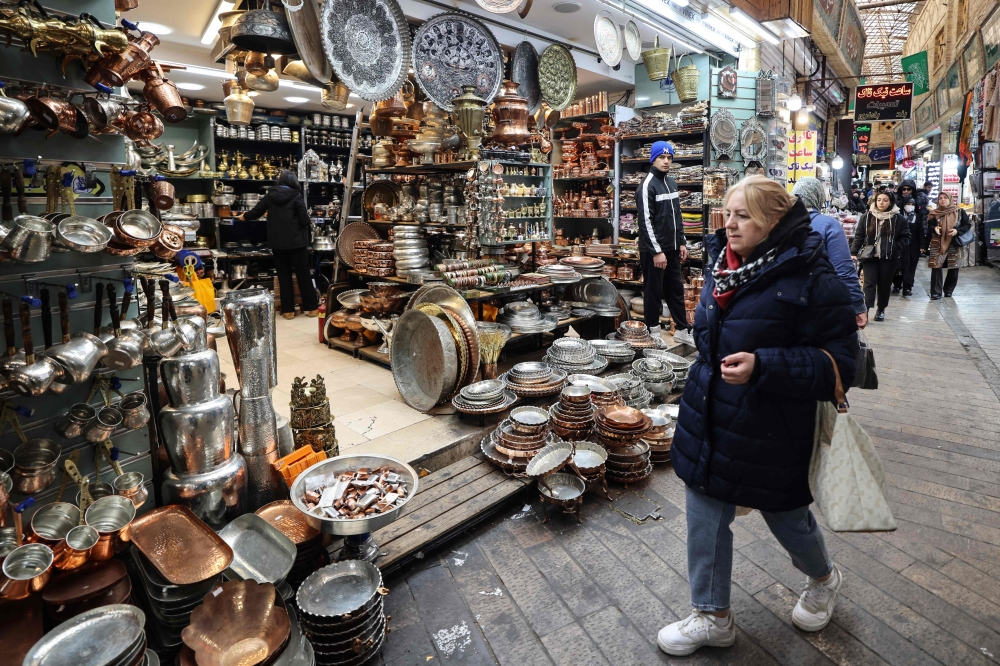
In a striking development reflecting the depth of the economic crisis in Iran, Iranian President Masoud Pezeshkian called on the relevant government agencies to listen to what he described as the "legitimate demands" of the protesters, following a wave of protests and the closure of shops in the capital, Tehran.
Iranian state media reported on Monday night that the president's directives came two days after shop owners in Tehran closed their stores, expressing their rejection of the rapidly deteriorating economic situation and the insane rise in the cost of living that has burdened citizens and merchants alike.
A call for dialogue and responsibility
In remarks carried by the official IRNA news agency, Pezeshkian confirmed via the X platform that he had instructed the Interior Minister to open direct channels of dialogue with representatives of the protesters. The Iranian president stated, "I have requested that the legitimate demands of the protesters be heard through dialogue with their representatives, so that the government can act responsibly and with all its might to resolve the problems and respond to them.".
Pezeshkian added, stressing the priority of the economic file on his government's agenda: "The people's livelihood is our daily concern. We have fundamental measures underway to reform the monetary and banking system, and preserving the people's purchasing power is at the top of our priorities at this sensitive stage.".
Currency collapse and hyperinflation
These political moves come at a time when the Iranian rial has hit a new record low against the US dollar. According to unofficial black market data, the dollar surpassed 1.4 million rials on Sunday, a dramatic jump from just 820,000 rials a year ago.
This continuous and sharp decline in the value of the national currency leads to a state of "hyperinflation," causing daily price fluctuations that make it difficult for traders to set prices for their goods, and for citizens to secure their basic needs, as the prices of food and consumer goods rise sharply from day to day.
The significance and historical dimensions of the "Bazaar" strike
The Tehran merchants' strike cannot be understood in isolation from Iran's historical and political context. Historically, Tehran's bazaar (traditional market) has been the beating heart of the country's economy and politics, and a vital indicator of the regime's stability. The merchant class (bazaar merchants) has consistently played a pivotal role in major political shifts in modern Iranian history, including their influential role in the 1979 revolution.
Therefore, any protest movement that originates from the bazaar carries profound implications that go beyond purely economic demands, to form direct political pressure on decision-makers, which explains President Pezeshkian’s quick response and call for dialogue, for fear that the protests would spread to include other sectors.
The challenges facing the Pezeshkian government and its economic legacy
The newly inaugurated reformist president, Masoud Pezeshkian, faces a heavy economic legacy exacerbated by years of international sanctions and economic isolation. Pezeshkian's election campaign focused on promises to improve living standards, lift sanctions through diplomatic engagement, and reform domestic financial structures.
Observers of Iranian affairs believe these protests represent the first real and serious test of Pezeshkian's popularity and his ability to balance responding to the pressures of an angry public with addressing the structural challenges of Iran's stagflationary economy. These developments present the government with the challenge of accelerating the pace of promised reforms before public patience runs out, all within a highly complex regional and international environment.