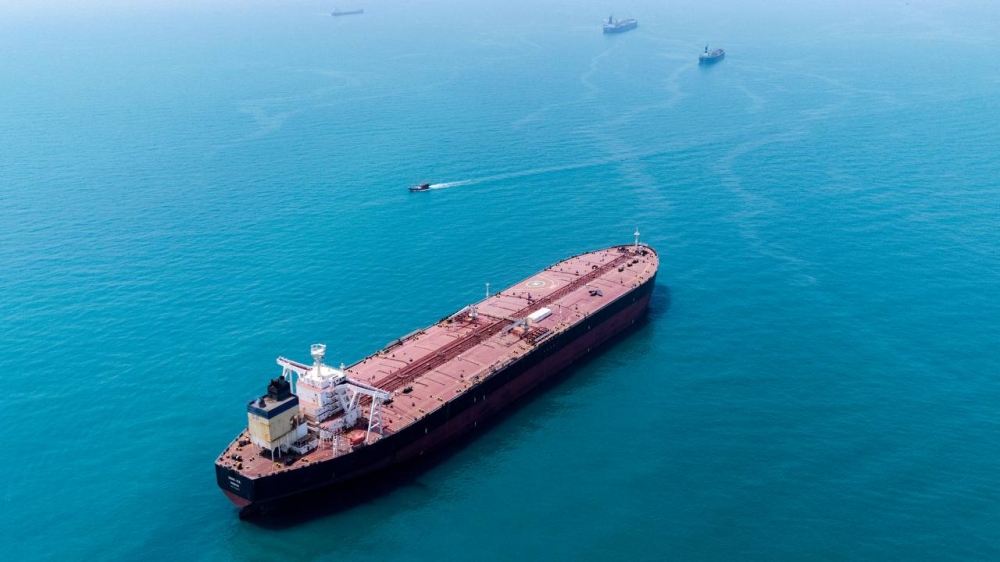
The U.S. Department of Defense (Pentagon) announced that its forces successfully intercepted and seized an oil tanker in the Indian Ocean, following a large-scale pursuit that began in the Caribbean. The Pentagon confirmed that the tanker, identified as the “Aquila 2,” had violated sanctions imposed by the previous U.S. administration under President Donald Trump on Venezuela’s oil sector.
In an official statement, the ministry explained that US forces boarded the tanker Aquila 2 without incident, ending its long escape. It added that this operation is part of ongoing efforts to enforce economic sanctions and prevent illicit networks from undermining international policies. The announcement was accompanied by a video showing US soldiers rappelling from a helicopter onto the tanker's deck to secure it.
Background of US sanctions on Venezuela
This incident comes amid a “maximum pressure” campaign imposed by Washington on the government of Venezuelan President Nicolás Maduro, aimed at forcing him to step down. This campaign has included crippling economic sanctions primarily targeting Venezuela’s state-owned oil company, PDVSA, the lifeblood of the country’s economy. The sanctions aim to cripple the Venezuelan government’s main sources of revenue, preventing it from exporting crude oil or importing refined products, thus exacerbating the country’s economic and humanitarian crisis.
The importance of the process and its strategic impact
The seizure of the Aquila 2 is particularly significant as it demonstrates the operational reach and intelligence capabilities of US forces, given that the vessel was tracked across two different oceans. This is the eighth ship seized by Washington since the imposition of sanctions on Venezuela, and the second to be intercepted outside the Caribbean, sending a clear message to global shipping companies that the United States is serious about enforcing its sanctions worldwide.
Regionally, this operation reinforces the U.S. military presence in vital shipping lanes, not only in the Caribbean to combat drug trafficking, but also in the Indian Ocean to ensure compliance with international sanctions. Internationally, the operation underscores the ongoing geopolitical tensions surrounding Venezuela and confirms that the network of vessels attempting to circumvent sanctions, estimated to number in the hundreds, remains under close scrutiny by Washington and its allies.