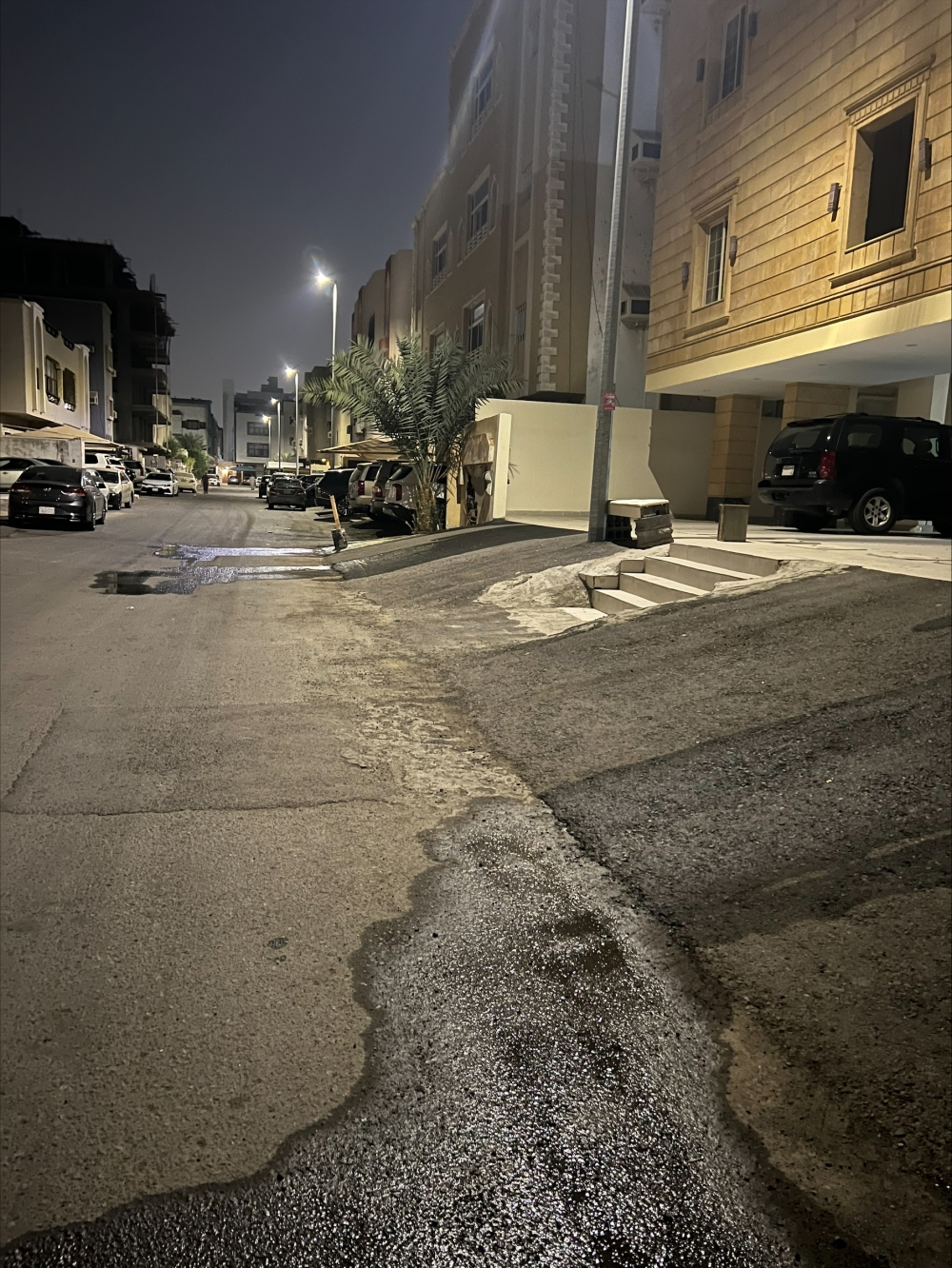
Like other major cities undergoing rapid urban development, Jeddah faces challenges related to preserving public assets and regulating urban space. In this context, a field survey conducted by Al-Youm newspaper revealed a growing and alarming phenomenon: the encroachment on public facilities, specifically sidewalks and streets. Some owners of residential properties and commercial centers are converting these public spaces into private parking areas and unauthorized entrances, creating visual pollution and violating municipal regulations.
Urban context and the challenges of "humanizing cities"
These practices come at a time when Saudi Arabia is placing great emphasis on its "Quality of Life" and "Humanizing Cities" programs within Vision 2030, which aim to make cities pedestrian-friendly and enhance open public spaces. Converting sidewalks into private parking is not merely an individual violation; it is a blatant contradiction of the strategic directions of modern urban planning, where sidewalks are meant to be safe havens for pedestrians and pathways that ensure smooth movement for people with disabilities and the elderly, not extensions of private property.
Forms of encroachment and resulting risks
These violations take various forms, ranging from completely obliterating sidewalks to lowering and leveling them with asphalt to connect them to building parking areas, and sometimes even encroaching on legally mandated setbacks. Experts confirmed to Al-Youm that these encroachments disrupt traffic flow, especially when shopping center parking areas intersect with main vehicle lanes, leading to frequent accidents and congestion on vital streets and those leading to major exits.
Expert opinion: Infringement on the rights of society
Commenting on the phenomenon, Dr. Rayan Sahahiri, Professor of Geomatics at King Abdulaziz University, explained that this issue strikes at the very heart of Jeddah's quality of life. He pointed out that streets and sidewalks are fundamental elements in shaping the city's image and the experience of both residents and visitors. He added that encroaching upon them undermines efforts to make the city walkable and weakens its appeal to tourists and investors, emphasizing that successful cities are those that respect public space and make it accessible to everyone.
For his part, engineer Abdul Nasser Al-Abdulatif, a real estate development consultant, considered what is happening to be the conversion of public space into private use, describing it as a "visual distortion" that affects spatial equity. He stressed that protecting the street is not a cosmetic luxury, but rather an urgent urban necessity to ensure safety and order, calling for intensified early monitoring before these violations worsen.
Legal aspect: Fines of up to 50,000 riyals
Legally, legal advisor Anwar Al-Qurashi confirmed that Saudi regulations are strict in this regard, as streets and sidewalks are considered public property that cannot be encroached upon. He explained that the municipal penalties regulations stipulate deterrent punishments, including fines that can reach 50,000 riyals for anyone who encroaches on public facilities or benefits from their services illegally.
Al-Qurashi added that the law criminalizes any cutting or digging of roads or alteration of their features without a permit, and obligates violators to remove the encroachment and restore the area to its original state at their own expense, with penalties doubled for repeat offenses. This strict legal framework aims to ensure the rule of law and protect public property from vandalism, thereby guaranteeing the sustainability of infrastructure and the safety of road users.