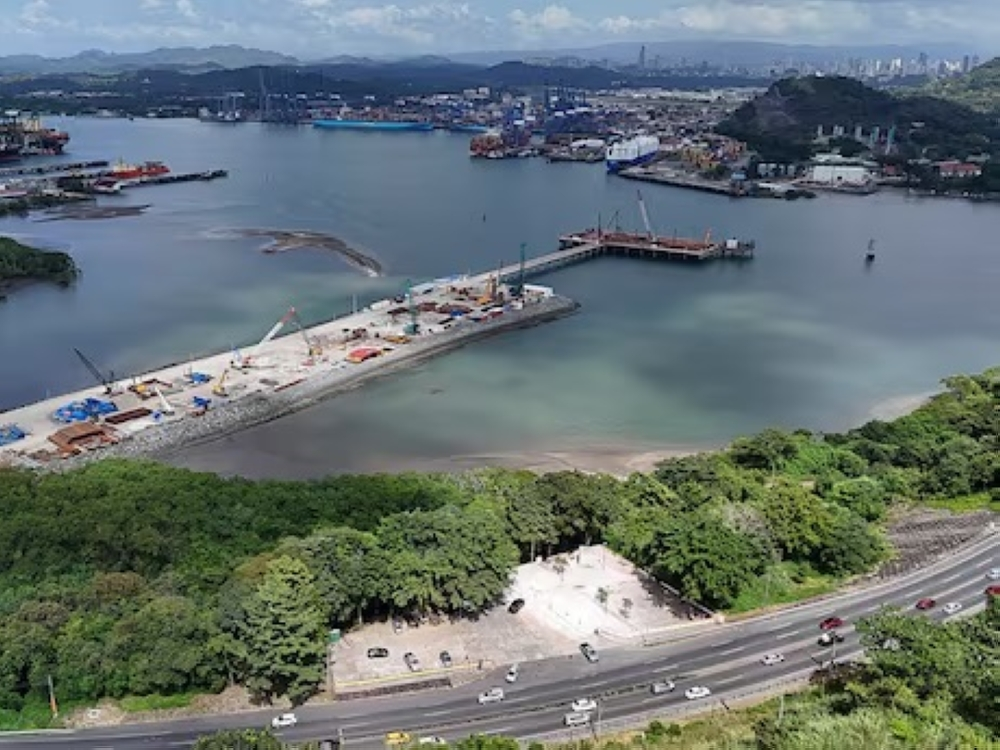
In a move of significant strategic and geopolitical importance, Panamanian authorities on Monday announced their full control of the ports of Balboa and Cristóbal, located at the Pacific and Atlantic entrances to the Panama Canal, respectively. This decisive action follows a landmark ruling by Panama's Supreme Court that annulled the concession agreement granted to Hong Kong-based CK Hutchison Holdings, deeming the agreement "unconstitutional.".
Background to the decision and details of the transition period
The Panamanian government based its decision on a ruling issued last January by the Supreme Court's General Assembly, which declared the contract under which the Chinese group operated these two vital ports unconstitutional. Despite the company's request to negotiate the continuation of terminal operations, Panama's Maritime Authority proceeded with the decision. Port Director Max Flores announced at a press conference that the "seizure decree" marks the beginning of an 18-month transition period. During this time, APM Terminals, a subsidiary of the Danish shipping giant Maersk, will temporarily manage the ports to ensure uninterrupted operations while a new international tender is launched to select a permanent operator.
The strategic importance of the Panama Canal
The Panama Canal, constructed by the United States and fully transferred to Panama on December 31, 1999, under the Torrijos-Carter Treaties, is one of the world's most important waterways. Approximately 6% of global maritime trade passes through it, including roughly 40% of U.S. container traffic, making its security and operational stability a matter of paramount importance to the global economy, particularly for the United States, the canal's largest user. Control of the ports at both ends of this vital trade artery grants significant influence over the flow of global commerce.
Dimensions of the geopolitical rivalry between Washington and Beijing
This decision cannot be separated from the context of the growing competition between the United States and China for influence in Latin America and the world. Washington has long expressed concern about China's economic and investment expansion in the region's vital infrastructure, particularly near the Panama Canal. The presence of a Beijing-linked company operating strategic ports was seen as a potential threat to US security interests. This move by Panama, which established diplomatic relations with China in 2017, is an attempt to strike a delicate balance between its new trading partner and its long-standing strategic ally, the United States. The decision sends a clear message that Panama is exercising full sovereignty over its strategic assets, while taking into account regional and international security concerns.