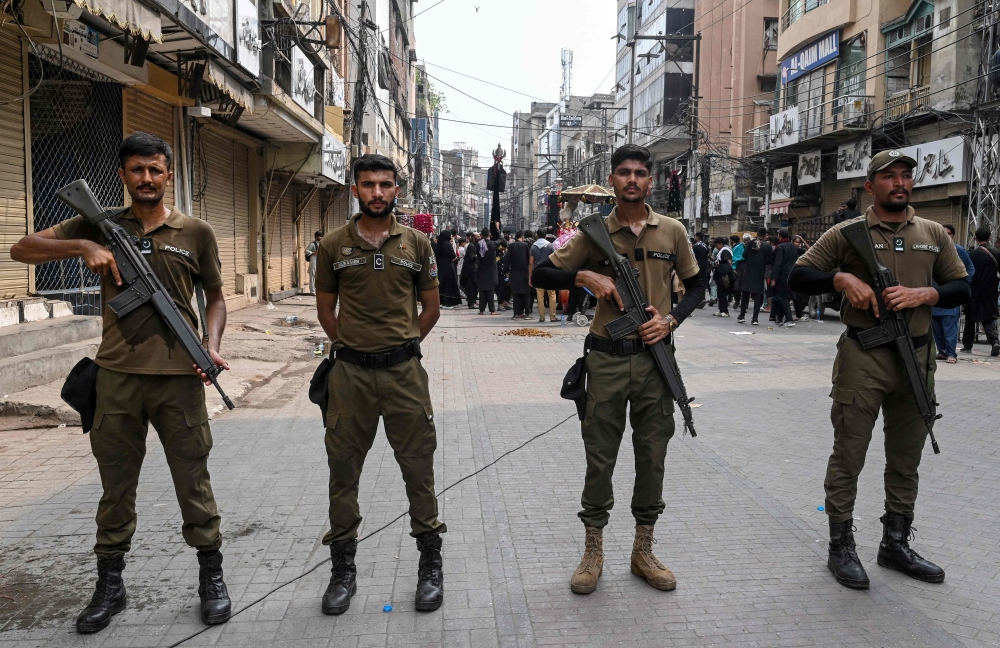
In a significant blow to militant groups, Pakistani security authorities announced the success of two precise intelligence operations in the restive southwestern province of Balochistan, resulting in the deaths of 14 terrorists belonging to two banned groups. These operations are part of Islamabad's ongoing efforts to impose security and stability in the province, which faces dual security challenges from separatist and extremist groups.
Details of security operations
According to official security sources, the first operation was carried out in the outskirts of Quetta, the provincial capital, targeting a hideout of members of the banned Pakistani Taliban. The raid resulted in a heavy exchange of fire, leaving eight terrorists dead. During the clash, three police officers were wounded and taken to the hospital for treatment; their condition was described as stable. The second operation took place in the remote Barkhan district and targeted militants from the Balochistan Liberation Army (BLA). Security forces successfully eliminated six members of the group without suffering any casualties. During both operations, security forces seized large quantities of weapons, ammunition, and bomb-making materials, thwarting plans for large-scale attacks in the province.
The security and historical context in Balochistan
Balochistan, Pakistan’s largest province by area and rich in natural resources, is a long-standing battleground. For decades, the province has been plagued by a separatist insurgency led by Baloch nationalist groups, such as the Balochistan Liberation Army (BLA), which demands greater autonomy or full independence, accusing the central government of exploiting the province’s resources without providing adequate development for its people. Alongside this insurgency, the province has become a haven for extremist Islamist groups, most notably the Pakistani Taliban and the Islamic State-Khorasan Province (ISIS-K), which exploit the rugged terrain and long borders with Afghanistan and Iran to establish safe havens and plan attacks targeting security forces and civilians.
Strategic importance and expected impact
These successful operations are of paramount importance both domestically and internationally. Domestically, they send a firm message from the state that it will not tolerate any security threat, boosting the morale of security forces and citizens' confidence in the state's ability to protect them. They also significantly weaken the operational capabilities of these armed groups. Regionally and internationally, the stability of Balochistan is vital for major economic projects, most notably the China-Pakistan Economic Corridor (CPEC), which traverses the region and terminates at the strategic port of Gwadar. Separatist groups have long targeted these projects in an attempt to disrupt them. Therefore, the success of counterterrorism efforts reassures international partners, particularly China, about the security of their investments and strengthens Pakistan's position as a reliable partner in the war on terror.