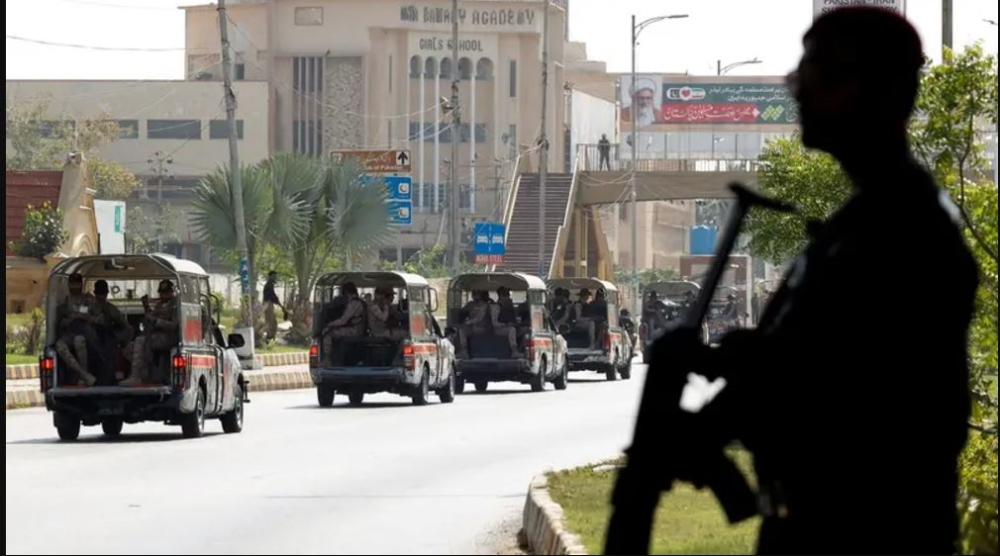
As part of its ongoing efforts to enforce security and stability, Pakistani security forces announced the success of a targeted operation in the Panjgur district of Balochistan province, in the southwest of the country, which resulted in the killing of three militants suspected of belonging to a banned terrorist organization. This operation underscores Islamabad's determination to combat terrorism and eradicate its roots from areas that have long suffered from security instability.
According to a statement issued by the Pakistani military's media wing (ISPR), the operation was planned based on precise intelligence that tracked the movements of terrorist elements in the area. The statement added that when their hideout was surrounded, the militants opened heavy fire on the forces, who returned fire, killing all three. The forces also seized a quantity of weapons, ammunition, and materials used to manufacture explosives, thus thwarting attacks they were planning against civilians and security forces.
Context of the conflict in Balochistan
This process cannot be understood in isolation from the complex historical and security context of Balochistan. The largest province in Pakistan by area, it is rich in natural resources such as gas and minerals, yet it suffers from marginalization and limited development compared to the rest of the country. These factors, coupled with historical grievances, have fueled armed separatist movements for decades, demanding greater autonomy or full independence, and accusing the central government of exploiting the province's resources with little benefit to its inhabitants.
Strategic importance and regional impact
Balochistan holds immense strategic importance both regionally and internationally. It shares long borders with Iran and Afghanistan, making its stability crucial to regional security. More importantly, the province is home to Gwadar Port, a cornerstone of the China-Pakistan Economic Corridor (CPEC), a massive project aiming to connect western China to the Arabian Sea. The corridor and its associated infrastructure have become frequent targets for militant groups, who view them as tools for Islamabad and Beijing to consolidate their control over the region. Therefore, security operations like the Panjgur operation are not only designed to protect Pakistani citizens but also to safeguard these multi-billion-dollar strategic investments, upon which Pakistan's economic future largely depends.