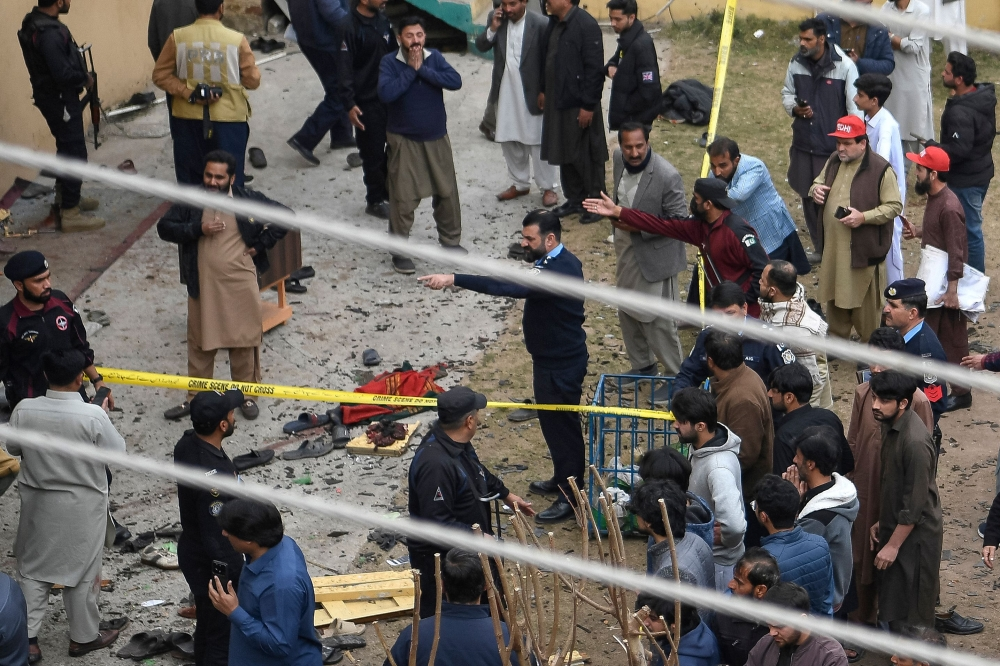
In yet another tragic incident to strike Pakistan, a powerful suicide bombing rocked a mosque packed with worshippers, killing at least 30 people and injuring more than 130 others, according to initial reports from local police sources. The horrific attack occurred as worshippers gathered for Friday prayers, the weekly peak time at Islamic places of worship, which explains the high number of casualties.
A senior police official, speaking on condition of anonymity, said the explosion was extremely powerful and occurred inside the main prayer hall. He added, “We unfortunately expect the death toll to rise, as many of the injured are in critical condition.” Footage circulating on social media showed chaotic and horrific scenes, with bodies, debris, and shattered glass scattered throughout the mosque, while survivors and bystanders rushed to transport the injured to nearby hospitals, which declared a state of emergency to accommodate the large number of casualties.
The context of sectarian violence in Pakistan
This attack comes amid a long history of sectarian violence that has plagued Pakistan for decades. Extremist groups, such as the Pakistani Taliban (TTP) and the Islamic State-Khorasan Province (ISIS-K), frequently target religious minorities, including Shia Muslims, with the aim of inciting sectarian strife and destabilizing the country. Cities like Peshawar, Karachi, and Quetta have witnessed similar attacks in the past, targeting mosques, markets, and religious gatherings, resulting in thousands of deaths and injuries over the years.
Importance and expected effects
Domestically, this attack represents a significant blow to the Pakistani government's counterterrorism efforts. It is expected to lead to heightened security measures around places of worship and vital areas across the country. The attack also places immense pressure on the government and Prime Minister Shehbaz Sharif, who swiftly condemned the assault and vowed to pursue the perpetrators and bring them to justice. Regionally, such attacks raise questions about the stability of Pakistan's security situation and its impact on neighboring countries, particularly Afghanistan, where many of these groups operate across the border. Internationally, the incident underscores the ongoing challenges Pakistan faces in its fight against extremism and could influence investor and international perceptions of the security situation in this nuclear-armed nation.