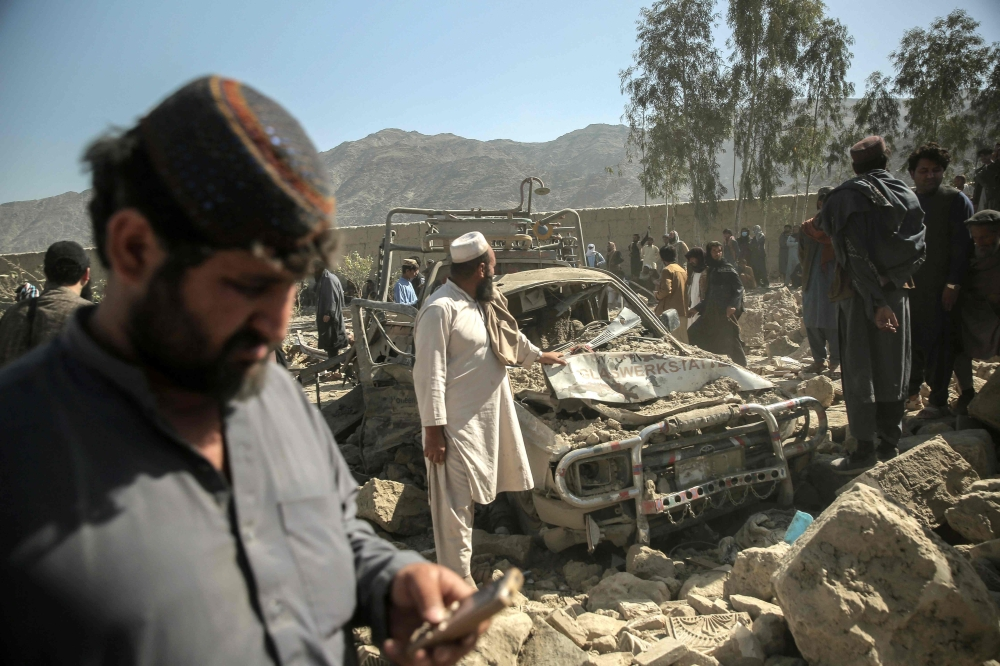
In a significant military escalation, a large explosion rocked the Afghan capital, Kabul, early Friday morning, just hours after Pakistan announced it had launched airstrikes targeting sites in Kabul and Kandahar. This dangerous development comes in response to a Taliban attack on Pakistani military installations along the border between the two countries, plunging already strained relations between the neighbors into a new phase of direct confrontation.
Details of the exchange of blows
The Pakistani government confirmed its responsibility for the airstrikes, with Information Minister Attaullah Tarar stating that the strikes targeted “defensive targets” belonging to the Afghan Taliban in Kabul and the provinces of Paktia and Kandahar. According to AFP, the first explosion in Kabul was heard around 1:50 a.m., following the overflight of a fighter jet and subsequent gunfire. Local residents reported hearing up to eight explosions that shook various parts of the capital. These airstrikes came after the Taliban announced on Thursday that its forces had killed and captured a number of Pakistani soldiers in an attack on border posts, justifying it as retaliation for “deadly airstrikes” launched by Islamabad on its territory days earlier.
Roots of tension: borders and armed groups
The roots of the current tension lie in decades of historical and political disputes, most notably the Durand Line, the border between the two countries that no successive Afghan government has recognized. However, the immediate cause of the recent escalation is the activity of the Pakistani Taliban (TTP), an armed group seeking to overthrow the Pakistani government and which uses Afghan territory as a safe haven. Islamabad accuses the Taliban government in Kabul of providing support and shelter to TTP fighters, an accusation Kabul consistently denies. Since the Taliban's return to power in Afghanistan in 2011, Pakistan has witnessed a sharp increase in attacks by the group, placing immense pressure on Islamabad to take more decisive action.
Importance and potential impacts
This military escalation has serious repercussions at the local, regional, and international levels. Locally, the exchange of fire threatens the lives of civilians on both sides of the border and further destabilizes already fragile border areas. Regionally, it raises tensions between two neighboring countries, potentially impacting trade and security in South Asia. Internationally, this conflict is a source of concern for the international community, which seeks to stabilize Afghanistan and prevent it from reverting to a haven for terrorism. Furthermore, any large-scale conflict could trigger a new humanitarian crisis and exacerbate the suffering of the Afghan people, who are already facing dire economic conditions.