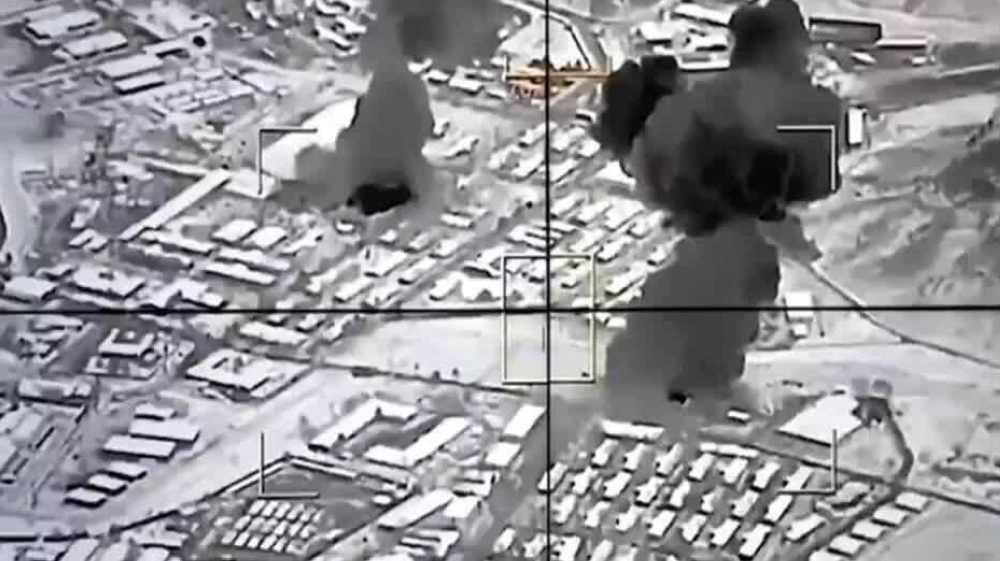
Authorities in Islamabad announced targeted military operations, including Pakistani airstrikes on locations in Afghanistan , specifically in the southern province of Kandahar. These air and artillery strikes targeted hideouts and infrastructure that Islamabad describes as belonging to "terrorist" groups. This move comes amid an unprecedented escalation of security and political tensions between the two neighboring countries, raising widespread fears of the region sliding into open conflict that could threaten the fragile stability of South Asia.
Details of Pakistan's bombing of sites in Afghanistan and destruction of infrastructure
According to high-ranking security sources in Islamabad, Pakistani forces carried out precision strikes that destroyed infrastructure and weapons and equipment storage sites in Kandahar. These sources confirmed that these sites were being used by elements linked to the Afghan Taliban and other armed groups to launch attacks against civilians and Pakistani security forces. This military escalation reflects a shift in the rules of engagement between the two countries, with Pakistan adopting a more proactive offensive strategy to protect its borders and national security from cross-border threats.
The historical roots of security tensions between Islamabad and Kabul
To understand the broader context of this escalation, it is essential to examine the complex historical background of relations between the two countries. Afghanistan and Pakistan have been locked in a series of mutual accusations for months. The main point of contention is Islamabad's accusation that its neighbor Kabul is harboring fighters from the Pakistani Taliban (TTP), an armed group that has claimed responsibility for numerous deadly attacks within Pakistan. Historically, the shared border between the two countries, known as the Durand Line, has been a flashpoint, as successive Afghan governments have refused to officially recognize it as an international border, facilitating the movement of armed groups and further complicating the security situation.
Despite repeated denials by the current Afghan authorities of these accusations, and their insistence that they will not allow their territory to be used to launch attacks against neighboring countries, the ongoing attacks inside Pakistan have prompted the military and political leadership in Islamabad to take unilateral measures, considering that Kabul is not doing enough to control the borders and restrain these armed factions.
The strategic importance and expected impact of military escalation
This development on the ground is of paramount importance and has anticipated repercussions that extend beyond the local level to encompass regional and international dimensions. Locally, this bombardment could inflame nationalist sentiments in both countries, weakening the prospects for diplomatic dialogue and exacerbating the suffering of civilians living in border areas who bear the brunt of these ongoing conflicts. Furthermore, the continuation of military operations could trigger new waves of displacement, further deepening the humanitarian crisis in the region.
Regionally and internationally, this escalation is raising concerns among major powers and neighboring countries, which fear that Afghanistan could once again become a safe haven for extremist groups. The stability of South Asia is closely linked to the ability of Pakistan and Afghanistan to resolve their differences through diplomatic channels. Any further deterioration in relations could disrupt regional economic projects, such as gas pipelines and trade corridors, and necessitate international intervention to mediate and prevent a further deterioration of the security situation, which could have repercussions for global security as a whole.