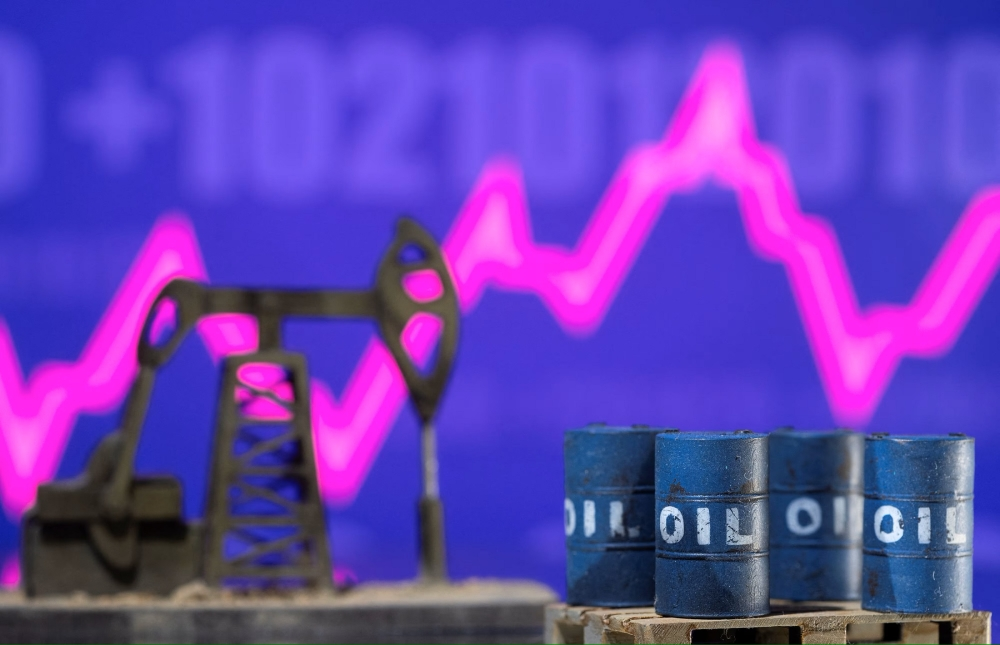
Oil prices were relatively stable in early Asian trading today, after falling in the previous session, as investors tried to balance signs of a global demand recovery with persistent concerns about economic challenges. This stability comes amid expectations of a second consecutive weekly loss, reflecting a cautious mood prevailing in global energy markets.
In trading, Brent crude futures, the global benchmark, rose slightly by 3 cents, or 0.04%, to $67.55 a barrel, after falling 2.7% in the previous session. Meanwhile, U.S. West Texas Intermediate crude gained 1 cent, or 0.02%, to $62.85 a barrel, after declining 2.8%. Despite these marginal gains, Brent is on track for a weekly decline of about 0.8%, while U.S. crude could see losses of up to 1.1%.
The general context of oil price fluctuations
This fluctuating performance comes within a broader context of tug-of-war in global markets. On the one hand, there is optimism fueled by the accelerating vaccination campaigns in major economies such as the United States and Europe, bolstering hopes for a strong recovery in economic activity and fuel demand. On the other hand, concerns persist about the emergence of new strains of the coronavirus in other parts of the world, such as India and Brazil, which could dampen global demand in the short term.
Historically, oil prices have been directly influenced by the balance of supply and demand. The Organization of the Petroleum Exporting Countries (OPEC) and its allies, a group known as OPEC+, play a pivotal role in managing the supply side through production cut agreements aimed at stabilizing markets. The decisions of this group are closely watched by traders, as any change in production policies can lead to significant price movements.
The importance of oil stability and its expected impact
Oil price stability is of paramount importance on multiple levels. Internationally , oil prices directly impact global inflation rates and shipping costs, and they significantly influence the trade budgets of energy-importing nations such as China, Japan, and the European Union. Stable prices at a reasonable level contribute to supporting global economic growth and preventing inflationary shocks.
Regionally , Middle Eastern economies are heavily reliant on oil revenues. For countries like Saudi Arabia, the United Arab Emirates, and Kuwait, price stability provides a predictable financial environment, enabling governments to fund their massive development projects and ambitious economic diversification plans, such as Saudi Vision 2030. Domestically , stable crude prices translate into lower fuel prices for consumers and energy costs for industrial sectors, impacting individual purchasing power and business competitiveness.
In conclusion, the current stability in oil prices reflects a state of cautious anticipation in the markets, as investors assess conflicting economic data and await further signals from the world’s major producers and consumers to determine the future direction of prices.