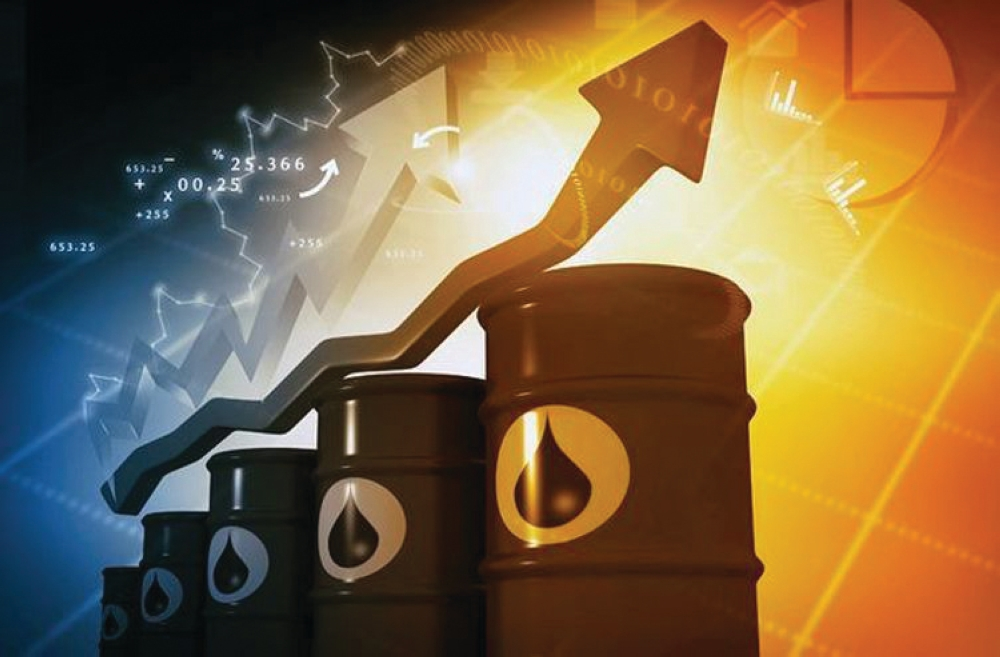
Global oil markets saw a significant rise, with prices jumping by nearly 2%, in direct response to escalating geopolitical tensions between the United States and Iran. This surge is driven by investor concerns about potential disruptions to oil supplies from the Middle East, a vital artery for global energy.
In trading details, Brent crude futures, the global benchmark, reached $70.02 a barrel, marking an increase of $1.22, or 1.77%. Meanwhile, West Texas Intermediate (WTI) crude, the US benchmark, rose to $65.17 a barrel, an increase of $1.21, or 1.89%, reflecting market concerns about the repercussions of this tension.
Background of the tension and its impact on energy markets
These tensions are not a recent development, but rather an extension of a years-long tug-of-war between Washington and Tehran. The roots of the current crisis lie in the United States' decision to withdraw from the Iran nuclear deal (the Joint Comprehensive Plan of Action) in 2018 and reimpose crippling economic sanctions on Iran, primarily targeting its oil sector with the aim of reducing its exports to zero. These sanctions have led to a significant reduction in Iranian oil supplies to global markets, creating a fragile balance between supply and demand.
The strategic importance of the Strait of Hormuz
Concerns are particularly high due to the strategic importance of the Strait of Hormuz, a narrow waterway separating the Persian Gulf from the Gulf of Oman. Approximately one-fifth of the world's daily oil consumption passes through this strait, making it the most crucial maritime chokepoint for global oil transport. Any threat to close the strait or disrupt shipping traffic, as Iran has previously hinted at in response to sanctions, would send shockwaves through energy markets and drive prices to record highs, with potentially devastating global economic consequences.
Expected regional and international impacts
Internationally, this tension adds a so-called “geopolitical risk premium” to oil prices, as traders and investors price in the possibility of a conflict that could disrupt supplies. Major consuming nations, such as China, India, and the European Union, are the most affected by higher prices, as this increases energy and production costs and could contribute to rising inflation. Regionally, any military escalation in the region will not only impact Iran and the United States but will also extend to neighboring Gulf states, which are major oil producers and exporters, threatening the stability of the entire region. Therefore, global markets are anxiously awaiting any new developments, and oil prices will remain highly sensitive to any statements or actions from either side in the near future.