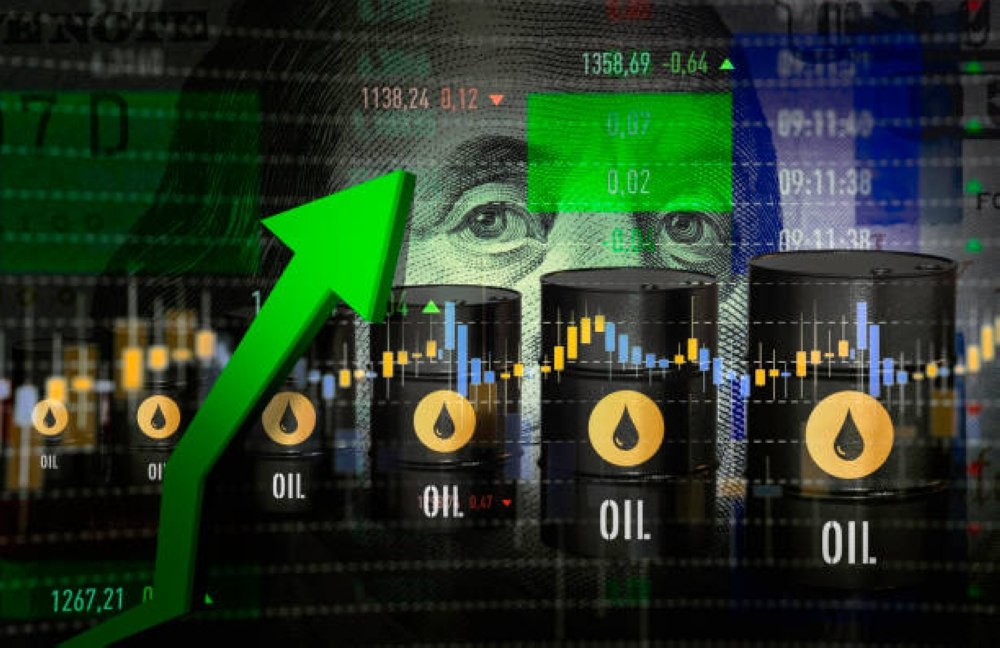
Global markets witnessed significant developments as oil prices surged by more than 2% on Tuesday. This rise came amid growing doubts and concerns about US President Donald Trump's ability to forge an effective international coalition to secure the Strait of Hormuz and protect commercial oil tankers transiting this vital waterway. These tensions were directly reflected in the markets, with Brent crude, the international benchmark for oil prices, reaching $102.56 per barrel, a 2.35% increase. Similarly, US markets were not immune to this impact, with US crude oil prices rising by 2.22% to $95.58 per barrel.
The strategic importance and historical context of the global energy corridor
To understand the scale of global concern, one must consider the geopolitical importance of this waterway. The Strait of Hormuz is one of the world's most vital waterways, connecting the Persian Gulf, the Gulf of Oman, and the Arabian Sea. Historically, this strait has been the scene of numerous tensions, from the "Tanker War" in the 1980s to the ongoing threats of its closure. Approximately one-fifth of the world's daily oil consumption passes through this narrow strait, making it a vital artery for the global economy. Any threat to the security of navigation through it represents not merely a regional crisis, but a global energy crisis capable of paralyzing industry and trade across entire continents.
Trump's statements and the challenges of securing the Strait of Hormuz
Amid this tense atmosphere, US President Donald Trump stated in a social media post that America's NATO allies did not want to participate in any military confrontation or war with Iran. Trump clearly asserted that the United States possessed sufficient capabilities and did not urgently need its allies' assistance to handle the situation. Despite this, the US administration repeatedly urged its allies to send naval forces to protect oil tanker traffic through the Strait of Hormuz. These calls came at a time when commercial shipping through this vital waterway had declined sharply following a series of Iranian attacks, leading to one of the largest disruptions to global oil supplies in modern history.
Economic repercussions and the event's impact locally and internationally
The impact of these disruptions extends to local, regional, and international dimensions. Regionally, oil-producing countries fear disruptions to their exports, which would directly affect their national revenues and development plans. Internationally, rising energy prices threaten inflationary waves that will hit both major and emerging economies, increasing production and transportation costs. In this context, Warren Patterson, head of commodity strategy at ING, explained the seriousness of the situation, saying, “The sheer scale of the oil supply disruption makes it very difficult for the market to find a suitable alternative in the short term.”.
Military options and the risks of naval escort
The analyses didn't stop at the economic aspect; they extended to include military and security complexities. Patterson pointed out that although the US administration had strongly promoted the idea of providing insurance guarantees and military escorts for commercial vessels, none of these measures had yet been fully implemented. The strategist added that escorting commercial ships through the narrow waters of the Strait of Hormuz would leave the warships themselves vulnerable to direct attack. Based on these tactical considerations, the United States might postpone implementing such a risky measure until it is absolutely certain that Iran's military capability to launch surprise attacks on ships has diminished, thus keeping energy markets in a state of constant anticipation and caution.