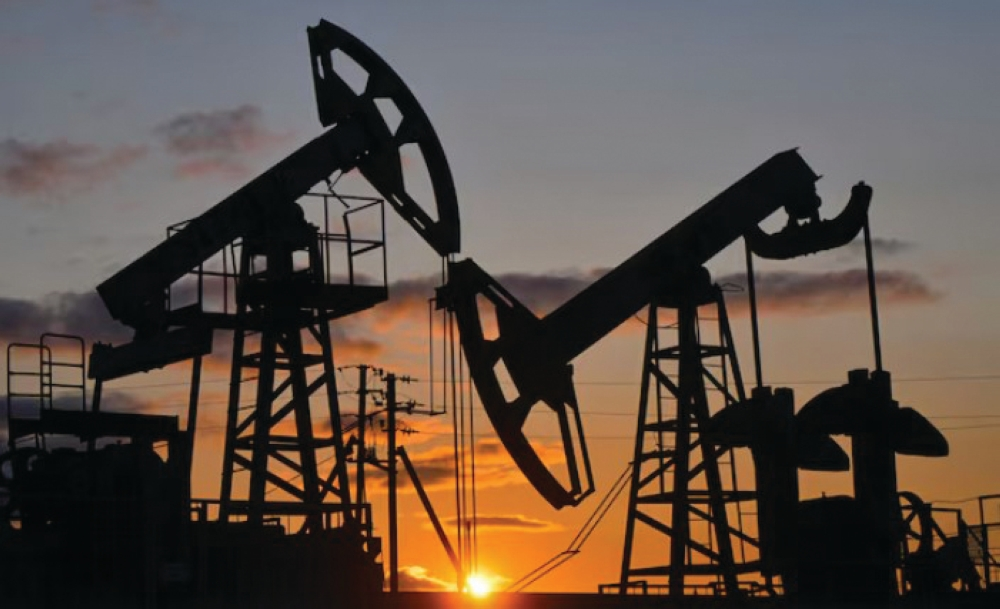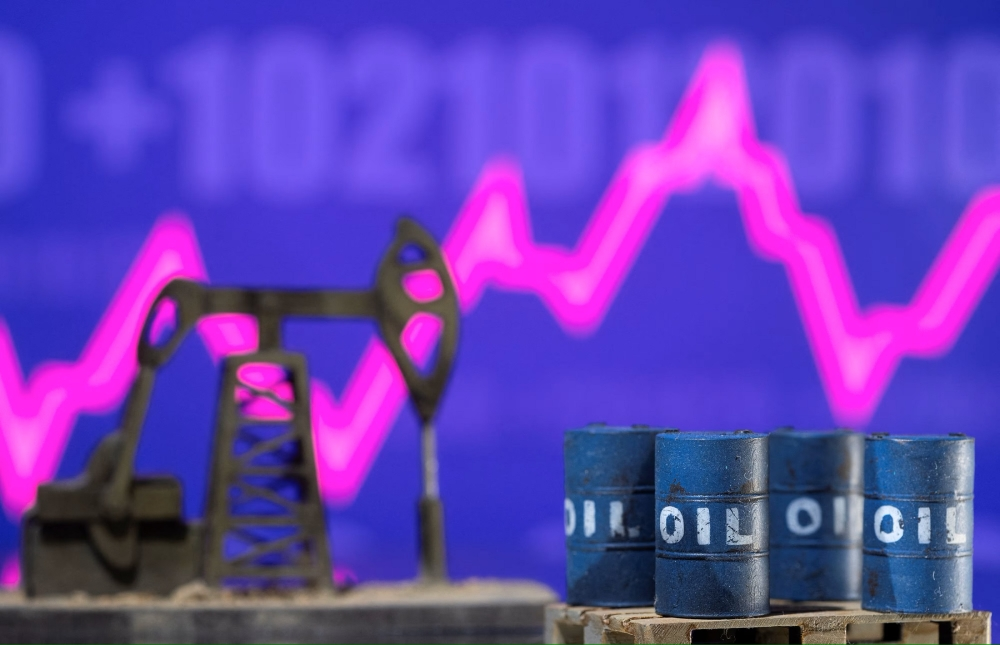
Oil prices surged nearly 3% in trading today, reflecting shifting supply and demand dynamics in global markets. According to settlement data, Brent crude futures jumped $2.13, or 3.16%, to settle at $69.46 a barrel, a significant level that reflects investor optimism.
Meanwhile, U.S. West Texas Intermediate crude also rose by $1.93, or 3.05%, to close at $65.14 a barrel, confirming the overall upward trend in the energy market.
General context and historical background of oil price fluctuations
This surge comes amid a confluence of economic and geopolitical factors that directly impact the supply and demand balance. Historically, oil markets have been heavily influenced by the decisions of the Organization of the Petroleum Exporting Countries (OPEC) and its allies, a group known as OPEC+. The production policies pursued by this group play a pivotal role in price stability, aiming to balance the market by controlling production levels to address any supply surplus or shortage. Furthermore, geopolitical tensions in key oil-producing regions, such as the Middle East and Eastern Europe, contribute to an increased "risk premium," driving prices higher due to concerns about supply disruptions. Economic data from major economies, such as the United States and China, also directly impacts global energy demand forecasts, with strong economic growth indicating increased consumption.
The importance of the event and its expected economic impact
This rise in oil prices has far-reaching economic implications at the local, regional, and international levels. For oil-exporting countries, particularly in the Arabian Gulf region, higher prices represent a significant boost to government revenues, allowing for increased spending on development projects, bolstering public budgets, and generating fiscal surpluses. For energy-importing countries, however, higher energy costs lead to inflationary pressures, as fuel, transportation, and industrial production costs rise, potentially impacting consumer purchasing power and slowing economic growth. Globally, monetary policymakers at major central banks are closely monitoring energy prices, as continued increases could prompt the adoption of tighter monetary policies, such as raising interest rates, to curb inflation.