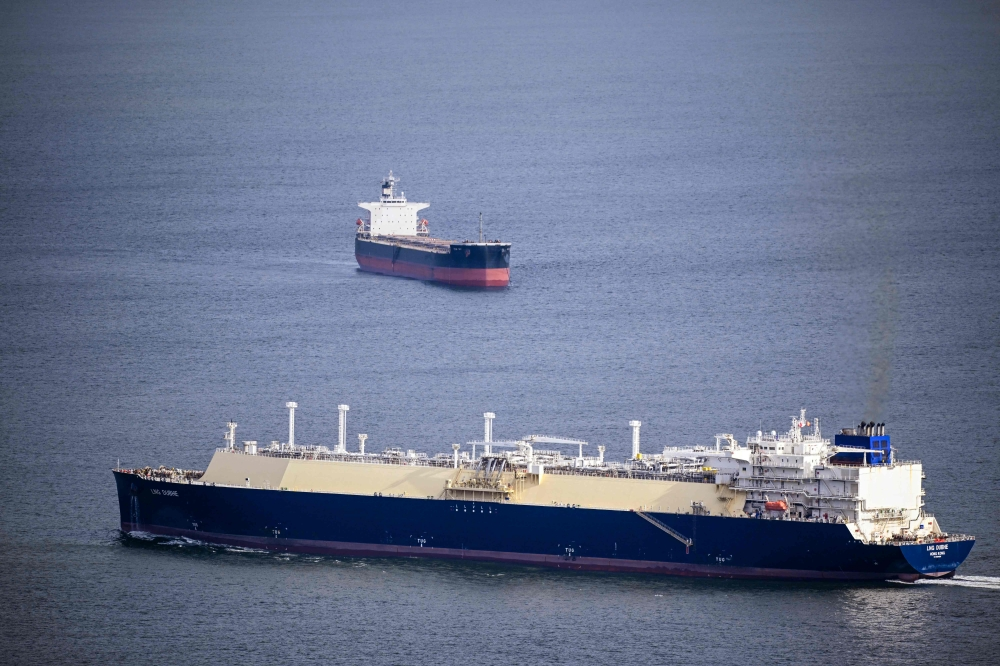
Oil prices fell sharply on Monday, following days of volatile trading in global markets due to escalating tensions in the Middle East. This decline reflects investor reaction to recent geopolitical developments, particularly those concerning the security of strategic waterways vital to the global economy.
In detail, Brent crude, the international benchmark, fell 0.9% to $102.20 a barrel, after earlier reaching $106.50. Similarly, West Texas Intermediate (WTI) crude, the US benchmark, declined 3.4% to $95.36 a barrel, retreating from its session high of over $102.
Reasons for the decline in oil prices and statements from the US Treasury
This decline in oil prices primarily attributed to statements made by US Treasury Secretary Scott Bisnett on Monday, in which he indicated that the United States would allow Iranian oil tankers to pass through the Strait of Hormuz. This coincided with a report published by The Wall Street Journal, citing officials, stating that Washington intends to announce soon the formation of an international coalition aimed at escorting and protecting commercial vessels as they transit this vital waterway.
These moves have helped to alleviate the anxiety that gripped the markets relatively, especially after prices had witnessed successive jumps from the level of $70 a barrel, against the backdrop of military tensions and mutual attacks between the United States and Israel on one side, and Iran on the other.
The strategic and historical importance of the Strait of Hormuz
Historically, the Strait of Hormuz is one of the world's most important waterways, connecting the Persian Gulf, the Gulf of Oman, and the Arabian Sea. It has long been a pivotal point in international politics and the global economy, with approximately one-fifth of the world's crude oil supply passing through it daily. Over the decades, the strait has witnessed numerous tensions, from the "Tanker War" during the Iran-Iraq War in the 1980s to the recurring threats of its closure in recent years. This historical context makes any threat to navigation in the strait a global crisis requiring swift international intervention to ensure the stability of energy supplies.
The economic repercussions of securing navigation on global markets
The formation of an international coalition to secure the Strait of Hormuz is of paramount importance and has far-reaching implications at the local, regional, and international levels. Internationally, such a coalition would ensure the stability of energy flows, preventing inflationary shocks that could devastate major import-dependent economies. Regionally, it would bolster the security of oil-producing nations in the Arabian Gulf, enabling them to continue exporting their production without interruption.
Recent tensions had prompted Iran to virtually halt shipping through the narrow strait in response to the military escalation. This temporary paralysis threatened to disrupt vital supplies to consumers worldwide and led some oil producers in the region to consider production cuts due to the lack of secure outlets for their crude oil. With the emergence of signs of international intervention to protect shipping, markets began to breathe a sigh of relief, which was immediately reflected in global trading indices and restored a relative balance to energy markets.