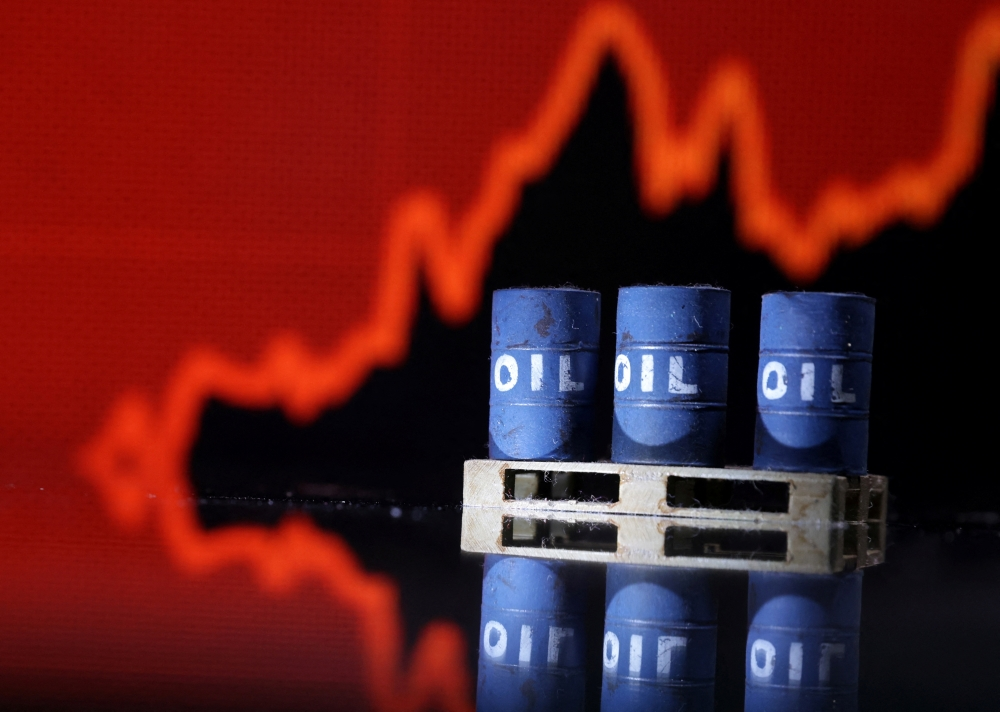
Global oil markets witnessed a significant decline today, with crude prices falling by more than 3%, directly impacted by recent geopolitical developments in the Middle East. This sharp drop came in response to statements by US President Donald Trump downplaying the likelihood of military escalation, expressing concern about avoiding loss of life in Iran. This sent reassuring messages to investors regarding the stability of the security situation and the diminishing threat of direct war.
In trading details, Brent crude futures fell by $2.19, or 3.3%, to settle at $64.33 per barrel. Similarly, West Texas Intermediate (WTI) crude futures dropped by $2.06, or a similar 3.3%, to close at $59.96 per barrel. This simultaneous decline in both benchmark crudes reflects the disappearance of the so-called "risk premium" that markets had added to prices in anticipation of potential disruptions to energy supplies from the region.
Historically, the Arabian Gulf region has been a vital artery for global energy supplies, and therefore any political or military tension there is immediately reflected on trading screens. Concerns centered on the potential disruption of shipping in the Strait of Hormuz or attacks on oil facilities, but the more measured tone of US statements helped defuse the crisis, prompting speculators to take profits and causing prices to correct downwards.
Meanwhile, despite the price drop, economic data from China showed strong signs of robust demand. Chinese government figures revealed a 17% jump in crude oil imports in December compared to the same period last year. Statistics also indicated a 4.4% increase in total imports for 2025, with daily imports in December reaching an all-time high.
The discrepancy between falling prices and strong Chinese demand suggests that geopolitical factors have been the primary driver of short-term price movements, overriding traditional supply and demand fundamentals. The global economy remains cautiously monitoring the balance between ample supply and volatile political tensions, which could reshape the price landscape at any moment.