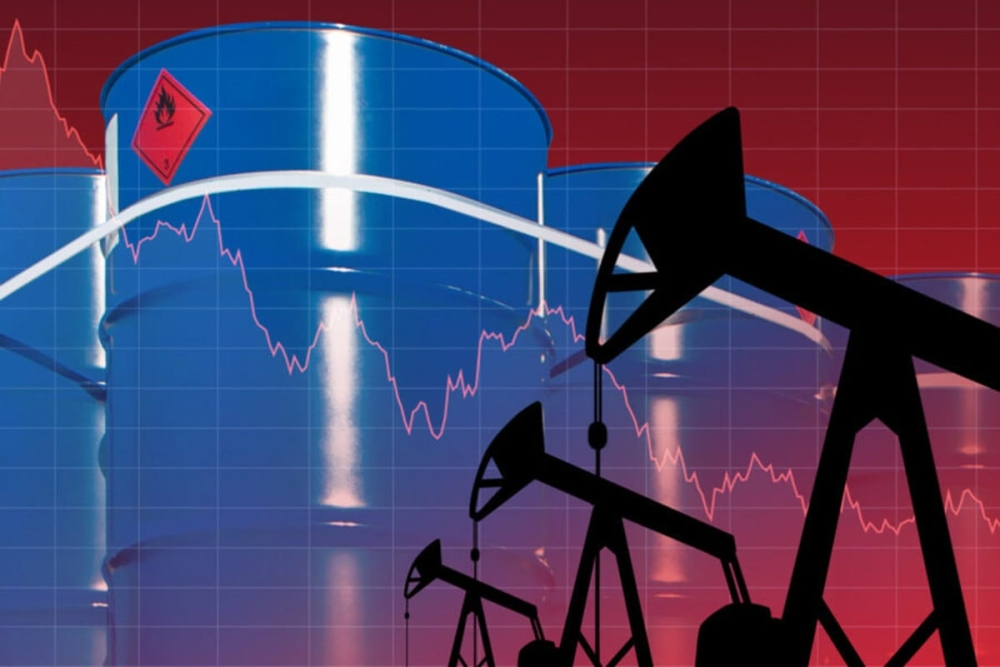
Global oil prices fell sharply at Monday's settlement, dropping by more than 4%, in direct response to easing geopolitical concerns that had previously supported prices. This decline reflects the energy markets' extreme sensitivity to political stability in key oil-producing regions.
In trading details, Brent crude futures, the global benchmark, fell by $3.02, or 4.4%, to settle at $66.30 a barrel. Similarly, West Texas Intermediate (WTI) crude, the U.S. benchmark, dropped by $3.07, or 4.7%, to close at $62.14 a barrel, marking one of its biggest daily declines in recent weeks.
General context and the impact of geopolitical factors
Historically, oil prices have been closely linked to geopolitical stability, particularly in the Middle East, home to the world's major oil producers. Any escalation of tensions, military conflicts, or even threats to close vital shipping lanes like the Strait of Hormuz typically leads to higher prices due to fears of supply disruptions. Conversely, any signs of diplomatic détente or a de-escalation of conflicts, as has recently occurred, tend to reassure markets, reducing the risk premium that has been priced in, and consequently lowering prices.
The importance of the event and its expected impact
This sharp drop in oil prices has far-reaching economic implications, both regionally and internationally. For oil-importing countries such as China, India, Japan, and the European Union, this decline is positive news, as it reduces energy costs for industries and consumers, potentially helping to curb inflation and support economic growth. Lower transportation and manufacturing costs have a positive impact on the prices of finished goods.
For oil-exporting countries, particularly those whose budgets rely heavily on oil revenues, such as the Gulf states and Russia, the price decline presents a challenge. A continued drop could put pressure on public budgets and lead to reduced government spending, underscoring the importance of these countries' economic diversification plans aimed at lessening their dependence on a single, volatile source of income. In this context, the Organization of the Petroleum Exporting Countries (OPEC) and its allies, within the OPEC+ alliance, are closely monitoring these developments and may intervene with production adjustments to stabilize the markets if necessary.