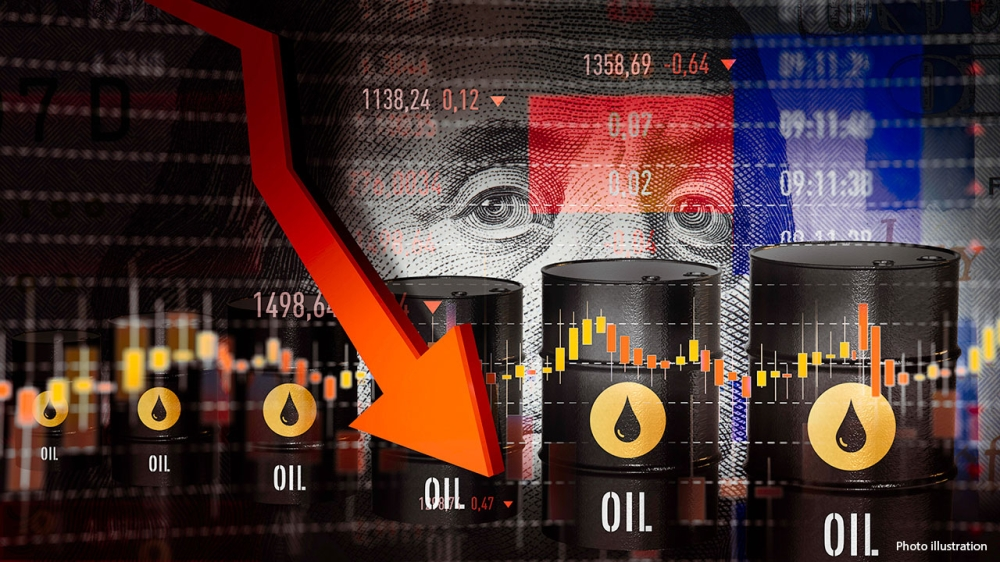
Global energy markets saw a significant decline on Sunday, with oil prices falling by more than a dollar a barrel, reflecting market uncertainty and the impact of macroeconomic factors. Specifically, Brent crude futures, the global benchmark, fell by $1.80 a barrel, or 2.7%, to settle at $67.48 a barrel. Meanwhile, West Texas Intermediate (WTI), the main US oil benchmark, also fell by $1.80 a barrel, a 2.8% decline, to $63.41 a barrel.
General context and background of the price decline
This decline comes amid a confluence of factors weighing on markets. On the one hand, concerns are mounting about a slowdown in global economic growth, particularly in major energy-consuming economies like China and the United States, which could lead to a decrease in oil demand. On the other hand, the monetary policies of global central banks are playing a crucial role; raising interest rates to combat inflation strengthens the US dollar, making dollar-denominated oil more expensive for buyers using other currencies and thus reducing its attractiveness.
Historically, oil markets have been highly volatile, influenced by geopolitical tensions, natural disasters, and political decisions. In this context, the OPEC+ alliance, comprising the Organization of the Petroleum Exporting Countries (OPEC) and its allies led by Russia, plays a pivotal role in attempting to stabilize markets by managing production levels. The alliance's decisions to cut or increase production have a direct and immediate impact on prices, as they aim to balance supply with fluctuating global demand. Investors closely monitor OPEC+ meetings and statements from its officials to gauge future price trends.
The importance and expected impact of the decline
The impact of oil price volatility extends across the globe. For oil-producing and exporting countries, particularly in the Middle East, lower prices pose a direct challenge to government revenues and public budgets, potentially slowing the pace of development projects and economic diversification plans. Conversely, oil-importing countries, such as most European nations, Japan, and India, benefit from lower prices, as these contribute to reduced energy costs, curb inflation, and boost the purchasing power of consumers and businesses, which can stimulate economic growth. At the local level, lower crude oil prices may translate into lower fuel prices at the pump, easing the financial burden on individuals.
In conclusion, this recent decline in oil prices reflects the sensitive nature of energy markets and their profound dependence on global economic health and political decisions. Attention will remain focused on economic growth indicators from major economies, as well as anticipated production decisions from the OPEC+ alliance, which together will determine the trajectory of oil prices in the coming period.