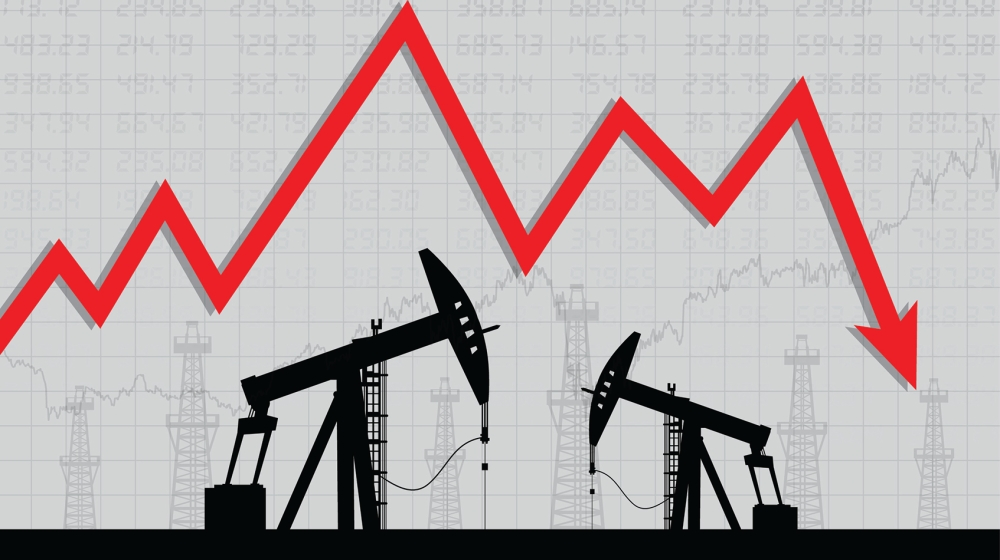
Oil prices plummeted by nearly 5% during trading on Wednesday, following media and political reports that the United States had sent Iran a comprehensive 15-point diplomatic proposal. This proposal aims primarily to end the state of war and military tensions that have persisted since the end of February, casting a long shadow over global energy markets and international shipping.
Reasons for the decline in oil prices and details of trading
In today's trading, reflecting the market's immediate reaction to the diplomatic news, Brent crude futures fell by $6.08, or 5.82%, to $98.41 a barrel in early afternoon trading. This decline followed a session low of $97.57. Similarly, West Texas Intermediate (WTI) crude futures dropped by $5.09, or 5.51%, to settle at $87.26 a barrel, after hitting a daily low of $86.72. Both benchmarks had risen by approximately 5% in the previous day's trading before paring their gains amid volatile trading following settlement, reflecting the cautious sentiment among investors.
The strategic importance of the Strait of Hormuz to global energy security
To understand the broader context and historical background of this event, it's essential to consider the pivotal role of the Strait of Hormuz in the global economy. Recent military operations have brought oil and liquefied natural gas shipments through this vital waterway, a crucial energy artery that typically carries roughly one-fifth of the world's oil and gas supply. The International Energy Agency has described this latest disruption as the most significant in the history of global oil supplies. Historically, the Strait of Hormuz has been a major flashpoint in geopolitical tensions, from the Tanker War of the 1980s to numerous crises in which Iran threatened to close the strait. Consequently, any threat to navigation there immediately triggers exorbitant increases in insurance and shipping costs, directly impacting the end consumer.
The expected impact of a diplomatic settlement regionally and internationally
The significance of this event and its anticipated impact, should the 15-point US proposal succeed, are evident in several strategic and economic aspects. Internationally, ending the conflict will restore stability to energy markets, helping to curb global inflation, which has been exacerbated by rising fuel costs. Regionally, de-escalation will provide Middle Eastern countries, particularly oil exporters in the Arabian Gulf, with a secure environment to resume exports without obstacles or security risks, thus bolstering their fiscal stability. Domestically, energy-importing countries will benefit from lower import bills, easing pressure on their foreign currency reserves. Reaching a diplomatic settlement represents not only a political breakthrough but also a lifeline for the global economy, which has been reeling from the repercussions of successive crises.