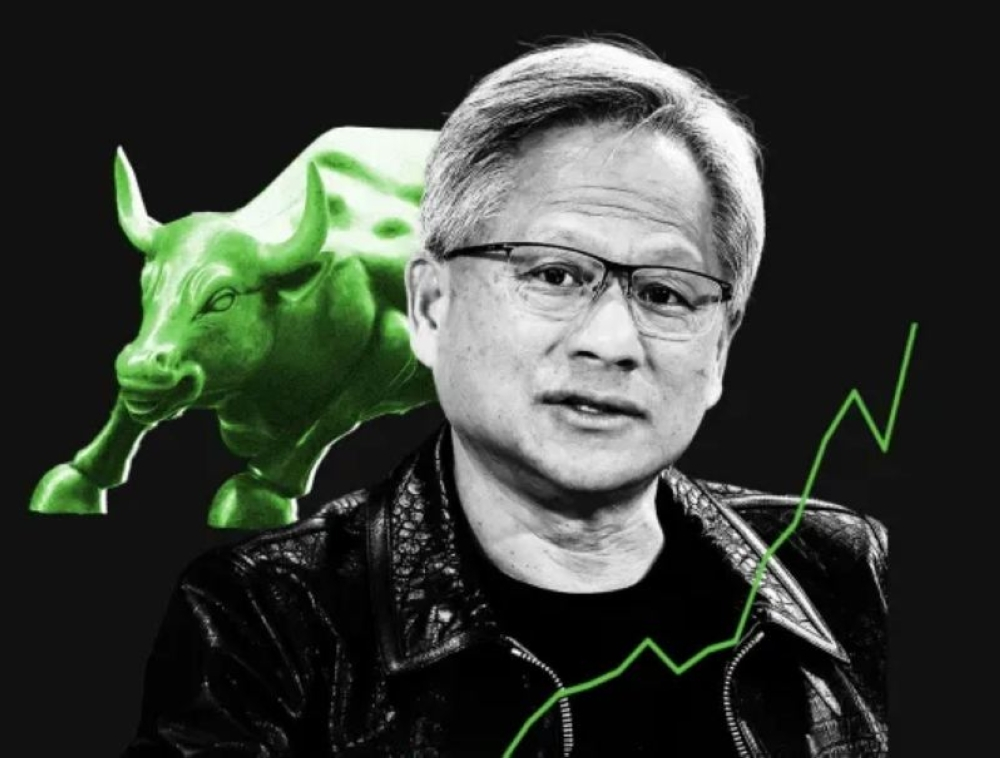
Nvidia, the semiconductor giant, announced record-breaking financial results for the fourth quarter of its fiscal year 2024, exceeding all Wall Street analyst expectations. The company reported revenues of $22.1 billion, a staggering 265% jump compared to the same period last year and a 22% increase over the previous quarter. These figures reflect the explosive growth and unprecedented demand for its graphics processing units (GPUs), which have become the primary driver of generative artificial intelligence applications worldwide.
Historical context: From gaming to AI dominance
Nvidia wasn't always at the forefront of the AI revolution. Founded in 1993, the company focused for decades on developing graphics processing units (GPUs) for the video game industry, building a solid reputation. However, the long-term vision of its founder and CEO, Jensen Huang, led the company to invest heavily in parallel computing architecture (CUDA), which allowed developers to leverage the power of its GPUs for complex computational tasks beyond gaming. This strategic investment, which began over a decade ago, is what positioned Nvidia to meet the massive computing demands of modern AI models, transforming the company from a major player in the gaming market to the leading provider of infrastructure for the most important technological revolution of our time.
The importance of the event and its global impact
The significance of these results lies not merely in their indication of a single company's success, but rather in their measure of the health and scale of the entire AI revolution. Nvidia is seen as the "pickaxe seller in the digital gold rush," with major global technology companies like Microsoft, Google, Amazon, and Meta heavily on its chips to build and train their large language models and power their cloud services. The data center segment was the primary driver of this growth, generating record revenues of $18.4 billion in the fourth quarter, a staggering 409% year-over-year increase.
Internationally, these figures reinforce the United States' dominance in the advanced semiconductor sector and directly impact the global technology race. Regionally, this development encourages countries pursuing ambitious digital transformation and artificial intelligence strategies, such as Saudi Arabia and the UAE, to increase their investments in digital infrastructure, creating new economic opportunities and solidifying their position as leading technology hubs in the region.
Commenting on the results, Jensen Huang said, “Accelerated computing and generative AI have reached a tipping point. Demand is growing globally across companies, industries, and countries.” This statement confirms that what we are witnessing is not just a temporary boom, but the beginning of a new era of computing that will reshape the global economy.