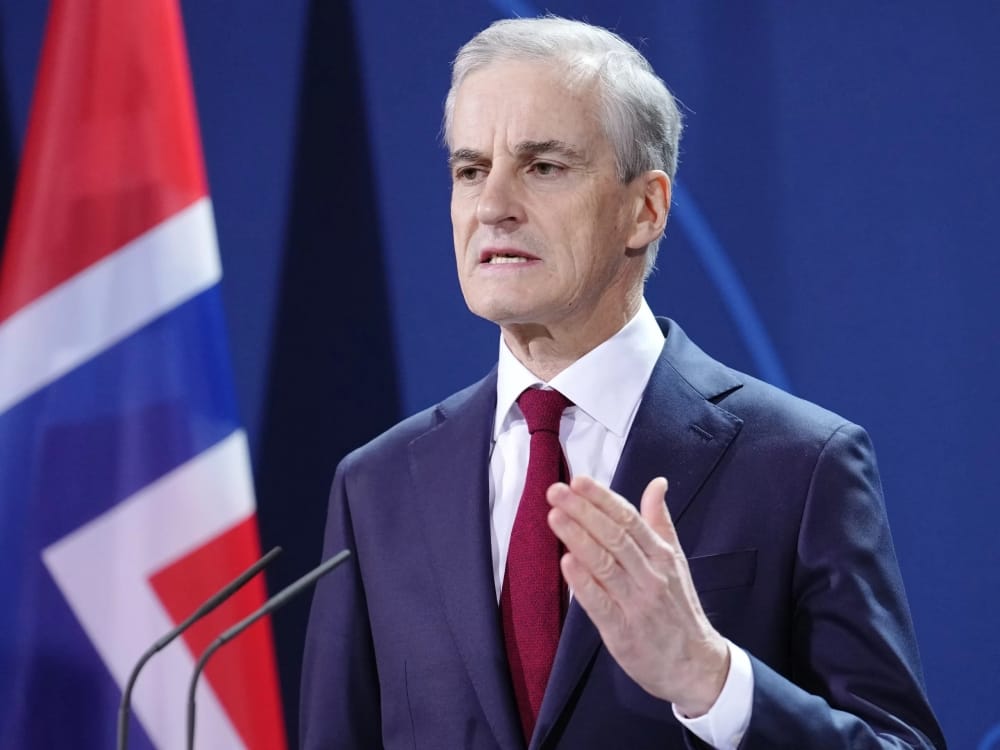
In a move reflecting a desire to maintain global economic stability, Norway, one of eight European countries targeted by US President Donald Trump's threats, announced that it does not currently intend to engage in a tit-for-tat policy or take immediate retaliatory measures against US imports. This cautious stance comes amid escalating geopolitical and economic tensions related to the Greenland issue.
Norwegian Prime Minister Jonas Gahr Støre told Norwegian state television that his country's position is pragmatic, saying, "I think we should think carefully to avoid a trade war that could spiral into a destructive spiral; it's in no one's interest." When asked about the possibility of implementing countermeasures to the tariffs threatened by Trump, Støre confirmed that this was "not under consideration at the moment," preferring diplomatic channels and de-escalation to further escalation.
Background to the crisis: American ambitions in the Arctic
The roots of this renewed crisis lie in US President Donald Trump's persistent desire to purchase Greenland, the world's largest island, from Denmark. Trump has threatened to impose punitive tariffs on European countries that oppose this move or that have deployed troops to the island. According to these threats, an additional 10% tariff will take effect on February 1st, with the potential to escalate to 25% by June 1st if US demands are not met.
Strategic and security dimensions
This event cannot be viewed in isolation from the broader international context. American interest in Greenland is not merely a real estate deal; it stems from paramount strategic importance in the Arctic region. International competition is intensifying in this resource-rich area, particularly for rare minerals, and its importance as a new shipping route is growing as the ice melts. The US administration justifies its actions on the grounds of “national security” to counter increasing Russian and Chinese expansion in the Arctic, making control of Greenland a vital linchpin for protecting Western and American interests.
The potential repercussions of a trade war
The Norwegian position carries profound economic implications. Despite its oil wealth, Norway relies heavily on free trade and open markets. A full-blown trade war between the United States and the European Union could disrupt global supply chains, drive up prices, and slow global economic growth, which is still recovering from previous crises. Therefore, the Norwegian Prime Minister's statement is seen as an attempt to prioritize shared economic interests over sharp political disagreements.
In a related context, the countries targeted by the American threat – Britain, Denmark, Finland, France, Germany, the Netherlands, Norway, and Sweden – stressed in a joint statement their unity of position and solidarity in the face of these pressures, affirming that diplomatic solutions remain the best option for all parties.