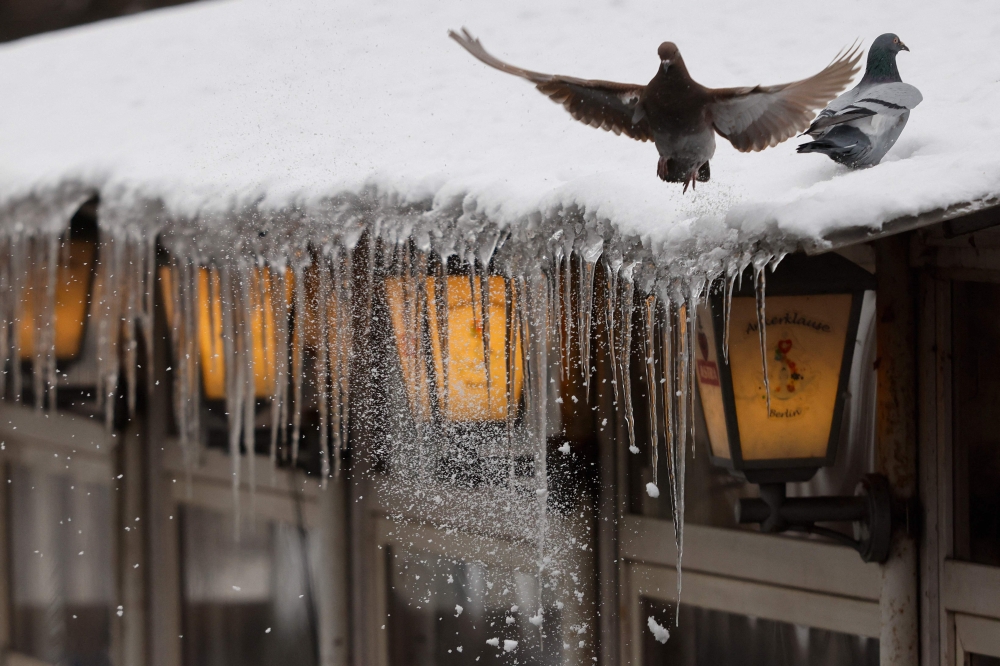
A violent wave of bad weather and fierce storms swept across large areas of northern Europe, causing a complete paralysis of vital transport sectors and plunging hundreds of thousands of homes into darkness as a result of power outages, amid strongly worded official warnings about the severity of the weather conditions.
Chaos reigns at airports and railways
Strong winds and heavy snow caused widespread travel chaos, with nearly 50 flights canceled at London's Heathrow Airport, leaving thousands of passengers stranded and disrupting international flight schedules. The storm's impact wasn't limited to the UK; it extended to air travel across Europe, from the Czech Republic to Moscow, where more than 300 flights were canceled at its four main airports.
In the rail sector, train traffic came to a complete halt on Friday in the Cornwall region of southwest England, while more than 250 schools across Scotland closed their doors for the safety of students.
Power outages and record-breaking wind speeds
Storm Goretti caused widespread damage to energy infrastructure. In Britain, around 50,000 homes remained without power by Friday afternoon, according to National Grid. The situation was even more severe in France, where nearly 320,000 homes were without electricity, mostly in the Normandy region of northern France.
French authorities recorded record wind speeds, reaching 213 kilometers per hour in the English Channel region of northwestern France, a speed comparable to that of devastating hurricanes, prompting a full mobilization of emergency services.
Regional impacts and expert warnings
Sporting activities were not spared from the effects of the weather, with two matches in the German Bundesliga being canceled, reflecting the widespread impact on various aspects of life. Meanwhile, meteorologists in both Britain and Germany issued urgent warnings, including a rare red alert for the Isles of Scilly, urging residents to stay indoors and avoid travel unless absolutely necessary.
These winter storms are part of typical weather patterns at this time of year, as Europe is affected by deep low-pressure systems coming from the Atlantic Ocean. However, the severity of this storm and its coincidence with heavy snowfall have doubled its impact on infrastructure and the daily lives of citizens, highlighting the ongoing need to strengthen countries’ preparedness to face extreme climate changes.