Military escalation on the Korean Peninsula
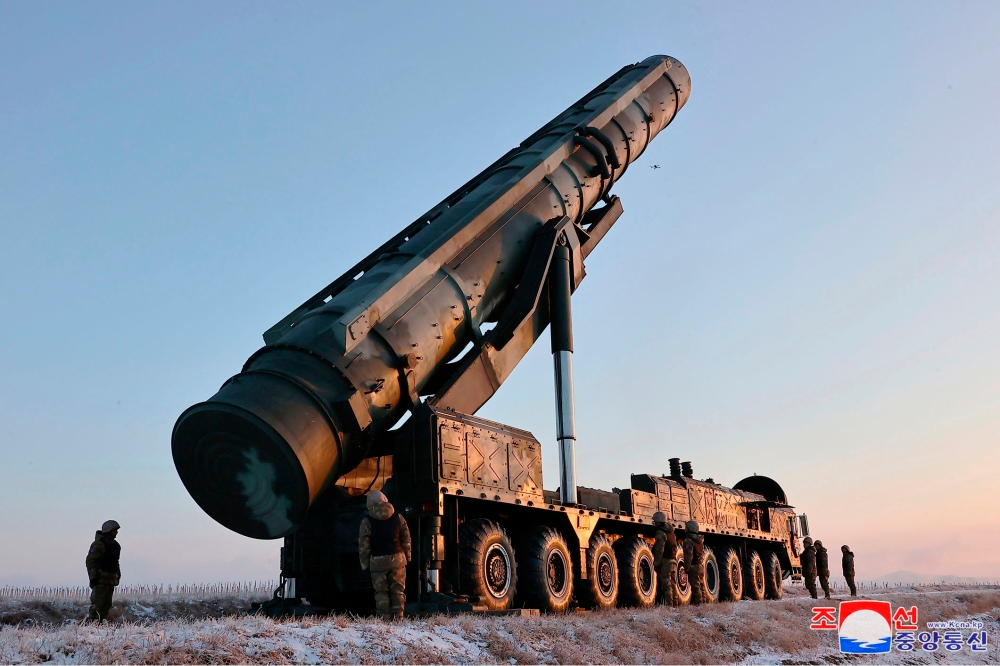
In a move that further escalates tensions in East Asia, North Korea announced the successful development and testing of a massive multiple rocket launcher, claiming it is capable of carrying tactical nuclear warheads. North Korean leader Kim Jong Un personally oversaw the official unveiling of the new system, which state media described as a significant leap forward in the country's offensive capabilities. According to the Korean Central News Agency (KCNA), Kim praised the new 600mm rocket launcher system at a ceremony marking the occasion, calling it "unique in the world" and "suitable for carrying out strategic missions"—a term typically used to refer to nuclear capabilities. This announcement sends a clear message of defiance to its southern neighbor and its ally, the United States, underscoring Pyongyang's determination to continue bolstering its military arsenal despite international sanctions.
Historical background of Pyongyang's military program
This development did not occur in a vacuum; rather, it is part of a long series of efforts by North Korea to develop its nuclear and missile program, which began decades ago. Since the Korean War (1950-1953) ended with an armistice, not a peace treaty, the Korean Peninsula has remained in a state of constant tension. Pyongyang has sought to acquire nuclear weapons as a strategic deterrent to ensure the survival of its regime in the face of what it perceives as threats from the United States and South Korea. It conducted its first nuclear test in 2006, and since then has continued to develop its capabilities by conducting further tests and launching ballistic missiles of varying ranges, from short-range to intercontinental. This strategy is an integral part of its military doctrine based on “deterrence,” which views nuclear power as the only guarantee against military attack.
Strategic importance and regional and international influence
The unveiling of this new bomber carries serious strategic implications both regionally and internationally. Domestically, this weapon places all of South Korea, including the capital Seoul and major population centers, under the direct threat of a tactical nuclear attack that would be difficult to repel. Tactical nuclear weapons are designed for use on the battlefield, lowering the threshold for nuclear use and increasing the risk of miscalculation that could lead to all-out war. Regionally, this development is deeply concerning for Japan, which lies within range of North Korean missiles, and it further complicates the security calculations of the United States, which maintains forces in both South Korea and Japan. Internationally, this move poses a significant challenge to nuclear nonproliferation efforts, undermines stability in the Indo-Pacific region, and places additional pressure on major powers to find a way to address Pyongyang's growing nuclear ambitions.