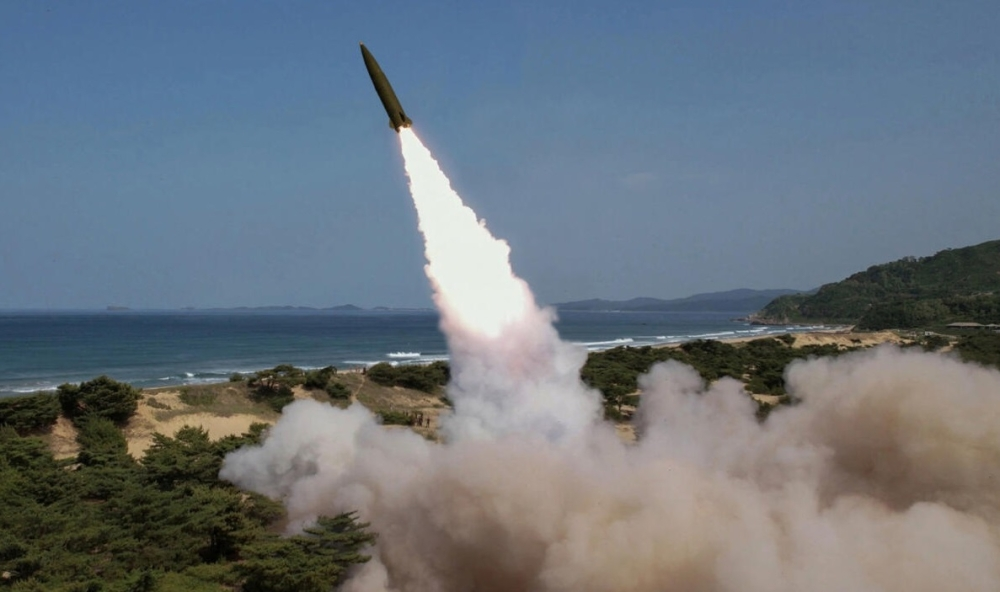
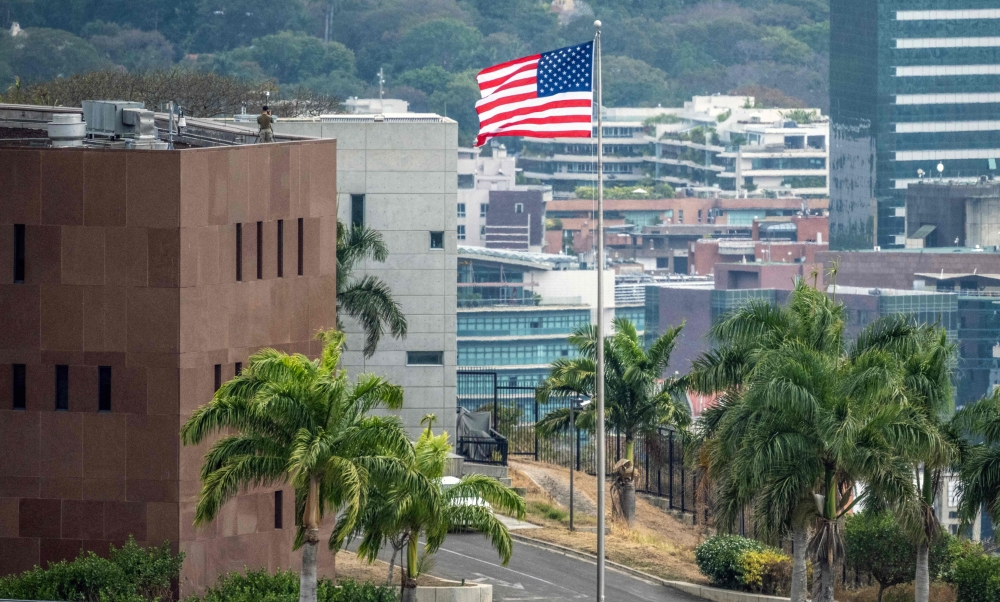
In a new escalation with profound political implications, North Korea conducted its first missile test of 2026, with North Korean leader Kim Jong Un directly linking the military exercise to what he called the "recent geopolitical crisis," in an explicit reference to the United States' arrest of Venezuelan President Nicolas Maduro.
Dimensions of the link between Pyongyang and Caracas
Pyongyang's timing was not arbitrary; the launch came just two days after the international political upheaval caused by Washington's arrest of the Venezuelan president. Kim Jong Un, according to the official Korean Central News Agency, justified the move as a necessary response to "complex international events.".
Observers believe that North Korea views US actions against regimes opposed to it, such as Venezuela, with suspicion and concern. Pyongyang has long accused successive US administrations of seeking regime change and attempting to overthrow its government. Consequently, the development of its military and nuclear programs is presented both domestically and internationally as an "existential deterrent" to prevent a recurrence of foreign intervention scenarios witnessed in other countries.
Evolution of missile capabilities: Messages by fire
On the military and technical front, the Central News Agency revealed that the system used in the launch was a new, "advanced" weapon system based on hypersonic missiles, a technology first tested last October. Reports indicated that the missiles accurately struck targets 1,000 kilometers away in the Sea of Japan.
During his supervision of the operation, the North Korean leader confirmed that significant and tangible progress had been made in preparing the country's nuclear forces for what he called a "real war," reflecting a shift in military doctrine from merely brandishing deterrence to operational readiness for confrontation.
Political condemnation and a critical diplomatic timing
In parallel with the military escalation, North Korea's foreign ministry launched a scathing attack on the United States, describing Maduro's arrest as a "blatant infringement on Venezuela's sovereignty." The official statement quoted a foreign ministry spokesperson as saying that the incident was "yet another example confirming the rogue and brutal nature of the United States," reinforcing North Korea's narrative about the necessity of arming itself to counter what it calls American arrogance.
These developments gain added significance given their regional context; the launch coincided with sensitive diplomatic activity in East Asia, specifically just hours before South Korean President Lee Jae-myung's arrival in Beijing. These missile tensions and relations between the two Koreas are expected to be high on the agenda of his talks with Chinese President Xi Jinping, presenting the region with renewed security and diplomatic challenges.