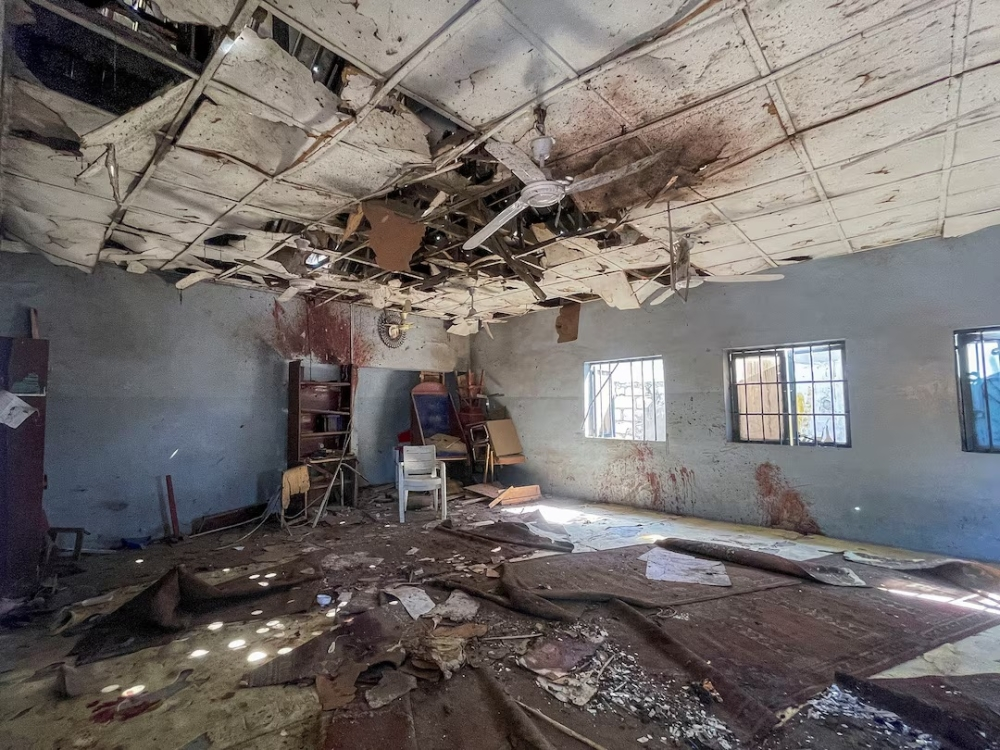
In a significant security development, Nigerian police announced their strong suspicion that a suicide bomber carried out the horrific attack that targeted a mosque packed with worshippers on Christmas Eve in Maiduguri, the capital of Borno State in the northeast of the country. This incident underscores the ongoing security challenges in the region, which has suffered for years from the ravages of armed insurgency.
In detailing the incident, police spokesman Nahum Dasso explained in a press statement on Thursday that initial investigations and witness testimonies point to a suicide attack scenario. Dasso said, "The incident may have been a suicide bombing, based on the discovery of fragments of what is likely an explosive vest at the scene, as well as statements from survivors." The spokesman confirmed that the death toll had reached five, while 35 others sustained injuries of varying severity. The explosion occurred while worshippers were performing evening prayers at a mosque located within the busy Gamboru market.
Security concerns return to the rebel stronghold
Maiduguri is considered the historical and spiritual stronghold of the Boko Haram extremist group, and it was from there that the armed insurgency began. Although the city has witnessed a relative improvement in security recently, and major attacks have decreased compared to previous years, this bombing has raised residents' fears of a return to targeting "soft targets" such as places of worship and markets. Security experts indicate that such attacks may bear the hallmarks of the Islamic State West Africa Province (ISWAP) or the remaining Boko Haram factions, which are vying for influence in the region.
Historical background of the conflict in northeastern Nigeria
Nigeria, Africa's most populous country, is suffering from a bloody jihadist insurgency that effectively began in 2009. According to United Nations data, this long conflict has killed at least 40,000 people and caused a severe humanitarian crisis that has displaced nearly two million people in the northeast of the country, many of whom live in camps lacking the most basic necessities of life.
Regional repercussions of the crisis
The impact of this conflict has not been confined to Nigeria alone; its flames have spread to neighboring countries in the Lake Chad Basin region. Armed groups have launched frequent cross-border attacks in Niger, Chad, and Cameroon, prompting the formation of a multinational counterinsurgency task force. Despite intensified military efforts and a decline in violence over the past decade, the region continues to experience sporadic security disturbances that hinder development and stability efforts, making the recent incident in Maiduguri a painful reminder that the road to lasting peace remains long.