In a unique incident that combined humor and strangeness in the world of crime, New Zealand police announced on Friday that they had successfully recovered a precious piece of jewelry, a diamond-encrusted "Fabergé egg," after a meticulous six-day surveillance operation of a thief who had swallowed it to conceal his crime, in an incident that attracted the attention of the global media.
Details of the bizarre incident and close surveillance
The story began when authorities arrested a 32-year-old man in Auckland, New Zealand, on suspicion of stealing a rare piece of jewelry from a luxury store last week. Investigators quickly discovered that the suspect had swallowed the stolen item in a desperate attempt to destroy evidence and avoid conviction.
In an official statement, the police confirmed that the officer assigned to the case monitored the suspect in custody for six full days, waiting for the object to pass naturally from his body. This monitoring proved successful, as the object was retrieved and cleaned. The man remains in custody pending the completion of legal procedures and his trial.
A masterpiece inspired by the world of James Bond
The recovered piece is not just an ordinary ornament; it is a special, unique edition from the prestigious house of Fabergé, with a market value of approximately $20,000 (equivalent to £13,000). This egg was designed based on the famous James Bond film "Octopussy," released in 1983, whose main plot revolves around the theft and smuggling of a Fabergé egg.
According to Fabergé's website, this exquisite little masterpiece is crafted from 18-karat gold and adorned with diamonds and rubies. A subtle artistic touch, reflecting the precision of its creation, is the small octopus figurine inside, enhancing its artistic and aesthetic value and directly linking it to the story of the famous film.
A rich history and global value for Fabergé eggs
This event gains significance from the name "Fabergé," which carries immense historical weight in the world of art and jewelry. The house became famous in the late 19th century for crafting gem-encrusted eggs, specifically for the Russian imperial family (the Romanovs). The renowned Russian jeweler Peter Carl Fabergé was the creator of these masterpieces, which were traditionally exchanged as Easter gifts between the tsars and their wives, becoming a symbol of the extravagant wealth and exquisite craftsmanship that characterized the pre-revolutionary era in Russia.
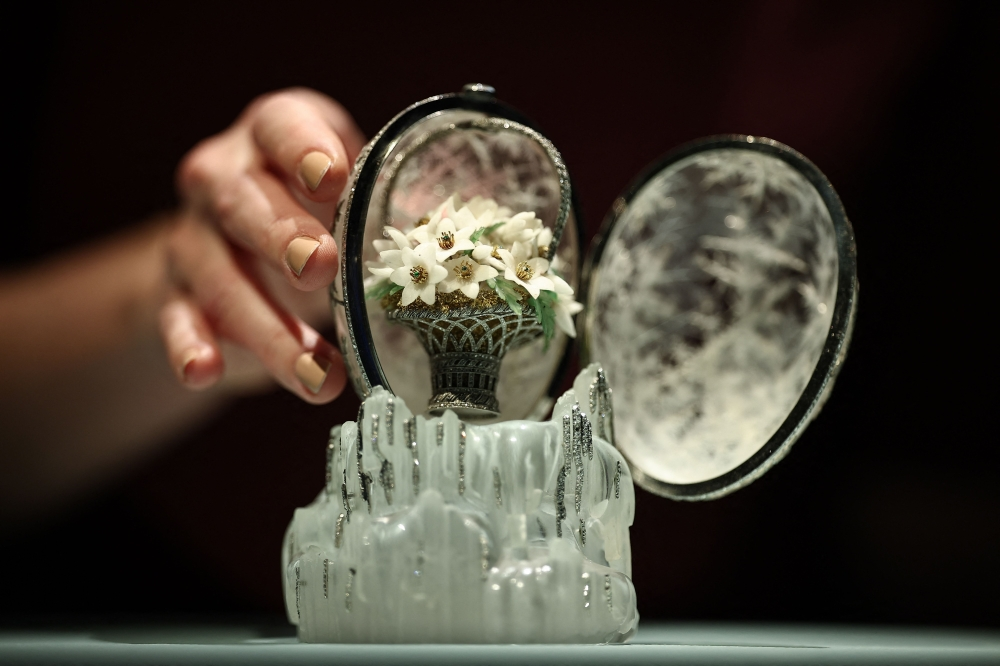
Original Fabergé eggs are among the rarest and most valuable works of art in the world. Only 50 Imperial eggs were ever made, and some have been lost and are still being sought. To illustrate their immense value, the "Winter Egg," made in 1913, sold for a record-breaking $30.22 million (£22.9 million) at a Christie's auction in London. This makes the theft of any piece bearing this name, even a recently made one, an event that attracts the attention of the world and collectors alike.