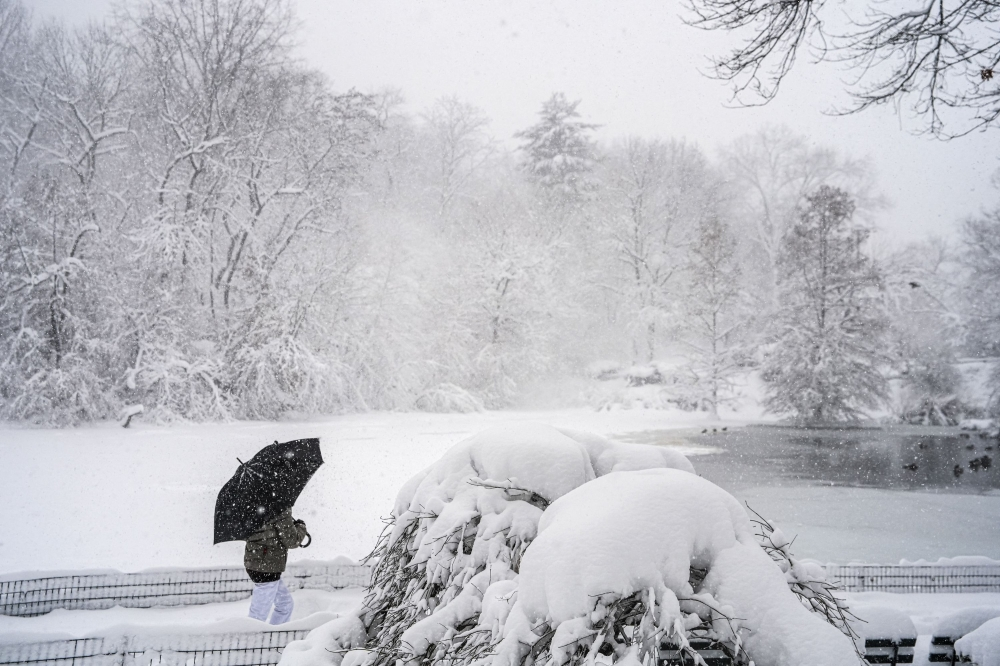
A powerful snowstorm struck the northeastern United States, bringing New York City to a near standstill, where authorities declared a state of emergency and imposed a ban on non-essential travel. The storm forced schools to close and urged residents to stay indoors, in the face of what the National Weather Service described as a dangerous weather event.
Emergency procedures and storm details
According to official reports, snowfall in some parts of the city exceeded 37 centimeters, while a layer of ice ranging from 23 to 28 centimeters covered neighborhoods in Manhattan and Brooklyn. In response, all non-essential vehicles were prohibited from traveling on city streets, highways, and bridges to ensure public safety and allow emergency crews and snowplows to operate. The National Weather Service issued warnings that travel would be “extremely hazardous” in the region stretching from Maryland to southeastern New England.
Historical context: The “Norester” phenomenon
These powerful storms that batter the US East Coast are known as "nor'easters." They are cyclones that form along the coast, drawing strength and moisture from the Atlantic Ocean, and bring torrential snowfall and gale-force winds. This weather phenomenon is a part of the region's winter, but its intensity varies from year to year. These storms are reminiscent of historically devastating storms like the "Storm of the Century" in 1993, which paralyzed much of the East Coast, and underscore the ongoing challenges that nature poses to the world's largest urban centers.
Local and regional impact of the storm
The storm's impact wasn't limited to New York City; it extended to tens of millions of residents in other major cities, including Washington, D.C., Boston, and Philadelphia. This resulted in widespread transportation disruptions, with thousands of flights canceled at major airports such as John F. Kennedy, LaGuardia, and Newark, causing significant difficulties for both domestic and international travelers. Train and bus services were also severely affected, further isolating the impacted cities. Economically, this type of storm causes millions of dollars in losses daily due to business closures and disruptions.
Ongoing warnings and future projections
As snow continues to fall and temperatures plummet below freezing, authorities have warned of additional risks such as power outages due to power lines freezing and collapsing under the weight of the snow and wind. Emergency crews are working around the clock to maintain essential infrastructure and keep major roads open. While residents prepare for more severe weather, the city remains on high alert, a testament to the power of nature and its ongoing challenges.