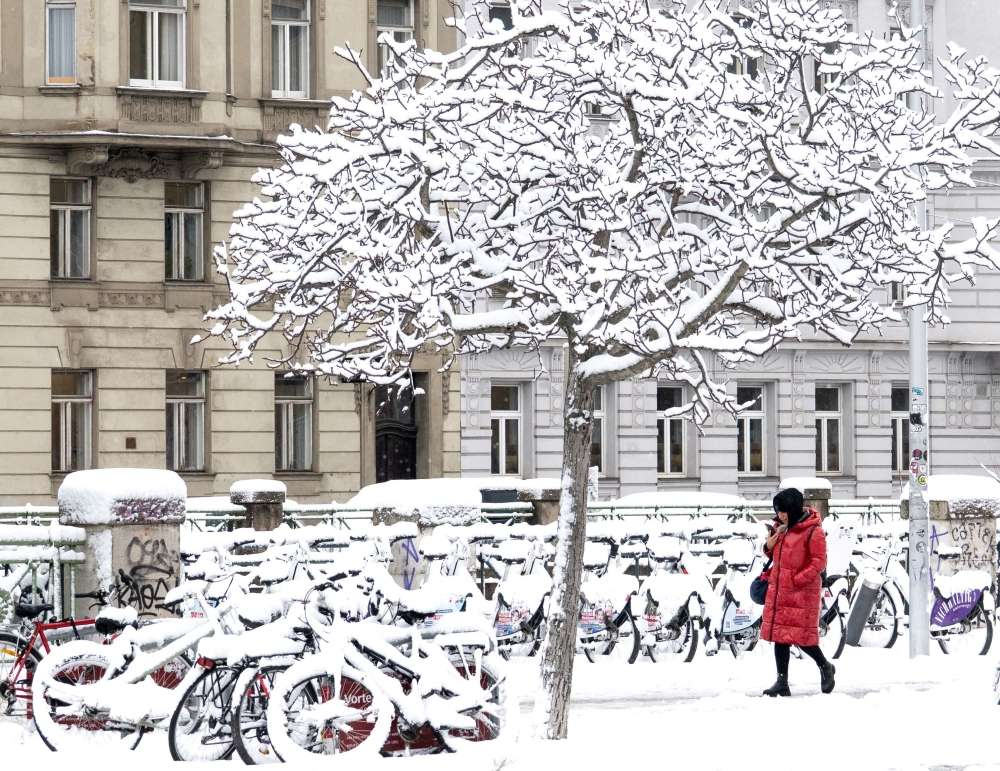
Authorities in New York City, New Jersey, and Connecticut have declared a state of high alert after the National Weather Service issued warnings of a powerful winter storm expected to hit a large swath of the US East Coast in the coming hours. All eyes are on the region, home to millions of residents, as preparations intensify for heavy snowfall and strong winds that could disrupt daily life.
Details of the expected storm and its effects
According to the National Weather Service, the warnings extend from the mid-Atlantic region to the Northeast. New York City and surrounding areas, including Long Island, are expected to receive up to 46 centimeters of snow. This snowfall will be accompanied by strong winds of 40 to 56 kilometers per hour, with gusts reaching up to 88 kilometers per hour, further complicating the situation and increasing the likelihood of widespread power outages due to downed trees and power lines.
Authorities also warned of the possibility of coastal flooding, ranging from minor to widespread, especially during high tide, threatening low-lying areas near the beaches.
The historical context of winter storms on the East Coast
The East Coast of the United States is known for its history of violent winter storms, often called "nor'easters." These storms form when cold air from Canada meets warm, moist air from the Atlantic Ocean, creating ideal conditions for massive storms capable of producing enormous amounts of snow and freezing rain. Throughout its history, the region has experienced legendary storms such as the "Storm of the Century" in 1993 and the "Great Blizzard" of 1888, which left an indelible mark on the collective memory and led to the development of current emergency plans and early warning systems.
Importance and expected impacts at the local and international levels
The effects of this expected storm extend beyond local boundaries to the national and international levels. Locally, emergency services are preparing thousands of snowplows and tons of salt to combat the ice, while residents are advised to stay home and avoid unnecessary travel. Schools and government offices are likely to close, with many businesses switching to remote work.
On a regional and international level, the greatest impact will be felt in the transportation sector. New York's three airports (John F. Kennedy, LaGuardia, and Newark) are among the busiest in the world, and any disruption there will have a ripple effect on global air traffic. Thousands of flights are expected to be canceled, stranding hundreds of thousands of passengers and disrupting global air cargo chains. Train and bus services will also be severely affected, temporarily isolating one of the world's most important economic and financial centers.