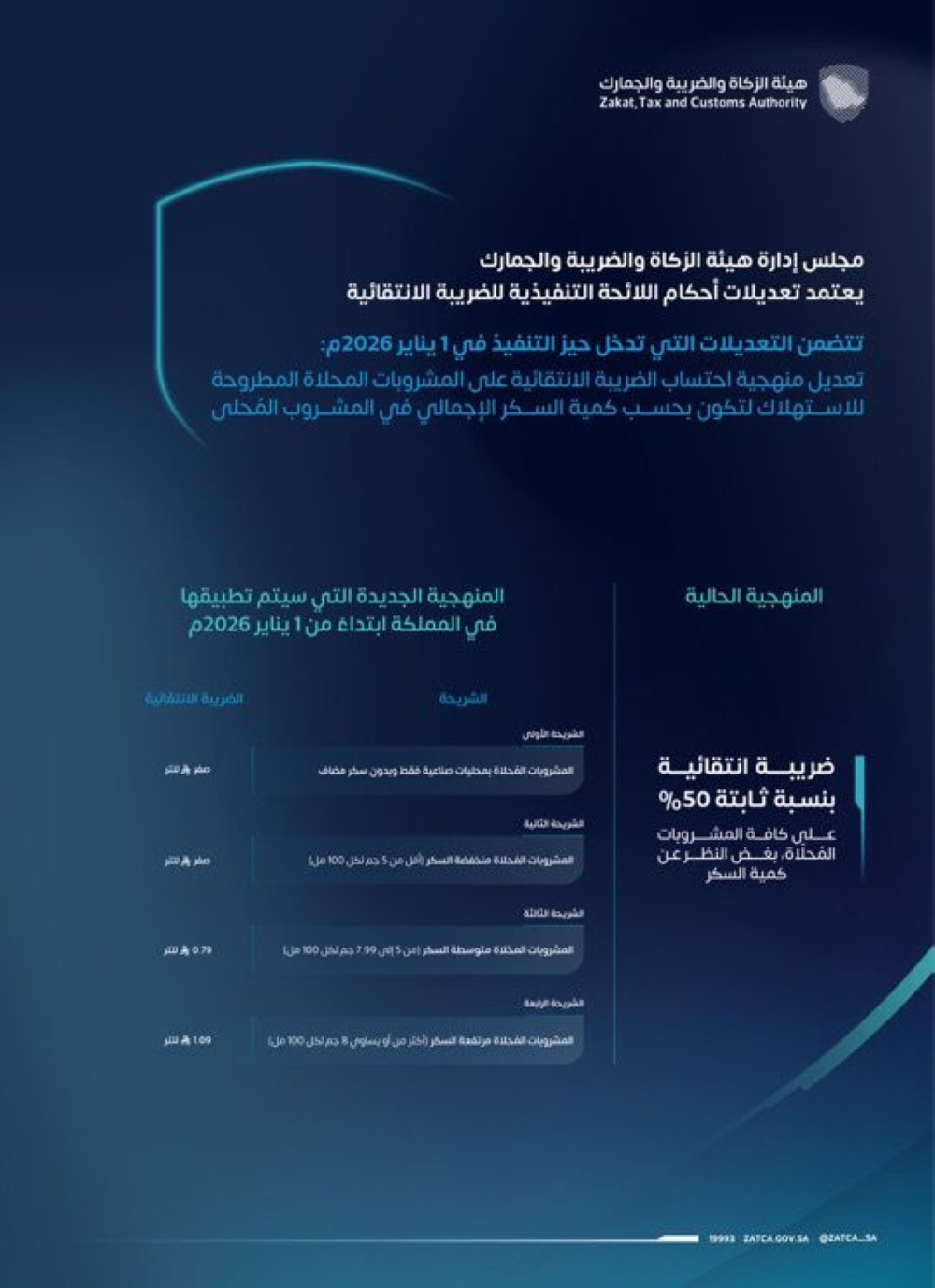
أعلنت هيئة الزكاة والضريبة والجمارك في المملكة العربية السعودية عن خطوة جوهرية تهدف إلى تعزيز الصحة العامة وتطوير السياسات الضريبية، حيث تم اعتماد تعديلات جديدة على اللائحة التنفيذية لنظام الضريبة الانتقائية. وبموجب هذا القرار، سيبدأ تطبيق آلية جديدة لاحتساب الضريبة على المشروبات المحلّاة اعتباراً من 1 يناير 2026م، لتنتقل من نظام النسبة الثابتة إلى منهجية دقيقة تعتمد على كمية السكر الإجمالية الموجودة في المنتج.
تفاصيل المنهجية الجديدة والشرائح الضريبية
أوضحت الهيئة أن النظام الجديد سيعتمد على شرائح ضريبية متدرجة ترتبط بشكل مباشر بمستوى السكر لكل 100 مل من المشروب. وتأتي هذه الخطوة استبدالاً للمنهجية الحالية التي تفرض ضريبة انتقائية بنسبة ثابتة قدرها 50% من سعر البيع بالتجزئة. وتهدف هذه الدقة في الاحتساب إلى تحقيق العدالة الضريبية وتشجيع المصنعين والمستوردين على إعادة صياغة منتجاتهم لتقليل المحتوى السكري، بما يتوافق مع المعايير الدولية وأفضل الممارسات العالمية في مكافحة الأمراض المزمنة.
السياق التاريخي للضريبة الانتقائية في المملكة
لا يعد هذا القرار وليد اللحظة، بل هو امتداد لسلسلة من الإصلاحات الاقتصادية والصحية التي بدأتها المملكة منذ سنوات. فقد بدأت السعودية تطبيق الضريبة الانتقائية لأول مرة في يونيو 2017، حيث شملت المشروبات الغازية بنسبة 50% ومشروبات الطاقة والتبغ بنسبة 100%. وفي ديسمبر 2019، وسعت المملكة نطاق الضريبة لتشمل المشروبات المحلّاة بالسكر المضاف. ويأتي التعديل الجديد لعام 2026 ليرفع من كفاءة هذا النظام الضريبي، مستنداً إلى قرارات لجنة التعاون المالي والاقتصادي لدول مجلس التعاون الخليجي، التي أقرت التحول نحو النهج الحجمي المتدرج.
التوافق مع رؤية 2030 وتعزيز الصحة العامة
يندرج هذا القرار ضمن مستهدفات رؤية المملكة 2030، وتحديداً برنامج جودة الحياة، الذي يسعى لخفض معدلات السمنة والسكري والأمراض غير السارية في المجتمع السعودي. وتشير التقارير الصحية إلى أن الاستهلاك المفرط للسكريات يعد مسبباً رئيسياً لهذه الأمراض، مما يجعل السياسات المالية أداة فعالة لتغيير السلوك الاستهلاكي. ومن المتوقع أن يسهم هذا القرار في تحفيز المستهلكين على اختيار بدائل صحية، ودفع الشركات لتقديم منتجات ذات محتوى سكري منخفض لتجنب الشرائح الضريبية المرتفعة.
تعريف المشروبات الخاضعة للضريبة
أكدت الهيئة أن التعريف القانوني للمشروبات المحلّاة يشمل أي منتج مضاف إليه أي مصدر من مصادر السكر أو المحليات الأخرى، ويتم إنتاجه بغرض التناول كمشروب. ولا يقتصر ذلك على المشروبات الجاهزة للشرب فحسب، بل يمتد ليشمل المُركّزات، المساحيق، الجل، المستخلصات، وأي صورة أخرى يمكن تحويلها إلى مشروب، مما يضمن شمولية التطبيق ومنع أي ثغرات قد تستغل للتهرب من التصنيف الضريبي الجديد.