Intensive preparations for the holy month of Ramadan
As part of its early and intensive preparations to receive millions of visitors and pilgrims during the holy month of Ramadan 1447 AH, the General Authority for the Care of the Two Holy Mosques announced the launch of its new and advanced guidance system. This innovative initiative aims to facilitate the movement of pilgrims and ensure their smooth passage within the Two Holy Mosques and their courtyards, enriching their spiritual experience and helping them perform their rituals with ease and tranquility.
Historical background and ongoing efforts
The Kingdom of Saudi Arabia, as the Custodian of the Two Holy Mosques, places paramount importance on the comfort and safety of pilgrims performing Hajj and Umrah. These efforts are a continuation of a long history of development projects and massive expansions undertaken at the Two Holy Mosques over the decades, always aimed at accommodating the increasing number of visitors and providing them with the highest quality services. This guidance system falls within the objectives of Saudi Vision 2030 , which seeks to comprehensively enhance the Hajj and Umrah experience and utilize the latest technologies to serve those visiting the Grand Mosque in Mecca and the Prophet's Mosque in Medina.
Details of the new guidance system
The system includes a comprehensive package of services that combines human guidance and modern technologies to ensure comprehensive and effective coverage:
- Multilingual support: A comprehensive guide has been prepared and translated into eight living international languages, to address the vast majority of nationalities of pilgrims and visitors, removing the language barrier and facilitating communication.
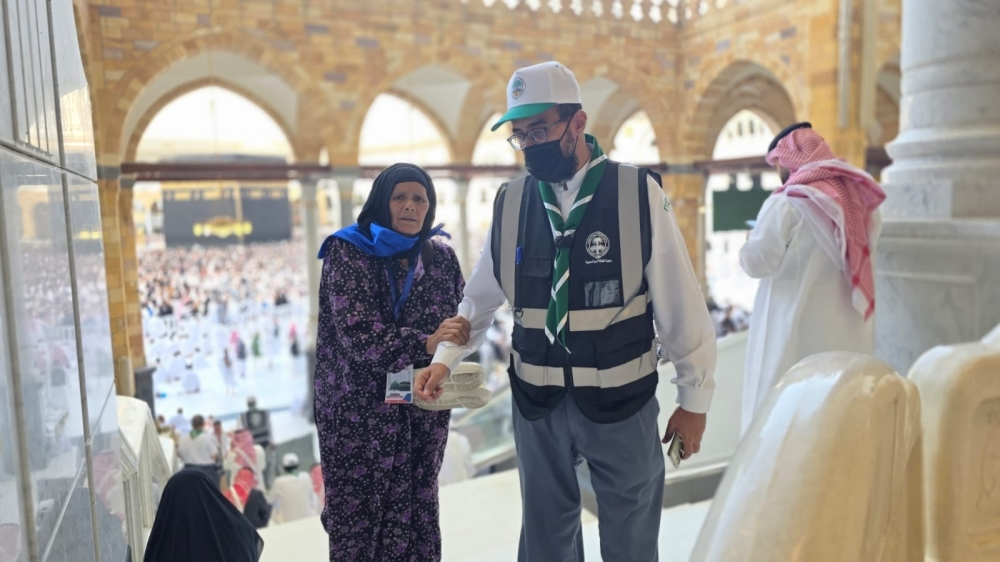
- Specialized field teams: Launching the “foot teams” service for field guidance, where specialized teams roam throughout the Two Holy Mosques to provide direct assistance, with special attention given to the elderly and people with disabilities, and directing them to the paths and facilities designated for them.
- Enhanced infrastructure: 350 new directional signs are being supplied and installed, bringing the total number of signs to 2,731 . In addition, 60 modern directional pillars will be installed (40 in the Grand Mosque and 20 in the Prophet's Mosque) to support the system before the start of the Hajj season.
Digital transformation in serving visitors
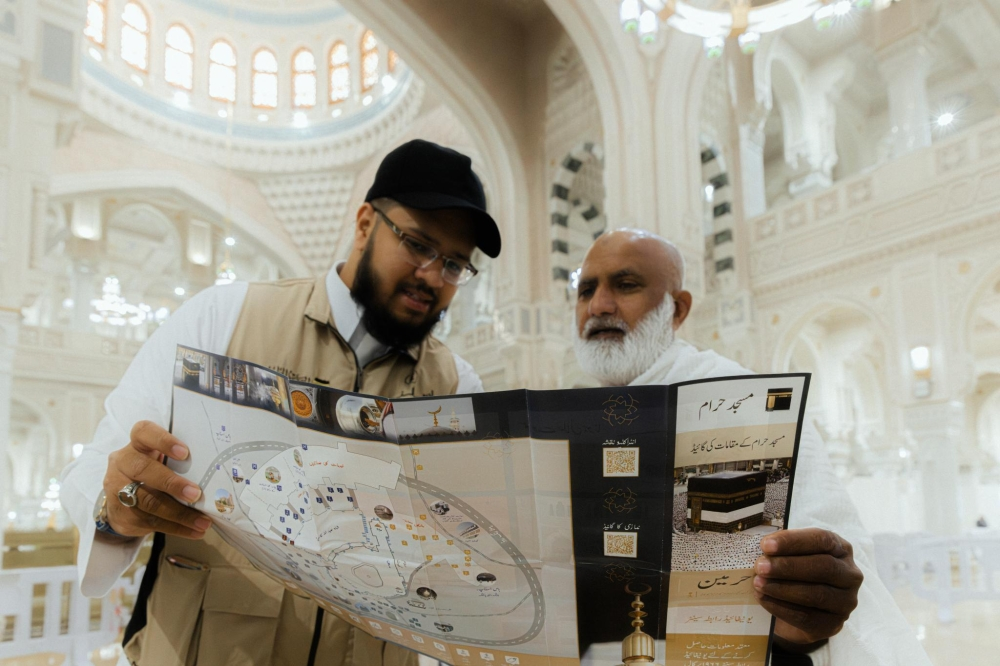
To keep pace with technological advancements, the Authority has issued a guide based on the global color-coding system to facilitate visual navigation. The guide includes a paper map and an interactive smart map supported by a QR code. By simply scanning the code with a smartphone, visitors can access an interactive map showing all areas of the Grand Mosque and the Prophet's Mosque, as well as the locations of essential services such as ablution areas, prayer rooms, and health centers, along with clear and easy directions to reach them.
Importance and expected impact
The importance of this system lies in its ability to efficiently manage millions of people, thus reducing the likelihood of overcrowding and ensuring everyone's safety. Internationally, these efforts reflect the Kingdom's exemplary commitment to the care of Islamic holy sites and underscore its dedication to utilizing all available resources, both material and technological, to serve Muslims from around the world, in a manner befitting the status and sanctity of the Two Holy Mosques.