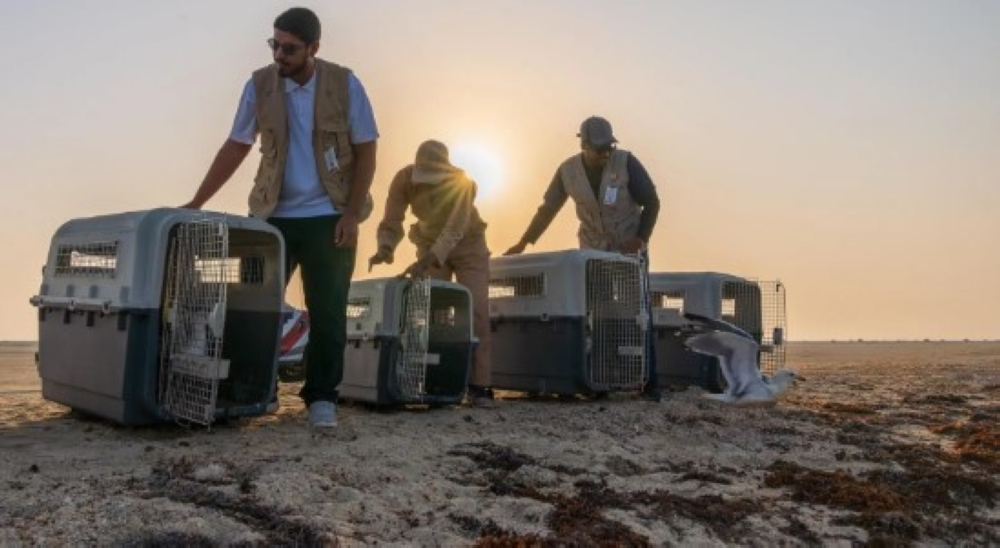
In a move reflecting the Kingdom of Saudi Arabia’s commitment to protecting the environment and promoting the sustainability of its natural resources, the National Center for Wildlife Development 63 seabirds on Jeddah’s Corniche, after completing their rehabilitation and treatment programs to ensure their ability to survive and reproduce in their natural environments.
This initiative is part of a series of releases carried out by the center in various regions of the Kingdom. The released group included a remarkable biodiversity, comprising 34 Greater Red-billed Gulls, 25 Lesser Red-billed Gulls, as well as Moorhens, Herons, and two Barbary Storks. These species are an integral part of the Red Sea coastal ecosystem and play a vital role in maintaining ecological balance.
Rehabilitation according to scientific standards
The release was not a mere coincidence, but rather the culmination of intensive efforts by the center's veterinary and research teams. These birds underwent a period of medical care and physical and behavioral rehabilitation according to the best internationally recognized practices, to ensure their health and ability to fend for themselves in the wild, thus increasing their survival rates and contributing to the enrichment of biodiversity in the region.
Supporting the Kingdom's Vision 2030 and the Saudi Green Initiative
This event is of strategic importance as it directly contributes to achieving the goals of the Kingdom's Vision 2030 and the "Green Saudi Arabia" initiative, which aims to protect terrestrial and marine areas and reintroduce endangered species. The Kingdom is working diligently to increase the percentage of protected areas to 30% of its total land area. Seabirds are a vital indicator of the health of marine ecosystems, as their presence contributes to nutrient transport and maintaining the delicate balance of the food chain.
International commitment and environmental sustainability
Commenting on the event, the center's CEO, Dr. Mohammed Ali Qurban, affirmed that returning these creatures to their natural habitat is part of the Kingdom's international commitments under biodiversity agreements. He noted that the center operates according to a comprehensive national environmental strategy aimed at ensuring the sustainability of wildlife for future generations and addressing environmental challenges through scientific research and continuous monitoring using modern technologies.
It is worth noting that the National Center for Wildlife Development continues its efforts in monitoring biodiversity in coastal and terrestrial areas, and works to address the threats facing wildlife, to ensure a thriving and sustainable environment in line with national aspirations.