A rich artistic experience at the “Ithra” center
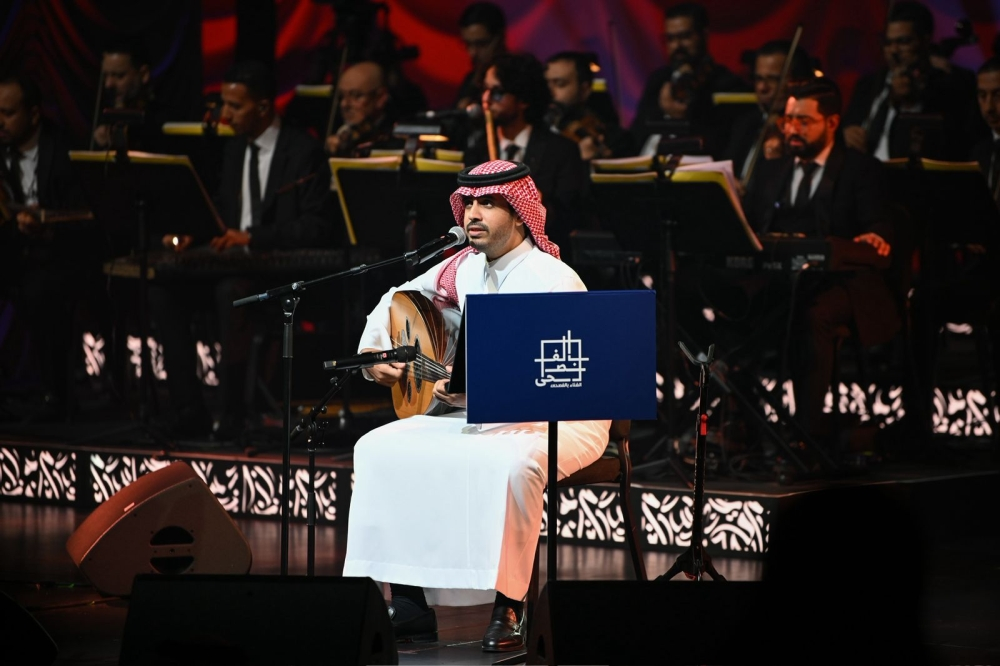
Saudi artist Nawaf Al-Jabarti expressed his immense joy at participating in the "Singing in Classical Arabic" evening held at the King Abdulaziz Center for World Culture (Ithra), emphasizing that this experience represents a unique artistic value and a creative depth he always aspires to offer. In the press conference following the evening, Al-Jabarti described the opportunity as "great" for him, noting that the audience, despite being accustomed to hearing this style of singing from him in a limited way in previous works, interacted remarkably with the concert, which featured a majority of songs in classical Arabic.
The Eastern Province audience... discerning and attentive
Al-Jabarti praised the audience from the Eastern Province who attended the concert, describing them as an "enjoyable and attentive" audience with refined artistic taste. He explained, "I saw an audience that followed every detail meticulously, from the lyrics and melody to the underlying artistic message. This remarkable response gives an artist great motivation to continue producing valuable works." He expressed his hope that the works he presented were well-received by the audience and touched their hearts.
Historical background: The sung poem and the legacy of giants
The interest of artists like Nawaf Al-Jabarti in singing in classical Arabic is an extension of a rich artistic heritage in the Arab world. The sung poem formed the cornerstone of classical Arabic music, with giants of the art such as Umm Kulthum, Mohammed Abdel Wahab, and Fairuz singing poems by renowned poets like Ahmed Shawqi, Nizar Qabbani, and Al-Akhtal Al-Saghir. These works represented the pinnacle of creativity, combining linguistic eloquence with melodic depth, thus immortalizing them in the Arab memory. In recent decades, this art form has declined with the rise of fast-paced commercial music. However, initiatives like the Ithra evenings and the efforts of contemporary artists are reviving this authentic art, connecting the new generation with its cultural and linguistic roots.
The importance of the event and its cultural impact
The significance of this evening extends beyond its status as a mere artistic event; it reflects a broader cultural direction embraced by the Kingdom of Saudi Arabia within its Vision 2030, which aims to enrich the cultural landscape and support the fine arts. Presenting songs in Classical Arabic at a world-class cultural venue like Ithra contributes to enhancing the status and beauty of the Arabic language, offering local and international audiences a model of authentic Arabic art. Regionally, these initiatives encourage an artistic movement aimed at restoring balance to the Arab music scene and highlighting the artistic value of lyrics and melody in the face of consumerist trends. It is expected that Al-Jabarti's experience will inspire other artists to take on this creative challenge.
New works and artistic vision
Al-Jabarti revealed that he would be presenting a new work during the evening, with lyrics by the poet Musafir, music by the same poet, and arrangement by Maestro Amir Abdel-Magid. Regarding his philosophy on setting classical Arabic texts to music, he emphasized the necessity of first understanding the poet's vision. He said, "When I read the text, I strive to understand the poet's aim and feelings, then I search for the appropriate musical mode that translates this emotion, along with a thoughtful performance and musical details that serve the meaning." He concluded by affirming that creativity in this field requires a deep awareness of Arabic melody and the structure of the language in order to achieve a complete artistic experience that respects the listener's taste and touches their heart.